Open your worlds
Your wish list — the plush you mean to keep.
Press Add to a collection on any plush in the shop: start a collection of your own, or keep it on your wish list. Sign in and both follow you to any device.
Open my wish list →Menu
Dragons you can really meet
Dragons in stories are not real, but these animals are. Each one carries the name 'dragon'.
The Komodo dragon
The Komodo dragon is the largest living lizard in the world. It lives on a few Indonesian islands, including Rintja, Flores and the island of Komodo itself.
SourceThe leafy seadragon
The leafy seadragon is a fish found along the southern coast of Australia. Its colouring and leafy flaps give it excellent camouflage on rocky reefs covered in kelp.
SourceDraco flying lizards
Draco lizards can glide on wings of skin held out by long ribs. Glides as long as 60 metres have been recorded, by a lizard only around 20 centimetres long.
SourceTasting the air
How a Komodo dragon smells its dinner
A Komodo dragon finds its food mainly by smell. It uses its long, yellow, forked tongue to sample the air. Then it moves the forked tip to the roof of its mouth, where it touches the Jacobson's organs. These 'smell' prey, such as a deer, by picking up tiny molecules in the air. If there are more molecules on the left tip of the tongue than on the right, the dragon knows the deer is coming from the left. As the dragon walks, its head swings from side to side, which helps it sense food and which way it is. A Komodo dragon can smell rotting meat up to 4 kilometres away.
SourceDads in charge
The leafy seadragon's egg-carrying dad
As with seahorses, it is the male leafy seadragon that cares for the eggs. The female makes up to 250 bright pink eggs and puts them onto the male's tail through a long tube. There the eggs attach to a brood patch, which gives them oxygen. After nine weeks, depending on the water, they begin to hatch. By then they have turned purple or orange. The male pumps and shakes his tail, and rubs it against seaweed and rocks, until the young come out, over 24 to 48 hours. From then on, each baby is completely on its own. Only about 5 per cent of the eggs survive.
SourceThree real dragons
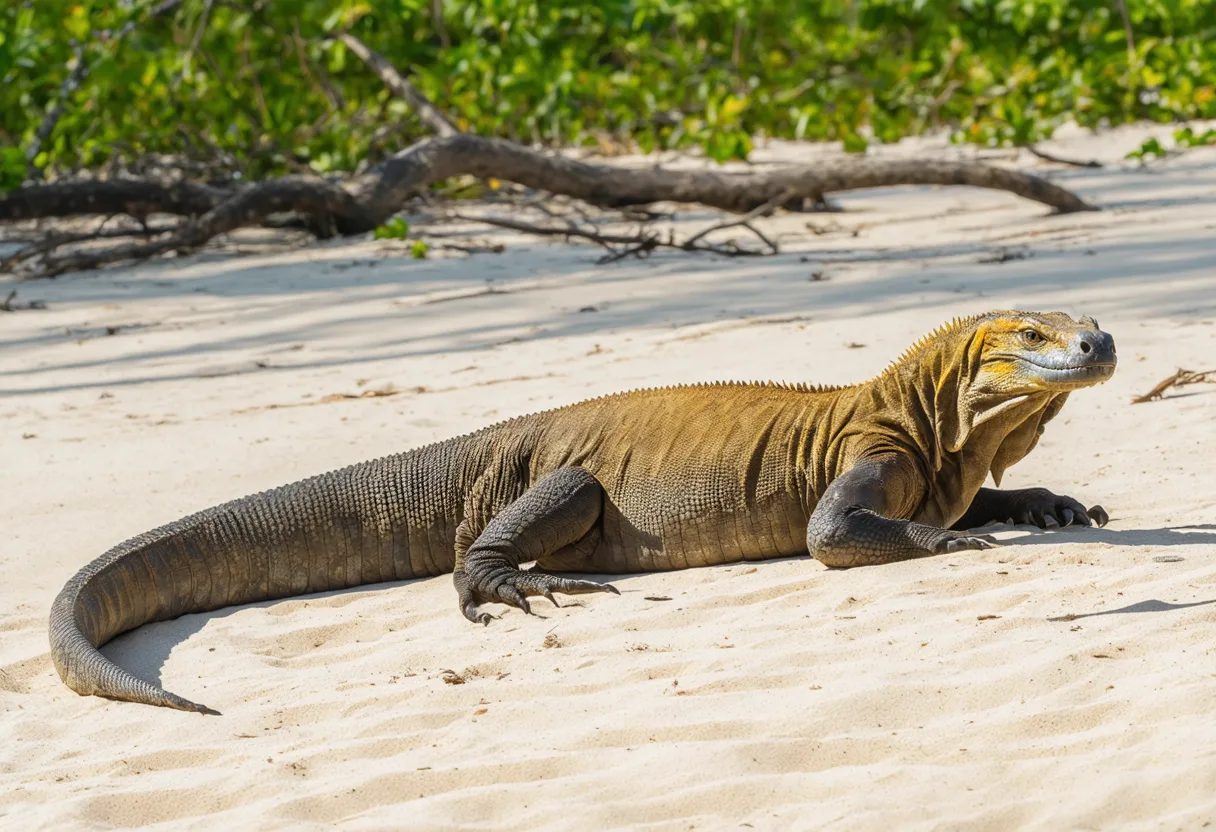
A Komodo dragon resting on a sandy beach
Komodo dragon
Varanus komodoensis
A newly hatched Komodo dragon weighs less than 100 grams and is about 40 centimetres long. By 5 years old it weighs about 25 kilograms and is about 2 metres long, and it begins to hunt larger prey. It keeps growing slowly all its life.
Source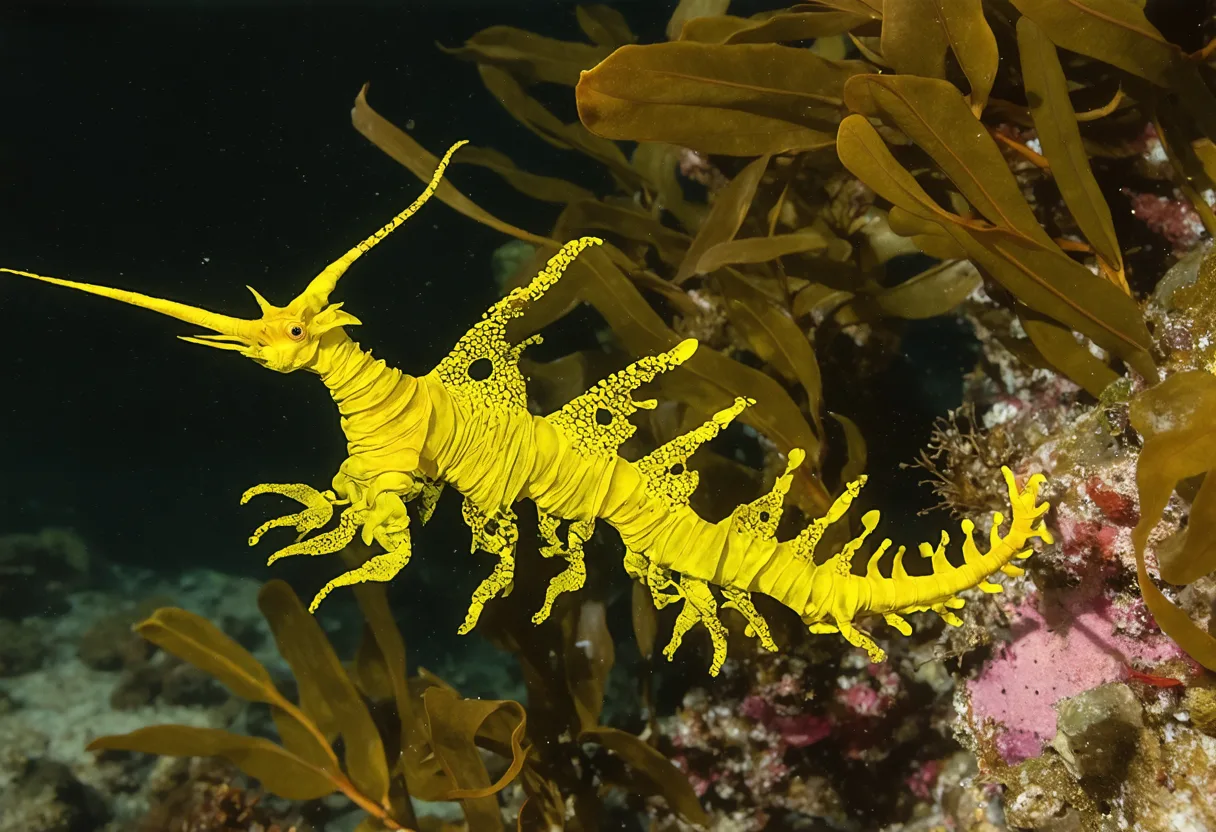
A leafy seadragon hiding among the kelp on a reef
Leafy seadragon
Phycodurus eques
It feeds by sucking up small creatures, such as tiny mysid shrimps, through its long, pipe-like snout. Its leafy flaps are not used for swimming. It moves with small, almost see-through fins on its neck and back. It is the marine emblem of South Australia.
SourceDraco flying lizards
Draco
There are 41 species. They live in trees and eat insects, in forests across South-east Asia, and one species lives in southern India. Their name, Draco, comes from the Latin word for the dragons of myths.
SourceThe pictures on this page are AI-generated illustrations. The facts are checked against the sources linked.