Open your worlds
Your wish list — the plush you mean to keep.
Press Add to a collection on any plush in the shop: start a collection of your own, or keep it on your wish list. Sign in and both follow you to any device.
Open my wish list →Menu
The real duck on the water
Ducks are waterbirds in the same family as swans and geese. Here are three true things about them.
Almost everywhere
Ducks are found on every continent except Antarctica. They live on both fresh water and sea water.
SourceNamed for diving
The word "duck" comes from the Old English word for "diver". It comes from a verb meaning "to dive", or to duck down low.
SourceGrounded for a while
Many kinds of duck cannot fly for a time while they moult their feathers. During this time they look for a safe place with plenty of food.
Source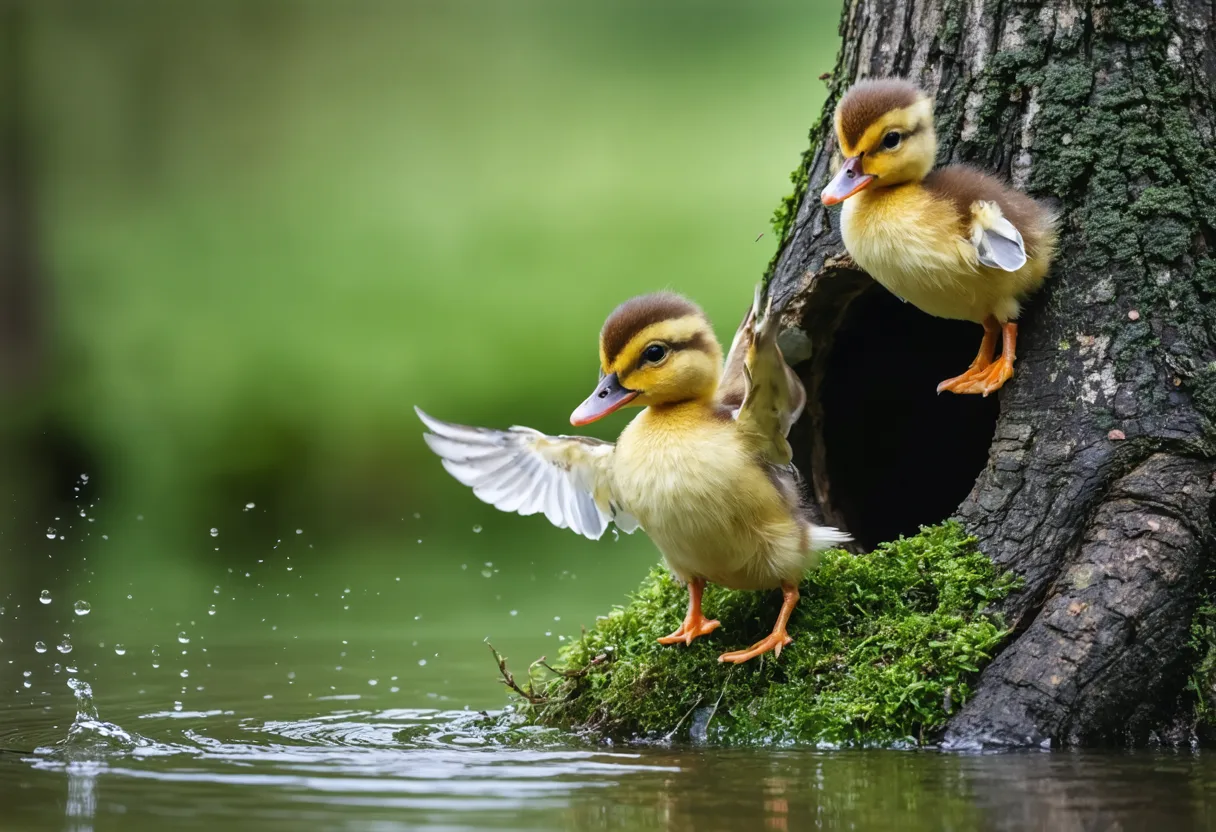
A mandarin duckling leaping from its nest hole high in a tree
First leap
Ducklings that jump from a tree
A female mandarin duck will build her nest in a hole in a tree, or in a nesting box, up to about 9 metres above the ground. The male guards the nest, but he does not help to keep the eggs warm. Soon after hatching, the ducklings leap from the nest to the ground when their mother calls. A typical brood has nine to twelve of them. These flexible little chicks land unhurt, then follow their mother to the water to feed. At one wetland reserve, staff put an old plastic water barrel in a tree, hoping owls would nest in it. A female mandarin moved in instead.
SourceQuack, quack
Not every duck says quack
We often say that ducks go "quack". Yet most kinds of duck do not quack. The classic quack comes from female mallards and several other ducks, such as the common teal and the northern pintail. Male mallards make a similar but raspier sound. Ducks also make many other calls, including whistles, cooing, yodels and grunts. The scaup, a diving duck, makes a noise like "scaup", which is how it got its name. There is also an old story that a duck's quack does not echo. In 2003, the Acoustics Research Centre at the University of Salford showed that this is not true.
SourceThree remarkable ducks
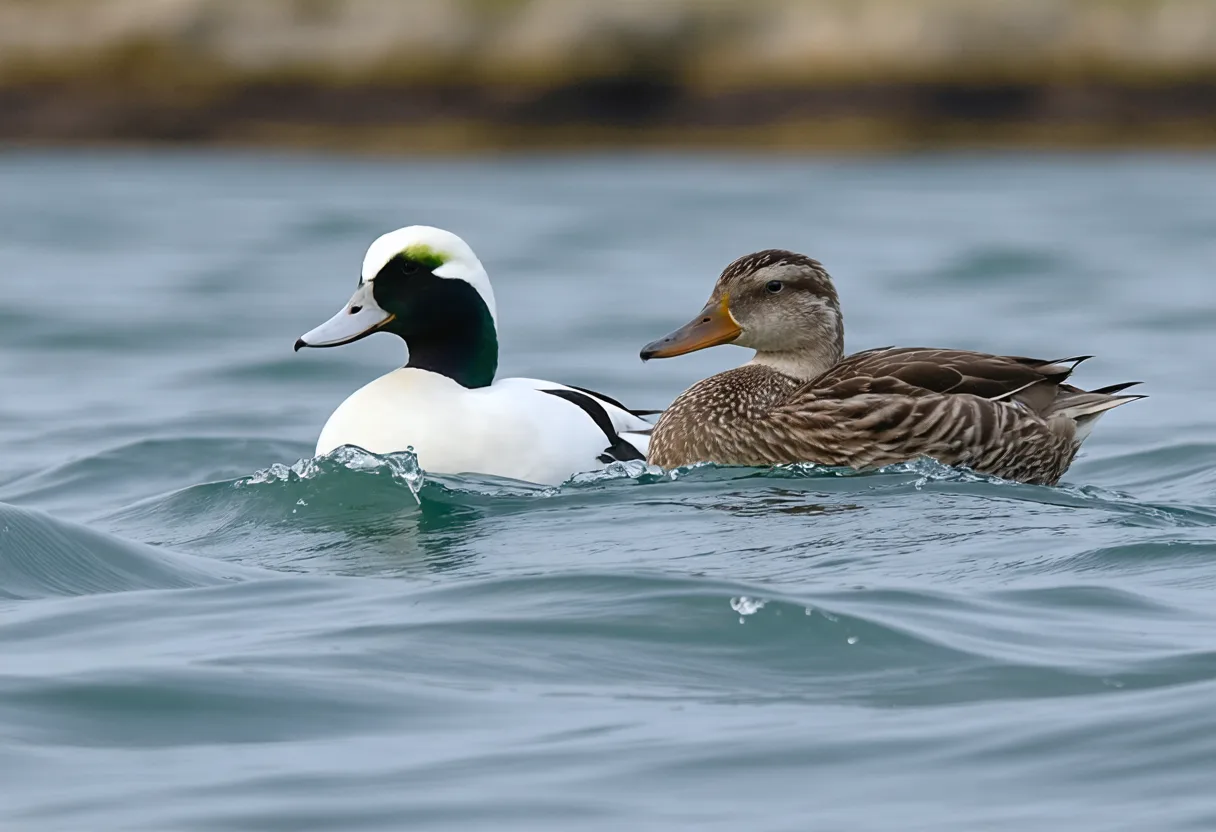
A male and female common eider on the sea near a rocky shore
Common eider
Somateria mollissima
The eider is the UK's heaviest and fastest flying duck. It is a true sea duck, and it is rarely found away from coasts.
Source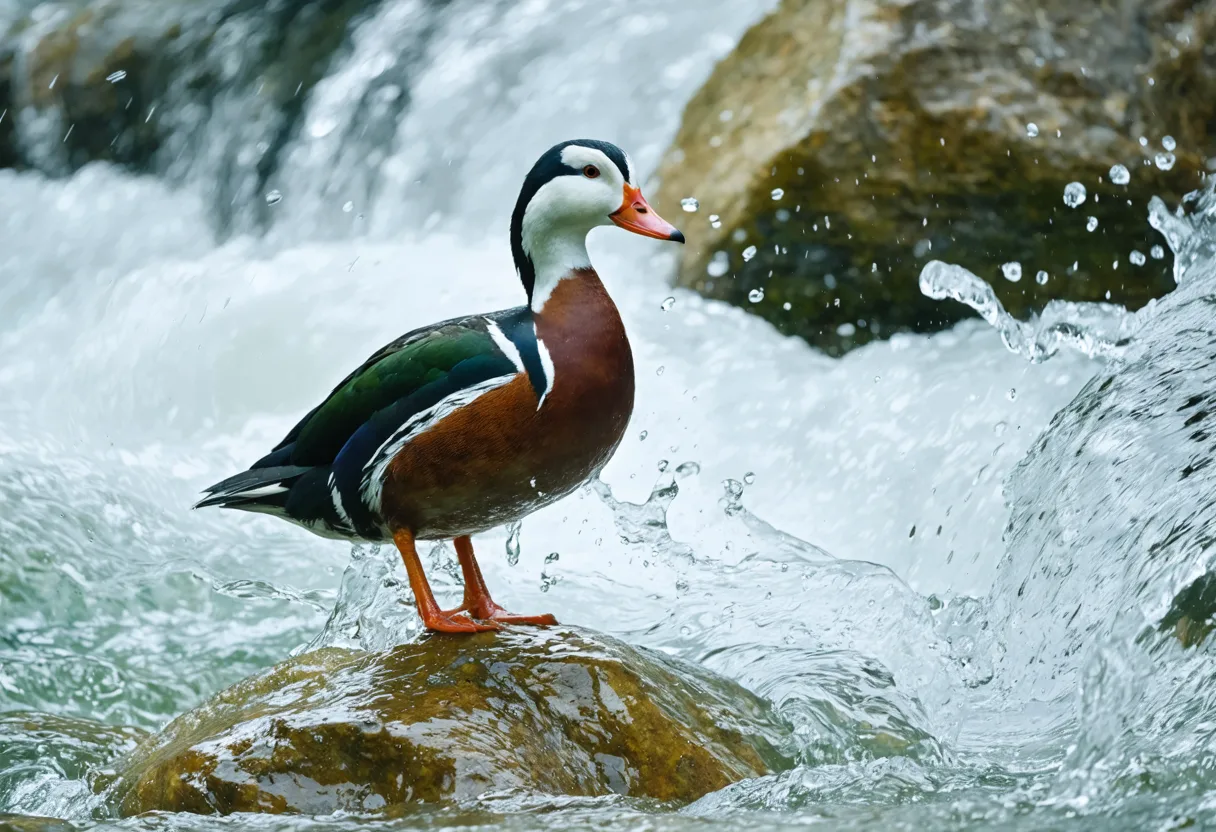
A torrent duck on a rock in a rushing mountain river
Torrent duck
Merganetta armata
This duck lives in the Andes of South America, on fast-flowing mountain rivers, usually above 1,500 metres. It is a powerful swimmer and diver, even in white water.
Source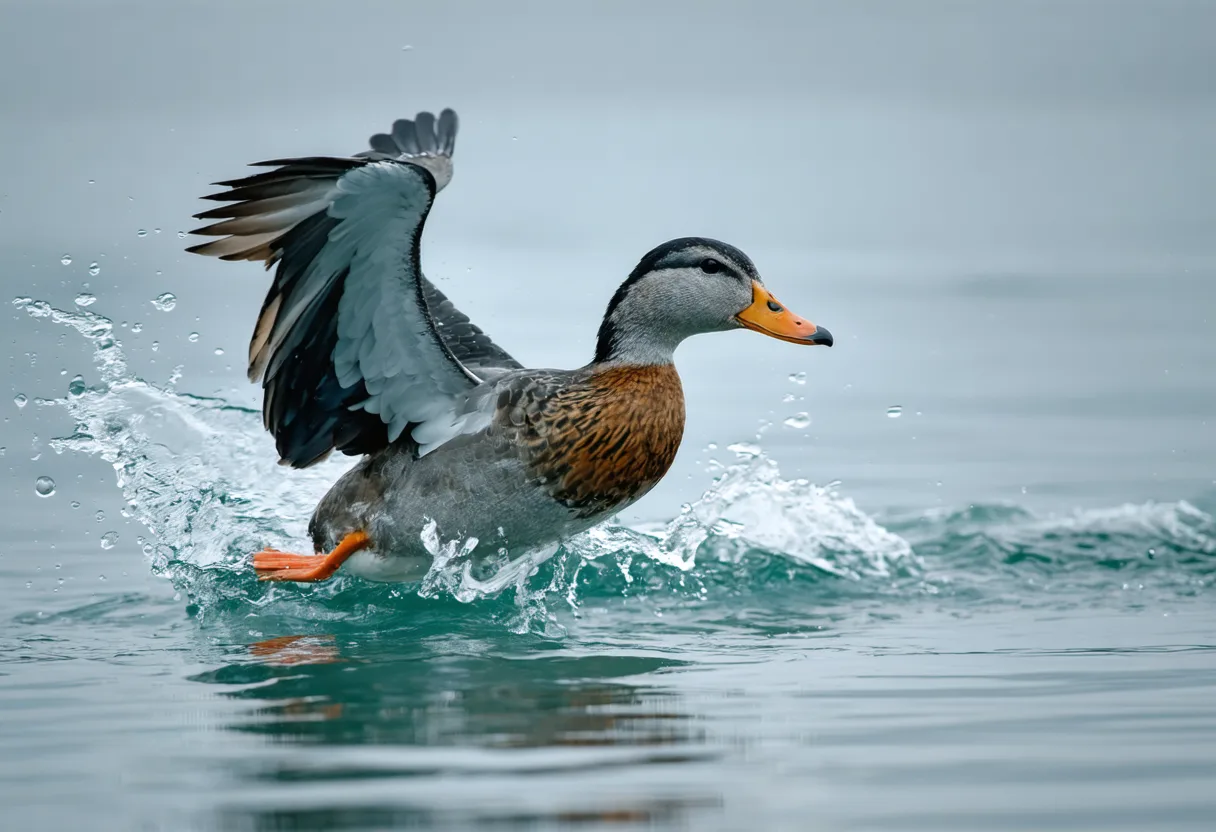
A Falkland steamer duck paddling across the water with its wings
Falkland steamer duck
Tachyeres brachypterus
This duck lives on the Falkland Islands and cannot fly. Steamer ducks get their name from the way they flap their wings and feet on the water, a little like an old paddle steamer.
SourceThe pictures on this page are AI-generated illustrations. The facts are checked against the sources linked.