Open your worlds
Your wish list — the plush you mean to keep.
Press Add to a collection on any plush in the shop: start a collection of your own, or keep it on your wish list. Sign in and both follow you to any device.
Open my wish list →Menu
The real hare in the field
Hares look a lot like rabbits, but they are a different group of animals. Here are three true things that set them apart.
Jackrabbits are hares
Hares make up the genus Lepus. Several of them are called jackrabbits, but they are hares, not rabbits.
SourceBorn ready to go
Hares give birth above ground in forms, shallow dips or flattened nests of grass. Their young are born fully furred and with their eyes open, and can fend for themselves soon after birth. Rabbits are born blind and hairless.
SourceBuilt for speed
Most hares are fast runners with long, powerful hind legs. Hares can run at up to 80 kilometres an hour over short distances.
Source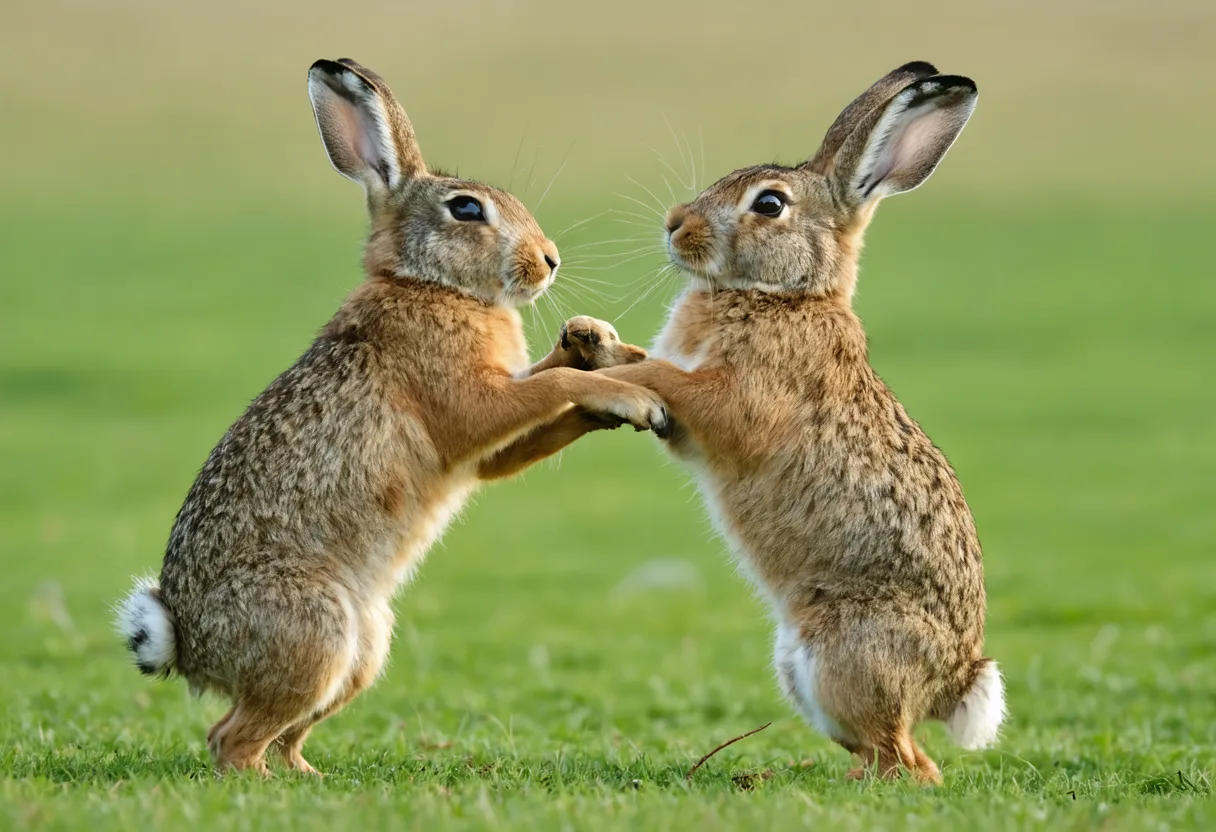
Two brown hares boxing in a spring field
Spring boxing
Two hares in a ring
The brown hare is golden-brown, with a pale belly, a white tail and long ears with black tips. It is thought to have come to the UK in Roman times, or even earlier. Brown hares are easiest to see in early spring, when the breeding season brings fighting, or 'boxing'. If you spot brown hares boxing in a field, you are most likely watching a female warding off a male who wants to mate, not two males fighting. If a fight does happen, the two hares stand on their hind legs and attack each other with their front paws, pulling out fur. It looks like two boxers in a ring. When disturbed, brown hares bound away across the fields, often in a zigzag.
SourceNever tamed
The hare that is a rabbit
Rabbits have been domesticated, and farmers raise them for meat, fur and wool, as well as breeding them as pets. No hares have been domesticated. So what about the pet called the Belgian hare? It is not a hare at all. It is a breed of rabbit that has been bred to look more like a hare, most likely from Flemish Giant rabbits. There is a hidden difference between hares and rabbits, too. All hares have 48 chromosomes, while rabbits may have anywhere from 38 to 52.
SourceThree remarkable hares
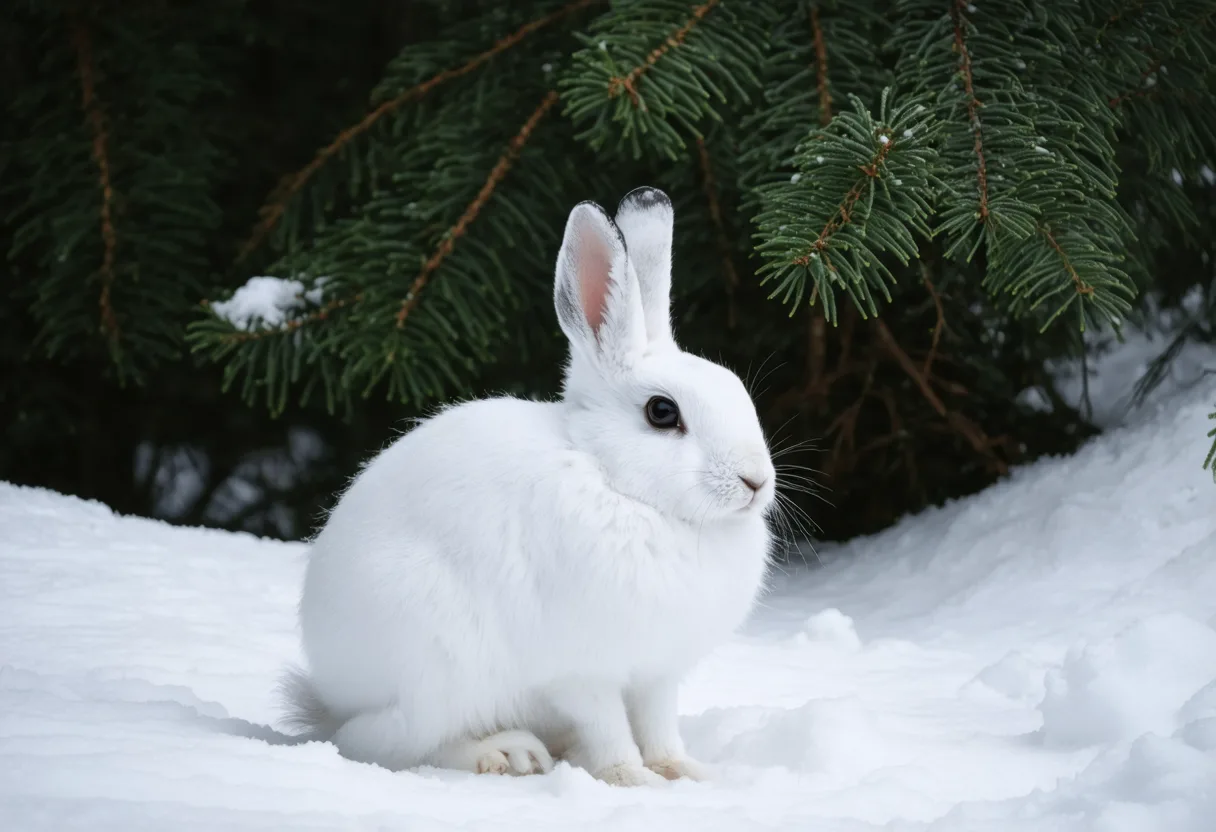
A snowshoe hare in its white winter coat
Snowshoe hare
Lepus americanus
It lives in North America. It is named for its large hind feet, which stop it sinking into soft snow, much like snowshoes. In summer its coat is rusty or greyish brown. In winter it is almost all white, apart from black eyelids and black ear tips.
Source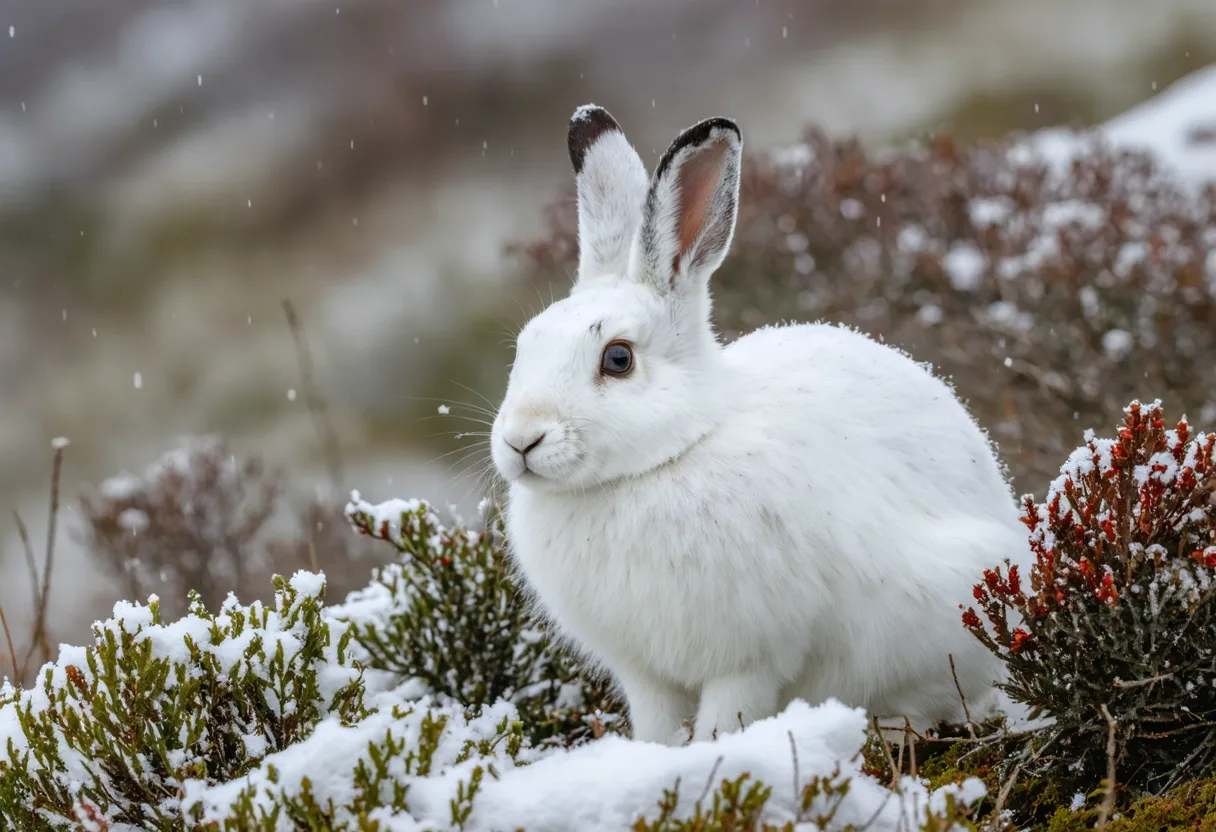
A mountain hare in its white winter coat in snowy heather
Mountain hare
Lepus timidus
It is a large hare, slightly smaller than the European hare. Its coat is brown in summer, and to get ready for winter most populations moult into white, or largely white, fur. Its tail stays completely white all year round.
Source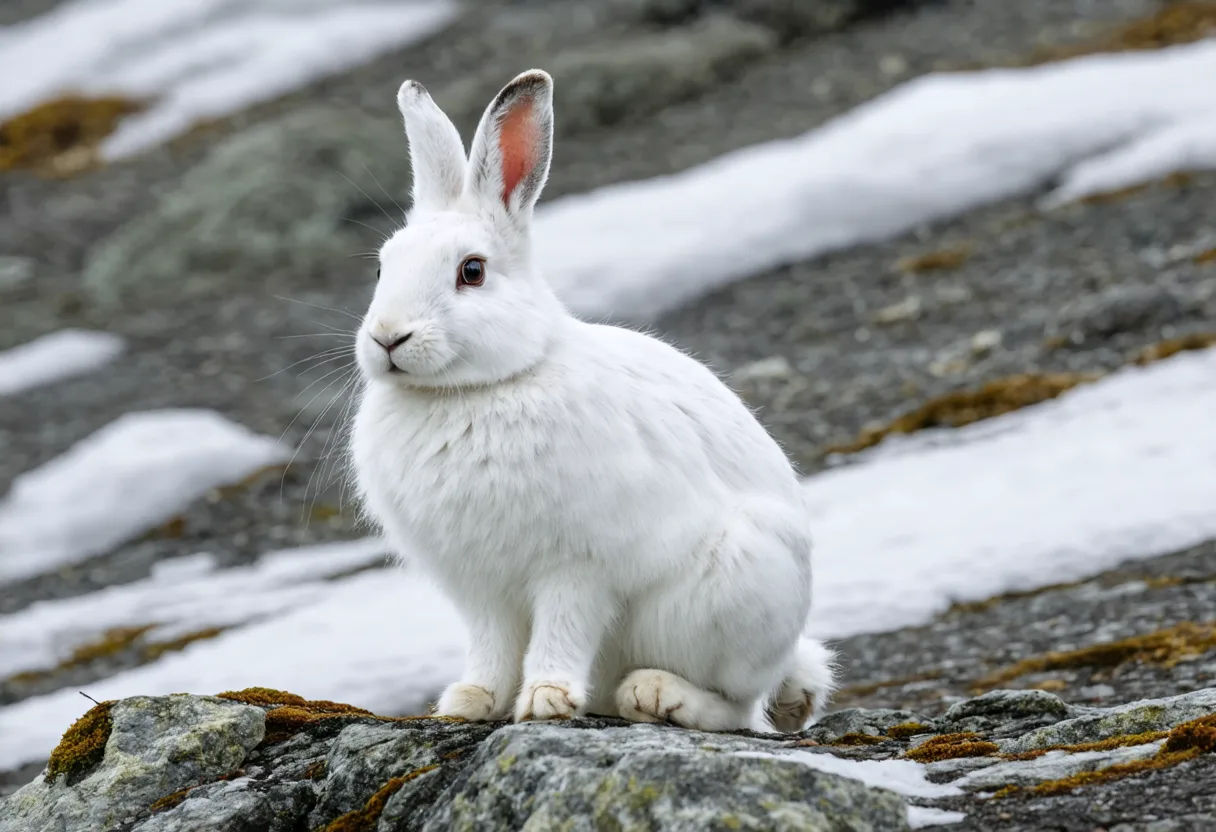
An Arctic hare on snowy tundra
Arctic hare
Lepus arcticus
It lives in the far north of Greenland and Canada, and farther south in Labrador and Newfoundland. It has short ears and legs, a small nose, a thick coat of fur, and fat that makes up close to 20 per cent of its body. It usually digs holes in the ground or under the snow to keep warm and to sleep.
SourceThe pictures on this page are AI-generated illustrations. The facts are checked against the sources linked.