Open your worlds
Your wish list — the plush you mean to keep.
Press Add to a collection on any plush in the shop: start a collection of your own, or keep it on your wish list. Sign in and both follow you to any device.
Open my wish list →Menu
Inside an octopus
Octopuses are soft-bodied sea animals with eight arms. Inside, they are built in surprising ways.
Three hearts
An octopus has three hearts. A main heart sends blood around the body, and two gill hearts pump it through the two gills.
SourceBluish blood
Octopus blood carries oxygen with a protein called haemocyanin, which is rich in copper. It gives the blood a bluish colour.
SourceThrough tiny gaps
Most of an octopus's body is soft, so it can squeeze through tiny gaps. Even the larger kinds can pass through a gap little more than 2.5 centimetres across.
Source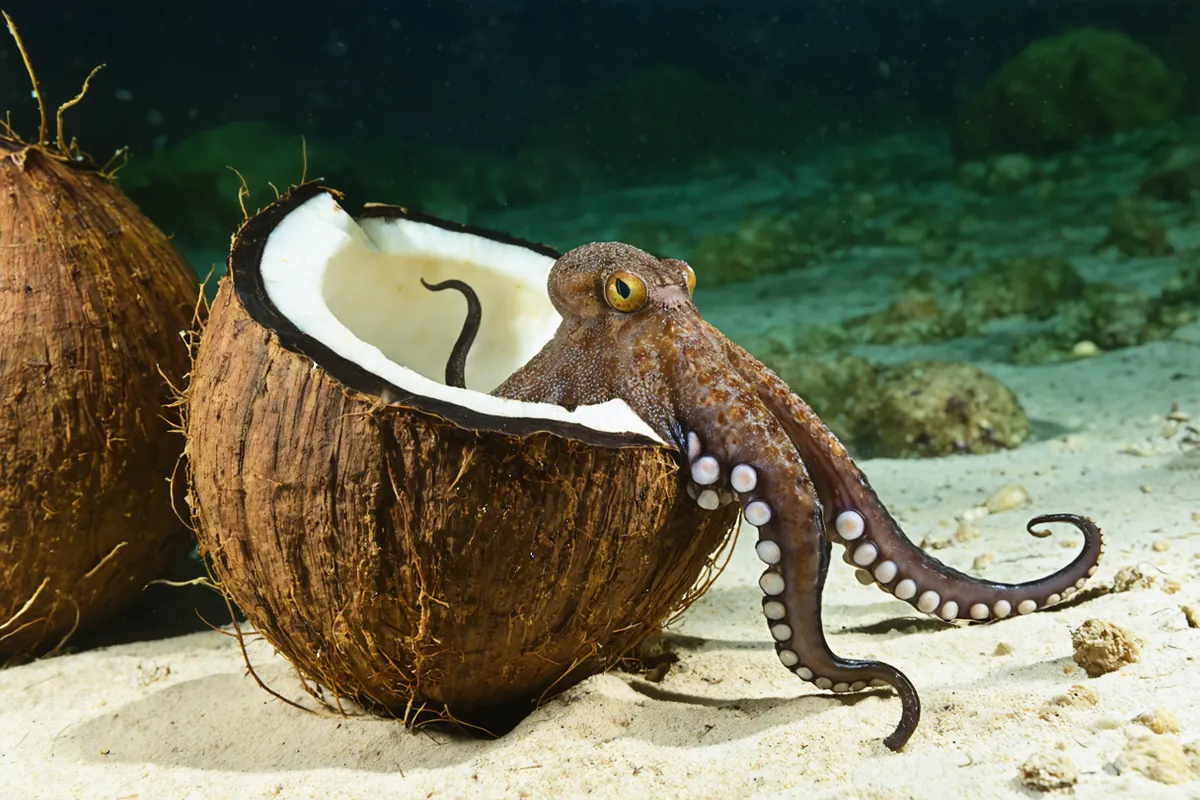
AI-generated illustration
Clever builder
The octopus that carries its house
In shallow waters of the Indian Ocean and the western Pacific, often on mud or sand, lives the coconut octopus. Its main body is usually only 5 to 10 centimetres long, and with its arms it can measure up to about 30 centimetres. It uses coconut shells and clamshells as a place to hide. It can carry coconut half-shells for up to 20 metres, then arranging them around its body. It has used litter such as bottles too. The coconut octopus can also walk on two arms, rolling along while its other six arms help to disguise it.
SourceGreat escape
Inky's journey home
In 2014 a fisherman found a common New Zealand octopus in a crayfish pot and brought him to the National Aquarium of New Zealand in Napier, where he was named Inky and given games and toys to play with. In early 2016, after his tank had been left slightly open following maintenance work, Inky is believed to have slipped out in the middle of the night. He crossed the floor, leaving octopus tracks behind him, and is thought to have gone down a 50-metre drain pipe that went out to sea. He was never found.
SourceThree remarkable octopuses
AI-generated illustration
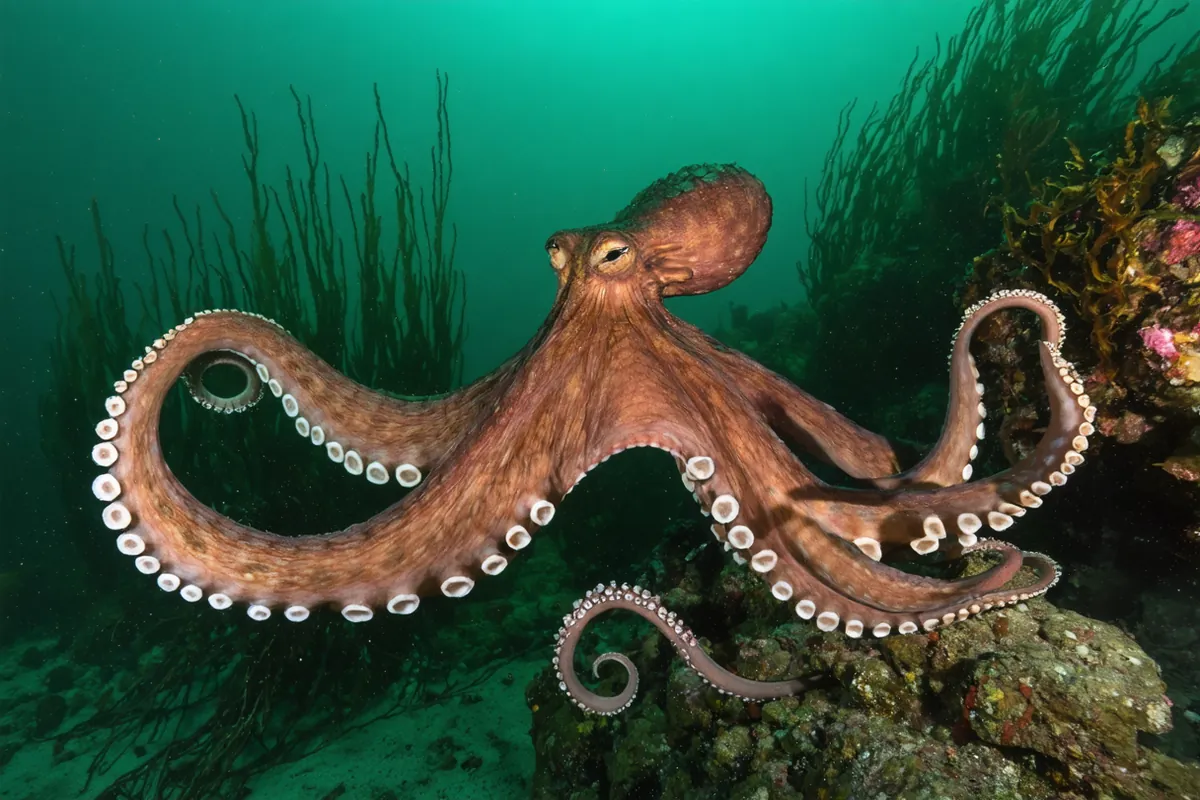
Giant Pacific octopus
Enteroctopus dofleini
Found along the coasts of the North Pacific, adults usually weigh around 15 kilograms and can spread their arms up to 4.3 metres across. Its largest suckers are about 6.4 centimetres wide.
Source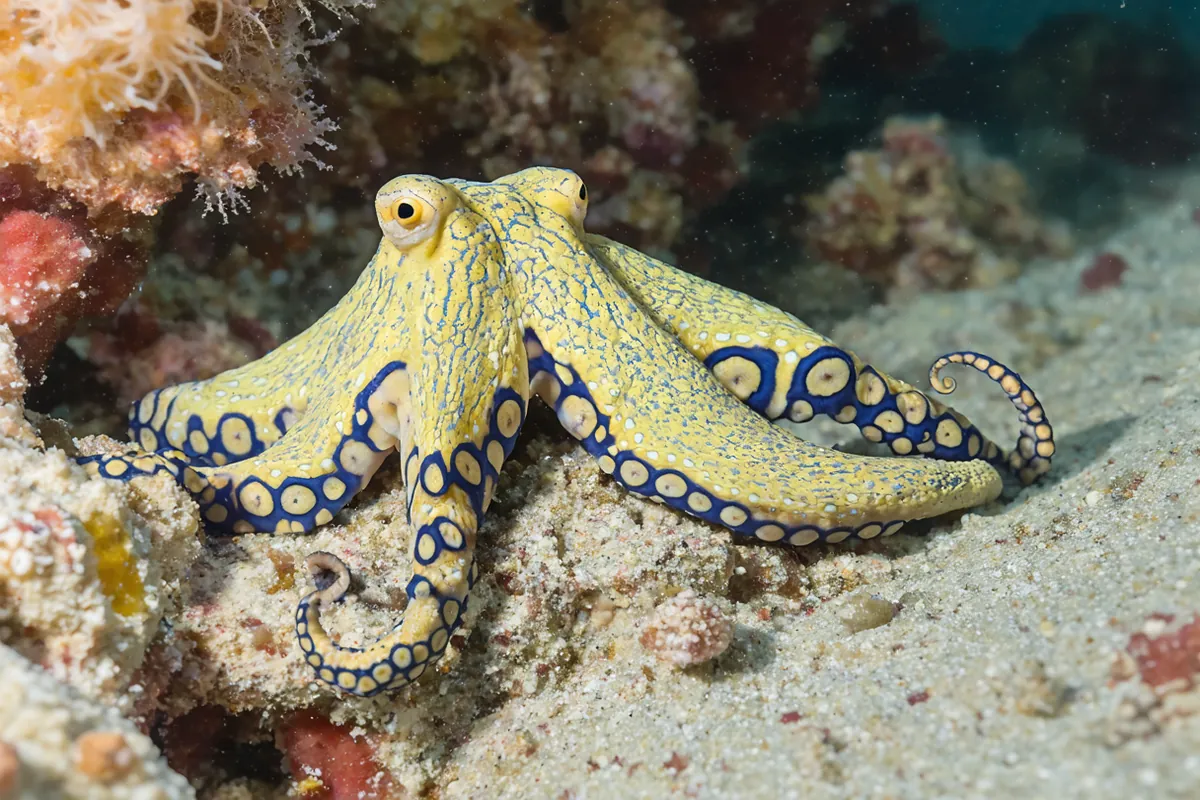
AI-generated illustration
Greater blue-ringed octopus
Hapalochlaena lunulata
Only 12 to 20 centimetres long, blue-ringed octopuses are venomous and live in the Pacific and Indian Oceans. When one is provoked, its skin turns bright yellow and its 50 to 60 rings flash blue within a third of a second.
Source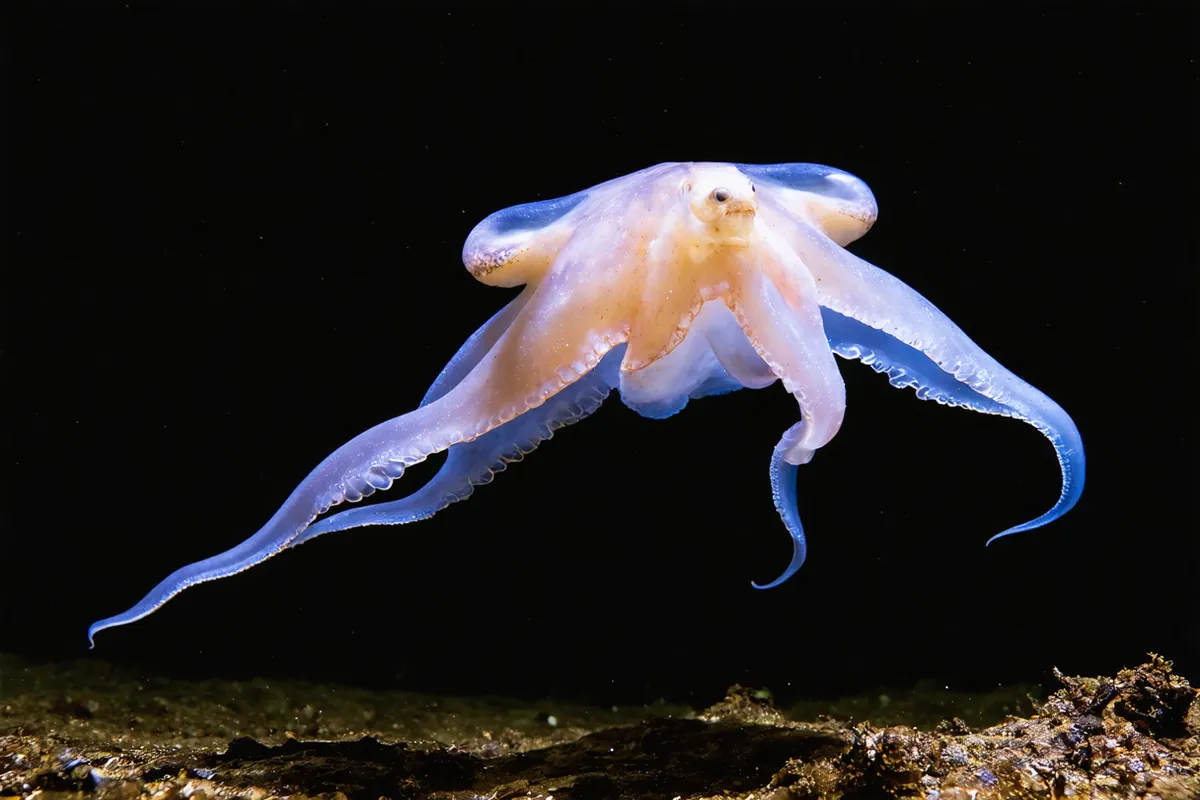
AI-generated illustration
Dumbo octopus
Grimpoteuthis
Dumbo octopuses are the deepest-living octopuses known, and in 2020 one was seen 6,957 metres down in the Java Trench. They move using two ear-like fins, one above each eye, and are named after the title character of Disney's 1941 film Dumbo.
SourceThe pictures on this page are AI-generated illustrations, not photographs. The facts are checked against the sources linked.