Open your worlds
Your wish list — the plush you mean to keep.
Press Add to a collection on any plush in the shop: start a collection of your own, or keep it on your wish list. Sign in and both follow you to any device.
Open my wish list →Menu
What makes a penguin a penguin
Penguins are birds that are at home in the sea. Here are three things worth knowing about penguins as a group.
Birds that swim, not fly
There are 18 species of penguins. They cannot fly, but they are excellent swimmers. They push themselves along with their flippers and use their feet and tail to steer.
SourceDressed for cold water
Penguins have a waterproof coat of short feathers that overlap. Under it is a well-developed layer of fat that keeps the warmth in.
SourceSalt water to drink
Almost all kinds of penguin come from the southern half of the world. Penguins can drink salt water, because a special gland filters the extra salt out of their blood.
Source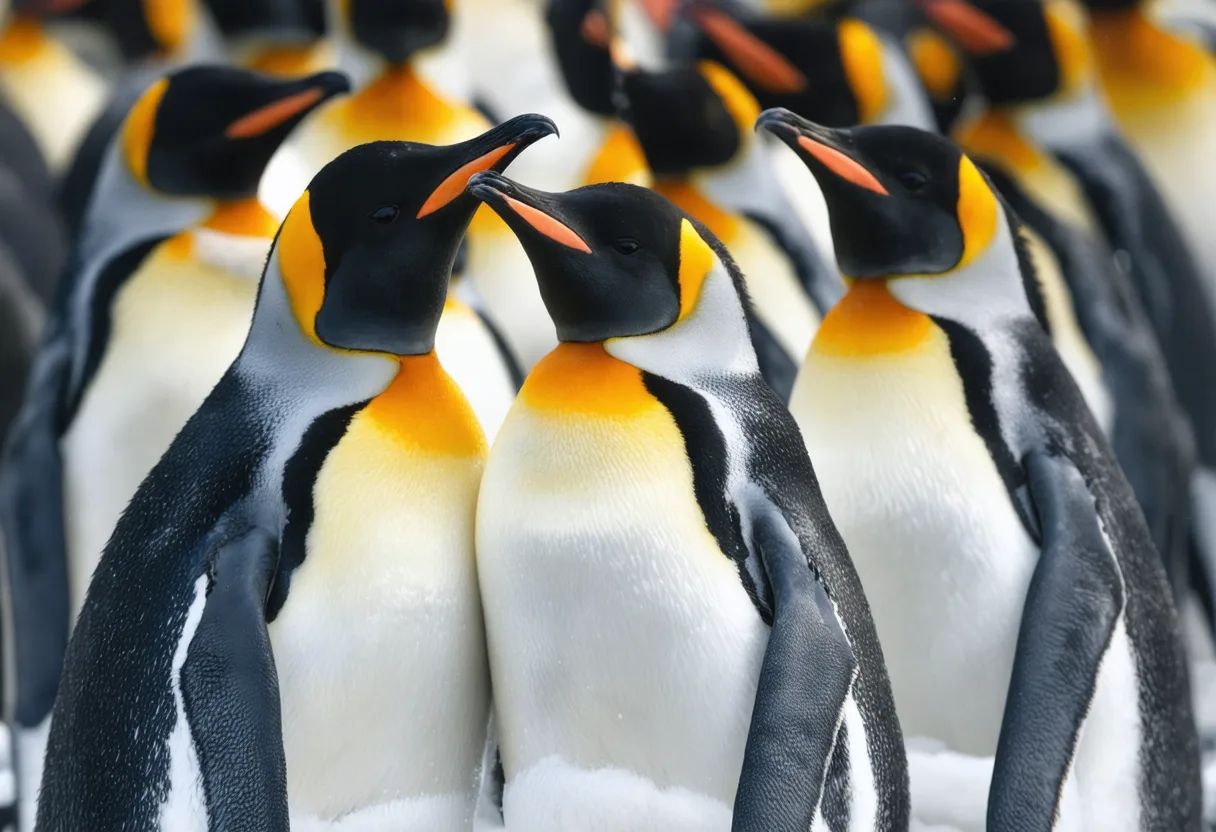
Emperor penguins huddled together against the snow
Winter fathers
The emperor penguin huddle
Emperor penguins are the only animals that breed during the Antarctic winter. Only the males look after the eggs. To keep warm, they close ranks and share their warmth in a huddle. As many as 10 of them pack into every square metre. Emperor colonies face blizzards of up to 200 kilometres an hour, yet inside a huddle it can be as warm as 24°C. The birds on the windy edge feel the cold most. One by one they peel off and shuffle, egg on feet, down the sides of the huddle to join it again on the sheltered side. Huddling cuts the heat they lose by as much as 50 per cent.
SourcePrecious stones
The Adélie penguin's pebble nest
In spring, Adélie penguins build nests out of the pebbles they find on dry land. They choose a sloping spot, so that when the snow melts, the water runs away from the nest. The more rocks in the nest, the better the chance of one or more chicks surviving. Adélies often steal rocks from other penguins. By mid-November there are 2 eggs in the nest, and the parents take turns to sit on them. In January, when the chicks are 3 weeks old, they are big enough to be left alone. While their parents are away, the chicks group together for protection and warmth.
SourceThree remarkable penguins
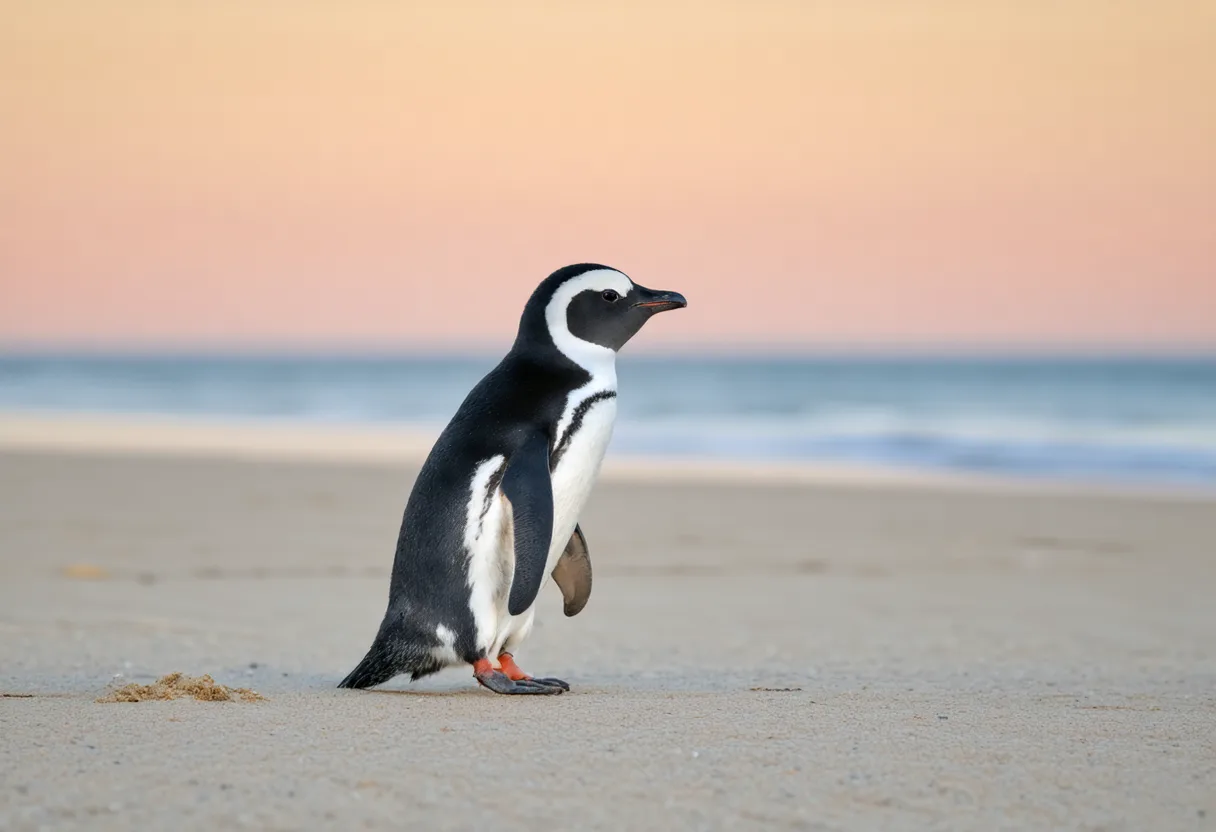
A little penguin coming ashore at dusk
Little penguin
Eudyptula minor
The smallest species of penguin in the world usually grows to between 30 and 33 centimetres tall. It has slate-blue feathers, comes from New Zealand and Australia, and returns to its burrow on the shore at dusk.
Source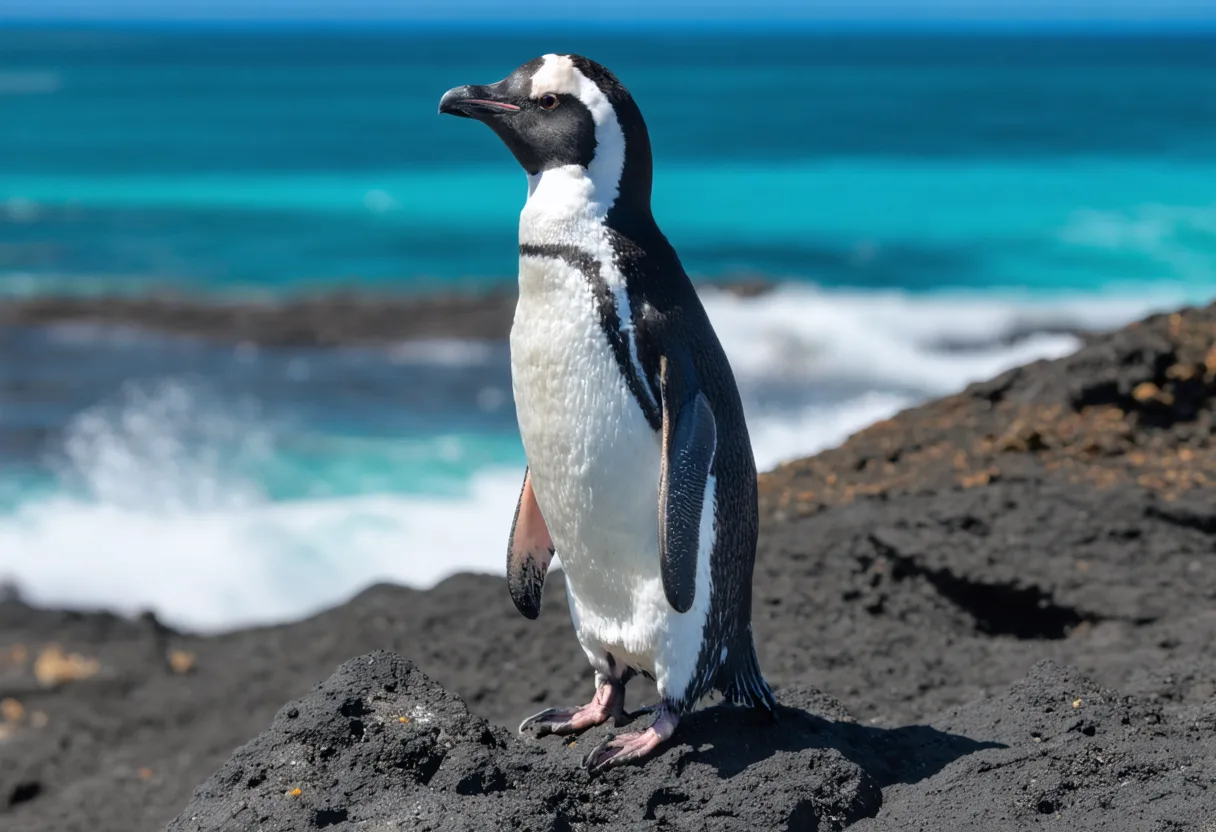
A Galápagos penguin hunched forward on volcanic rock
Galápagos penguin
Spheniscus mendiculus
It is the only penguin found north of the equator. Most live on Fernandina Island and the west coast of Isabela Island, where cool ocean currents let it survive in the tropics. To keep the sun off its feet, it may stretch out its flippers and hunch forward.
Source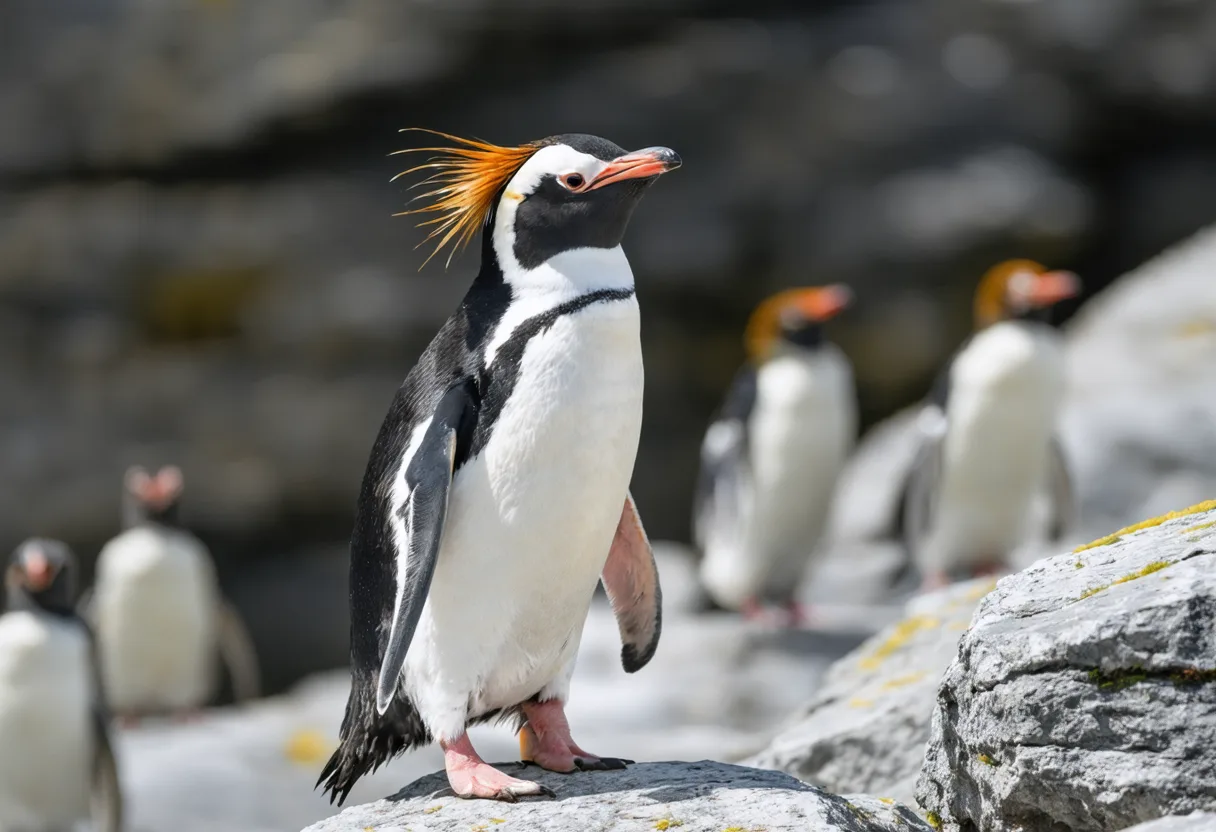
A macaroni penguin with its golden crest
Macaroni penguin
Eudyptes chrysolophus
Its scientific name comes from Greek words meaning 'good diver with a golden crest'. Unlike most other penguins, it lays two eggs each breeding season. The second egg is bigger than the first, and it is usually the only one that hatches.
SourceThe pictures on this page are AI-generated illustrations. The facts are checked against the sources linked.