Open your worlds
Your wish list — the plush you mean to keep.
Press Add to a collection on any plush in the shop: start a collection of your own, or keep it on your wish list. Sign in and both follow you to any device.
Open my wish list →Menu
The real rabbit in the grass
Rabbits are small plant-eating animals that live in many parts of the world. Here are three true things about how their bodies work.
Teeth that keep growing
All of a rabbit's teeth keep growing. In most rodents, only the front gnawing teeth, the incisors, do.
SourceEars that help with heat
A rabbit's ears are full of blood vessels. Rabbits have few or no sweat glands, so they keep their body temperature right by changing how much blood flows through their ears.
SourceEyes that see nearly all round
A rabbit can see nearly 360 degrees around it. It has a blind spot at the bridge of its nose, so it uses its lips and whiskers to tell what it is eating.
Source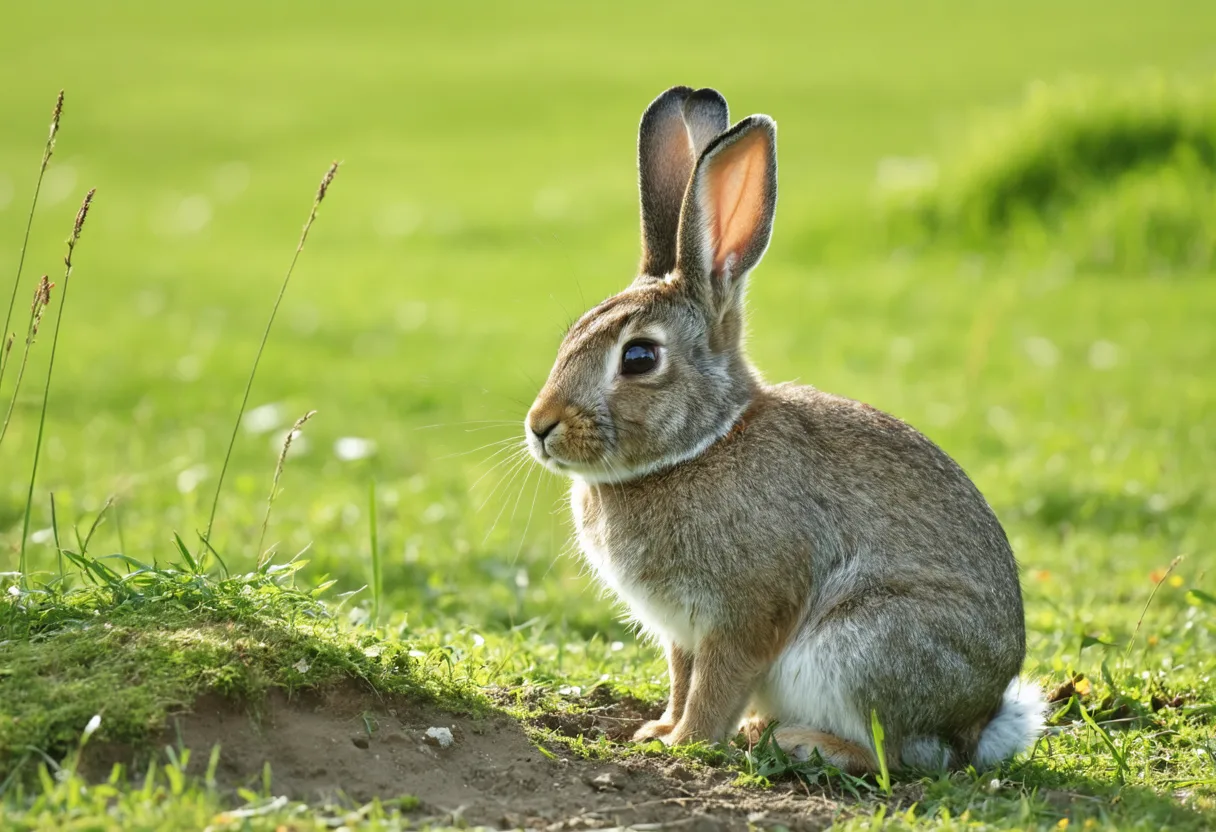
A wild rabbit sitting up still, watching for danger
On alert
Freeze, look, thump
Rabbits are prey animals. In Mediterranean Europe, for example, they are the main prey of red foxes, badgers and Iberian lynxes. A rabbit is constantly aware of what is around it. If it meets a possible threat, a rabbit may freeze and watch first. Then it may warn the others in the warren with powerful thumps on the ground from a hind foot. A good deal of a rabbit's wide view is spent scanning the sky above. Across the middle of each eye's retina runs a line called the visual streak, which lets it scan the horizon with little turning of its head. To get away, rabbits hop off to thick cover, and some species dive into burrows.
SourceSecond helpings
Why rabbits eat some droppings twice
Rabbits eat only plants, and their food is full of tough fibre. They usually graze grass when they wake up and come out of a burrow. The hard-to-digest fibre goes to a part of the gut called the caecum, where it ferments. The rabbit then passes it out as soft pellets called caecotropes, and eats them again. This time the goodness can be taken in, in the small intestine. Rabbits usually eat these soft pellets while resting underground. Rabbits cannot vomit, and their gut can become blocked, often because they have eaten too little fibre.
SourceThree remarkable rabbits
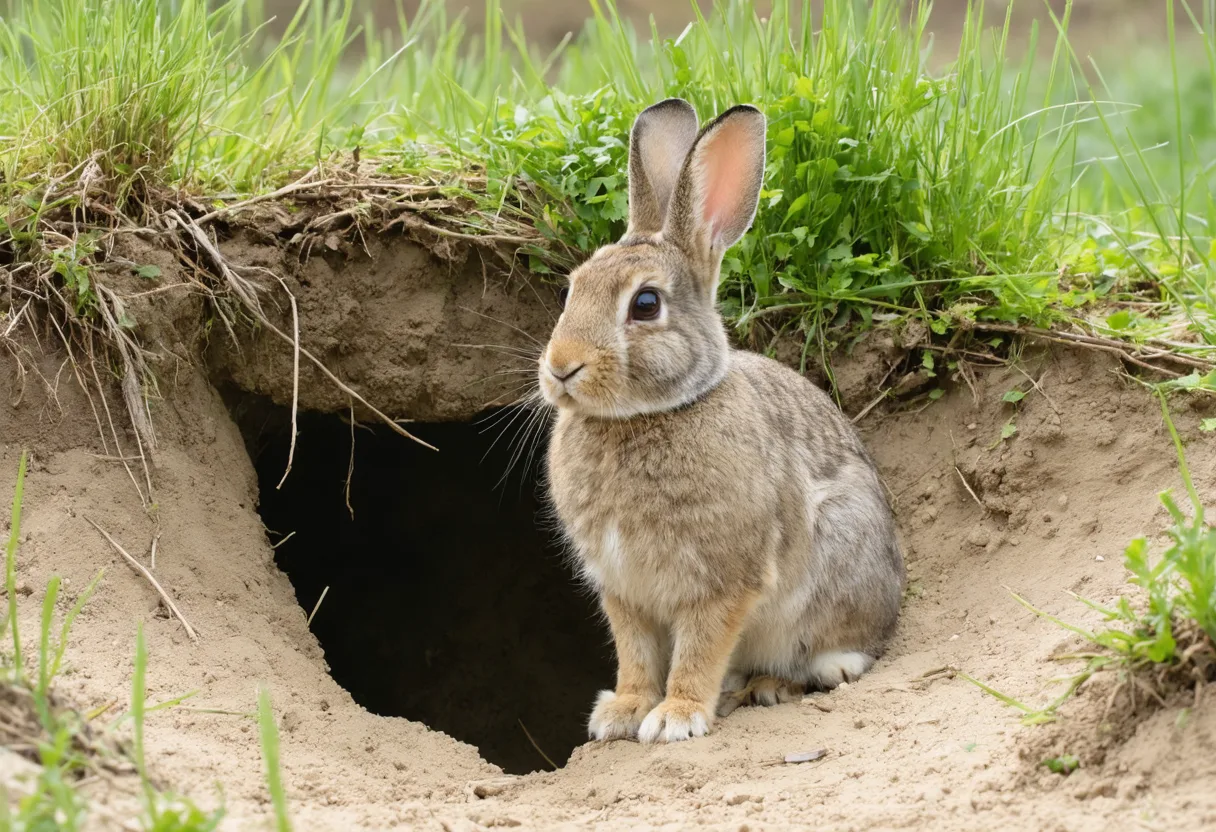
A European rabbit peeping out of its burrow
European rabbit
Oryctolagus cuniculus
It is native to the Iberian Peninsula and south-western France. All known breeds of tame, domestic rabbit come from it. It is well known for digging networks of burrows, called warrens.
Source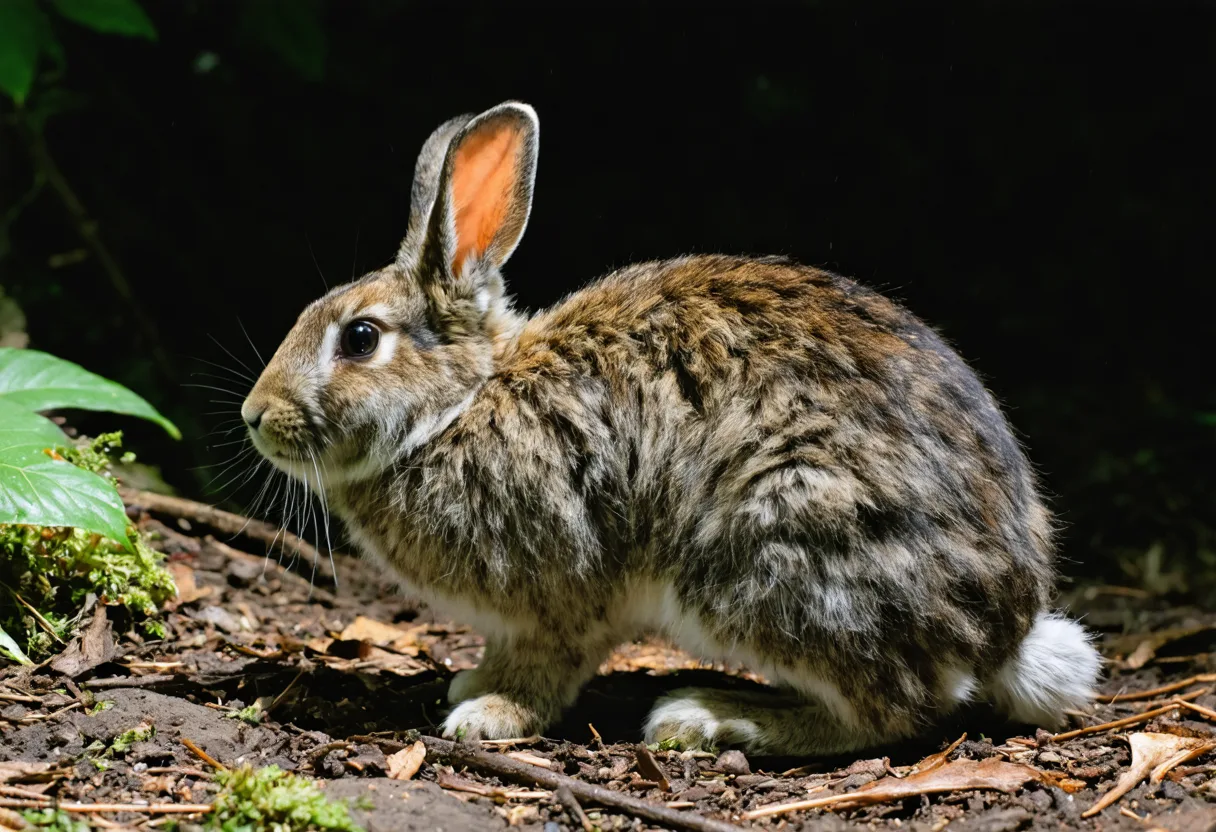
An Amami rabbit on the forest floor at night
Amami rabbit
Pentalagus furnessi
It is found only on Amami Ōshima and Tokunoshima, two small islands in Japan. By day the mother digs a hole for her young to hide in. At night she nurses them, then closes the hole with soil and plants by thumping on it with her front paws.
Source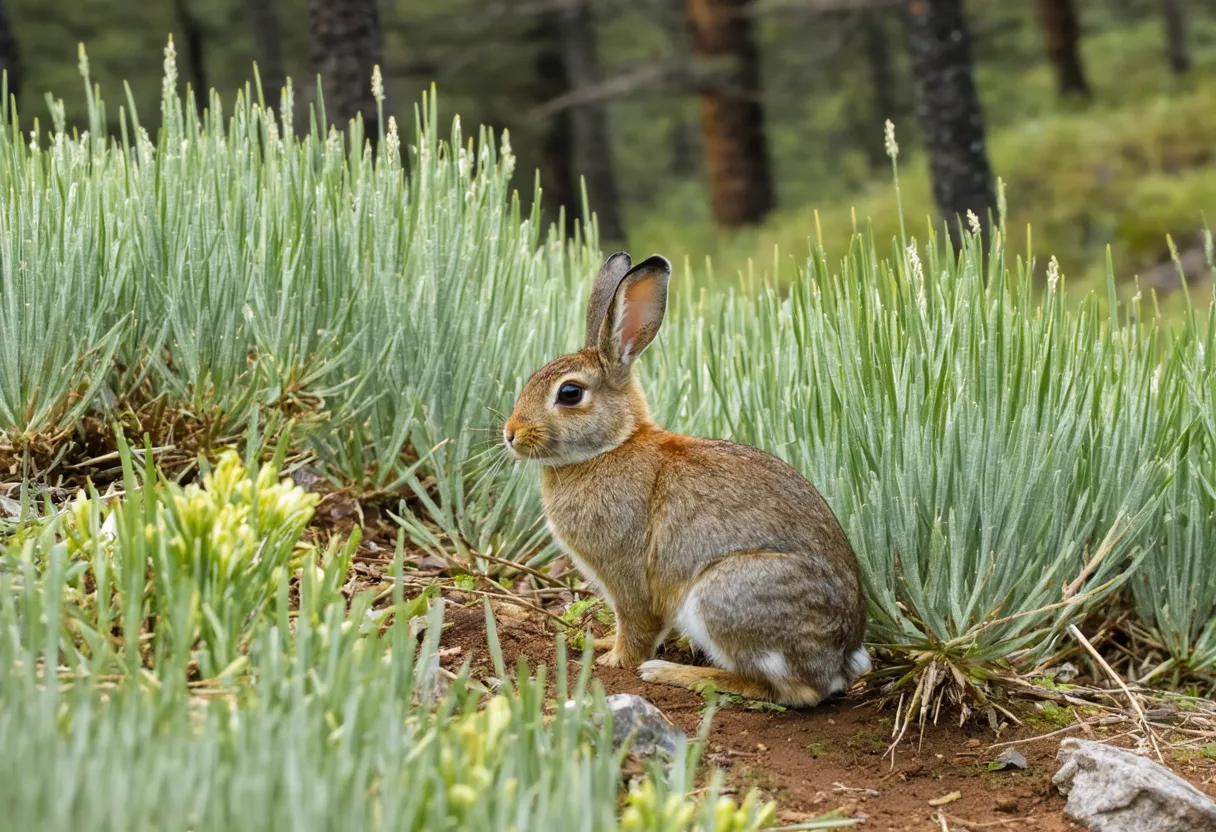
A volcano rabbit among tall clumps of grass
Volcano rabbit
Romerolagus diazi
It is one of the world's smallest rabbits, with small, rounded ears. It lives around four volcanoes just south-east of Mexico City. It makes high-pitched sounds to warn other rabbits of danger, a habit common in its relatives the pikas.
SourceThe pictures on this page are AI-generated illustrations. The facts are checked against the sources linked.