Open your worlds
Your wish list — the plush you mean to keep.
Press Add to a collection on any plush in the shop: start a collection of your own, or keep it on your wish list. Sign in and both follow you to any device.
Open my wish list →Menu
Wonders of seals
Seals (the true seals, family Phocidae, and the fur seals, which belong with the sea lions)
What makes a seal a seal
There are two kinds of animal we call seals: the true seals, and the fur seals. Here are three things worth knowing about them.
Ear holes, not ears
True seals have ear holes but no ears on the outside. Under their skin is a smooth layer of blubber, which helps control their body temperature.
SourceFur seals can walk
Fur seals are much more closely related to sea lions than to true seals. Like sea lions, they have ears on the outside and can walk on all fours.
SourceVery rich milk
True seal mothers make thick milk that is rich in fat. Pups feed on it for five to seven weeks in the monk seal, but for just three to five days in the hooded seal.
Source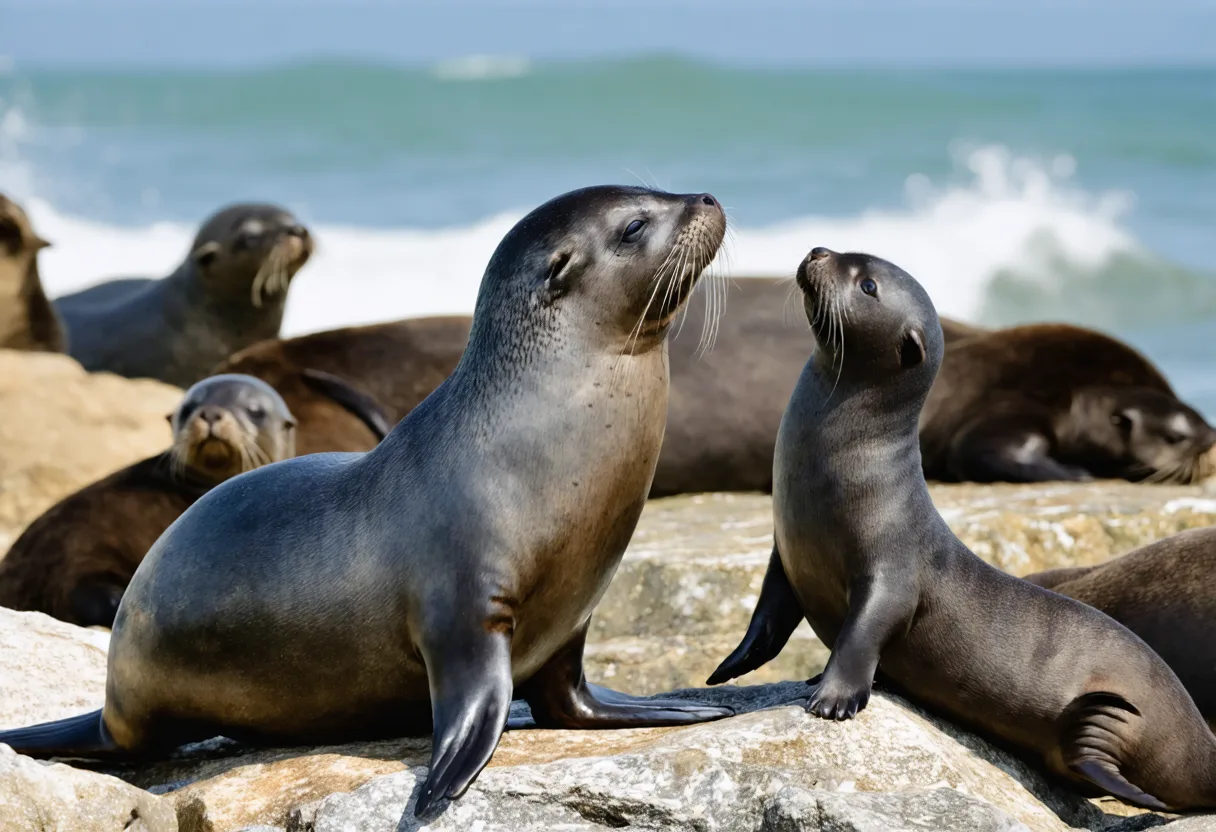
A fur seal mother calling to her pup on a crowded shore
A noisy beach
How a fur seal mother finds her pup
Every summer, fur seals gather in large groups at particular beaches or rocky outcrops to give birth and breed. The males arrive a few weeks early to fight for a territory. When the females arrive, they give birth to their pups. Soon the mothers begin a feeding cycle. A mother typically spends about 5 days feeding at sea, and most mothers travel around 200 kilometres from the beach. Then she comes back to feed her pup for about 2 days. On a crowded beach, how do they find each other? Mothers and pups know each other by their calls.
SourceComing back
The fur seals that were hunted
Fur seals have dense underfur. For a long time, that made people hunt them for their fur. Many kinds were hunted heavily, especially during the 1800s. Numbers of many groups, including the Guadalupe fur seal, the northern fur seal and the Cape fur seal, fell sharply. Today most kinds of fur seal are protected, and hunting is mostly limited to people who hunt for their own food and needs. Most groups of fur seals are still growing in number as they recover from the hunting and other dangers of the past.
SourceThree remarkable seals
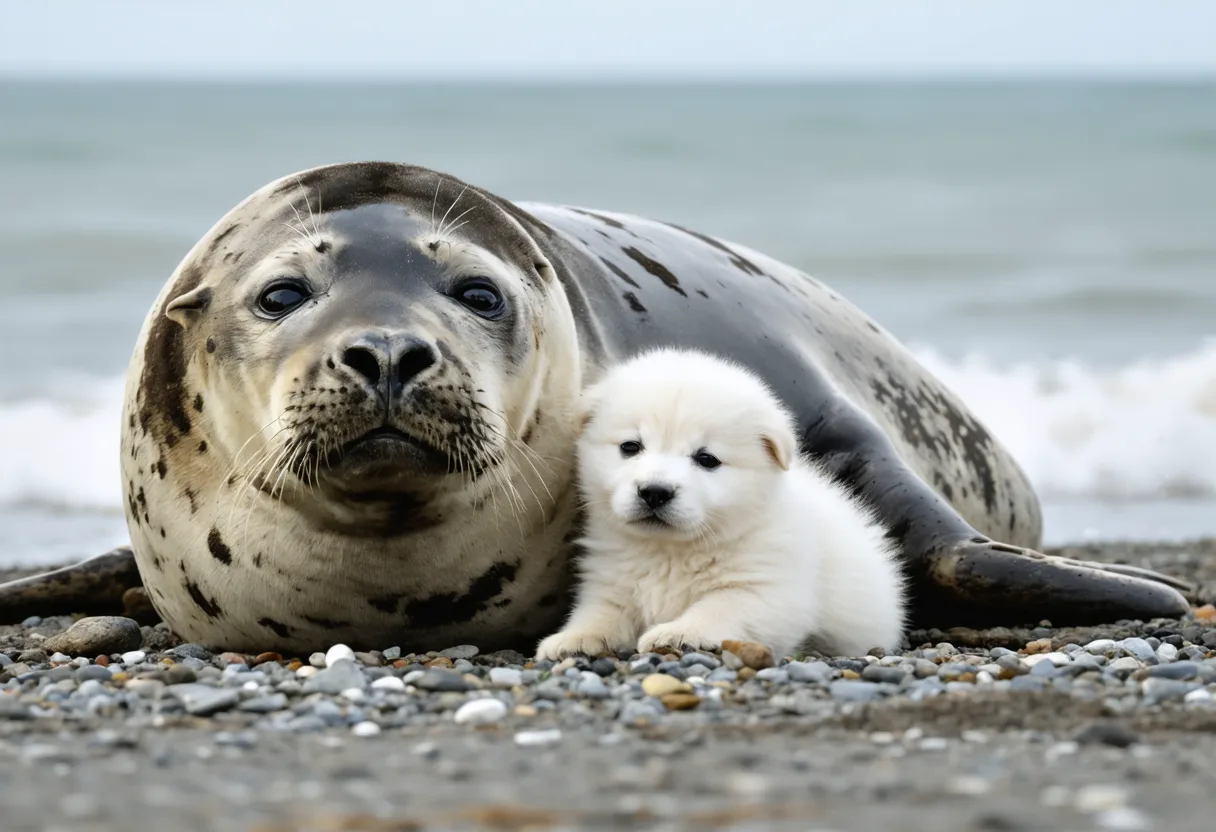
A grey seal with her fluffy white pup on a pebble beach
Grey seal
Halichoerus grypus
It has a long head with a sloping 'Roman nose', and gives birth to fluffy white pups in autumn and winter. In the early 20th century its numbers dropped to only 500. Now there are thought to be more than 120,000 grey seals in Britain, which is 40 per cent of all the grey seals in the world.
Source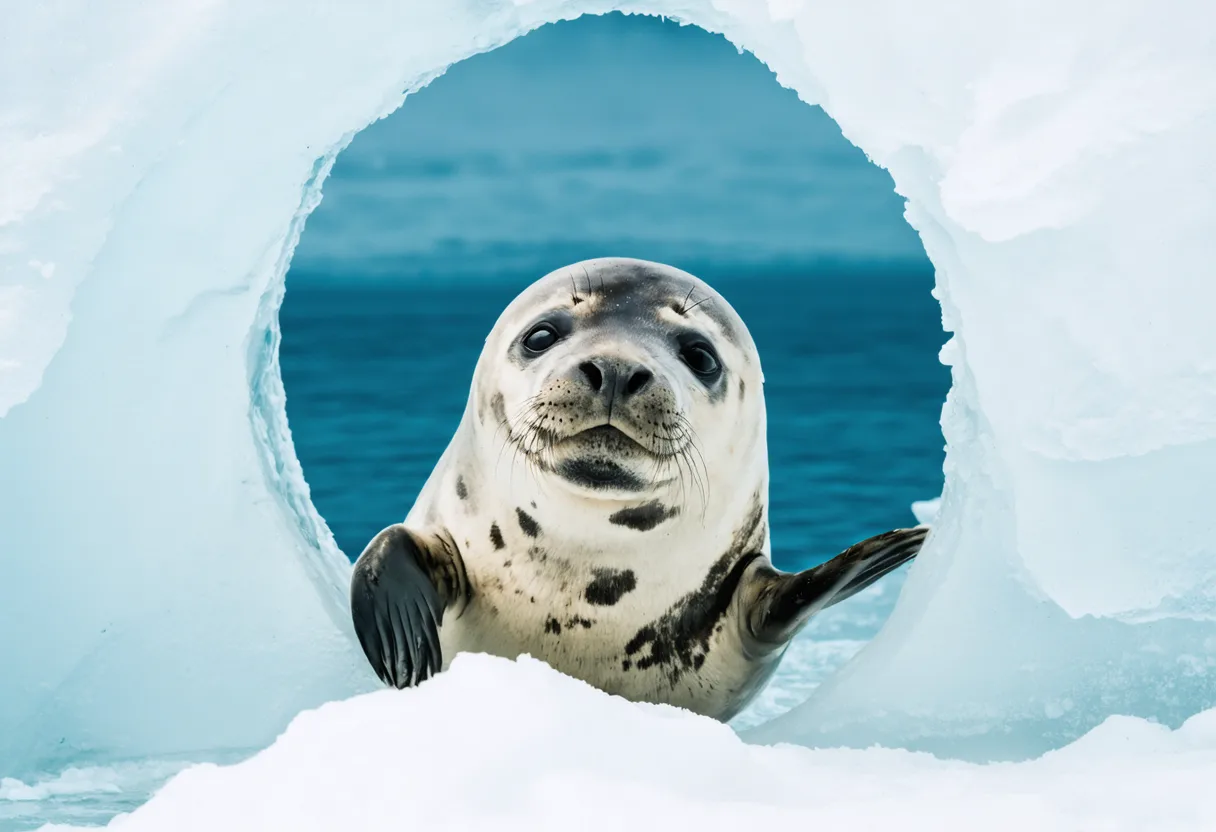
A Weddell seal coming up through a breathing hole in the ice
Weddell seal
Leptonychotes weddellii
It lives farther south than any other mammal that lives on the Antarctic continent all year round. It uses its teeth to scrape open breathing holes in the new ice. It can stay underwater for up to 45 minutes and dive as deep as 720 metres.
SourceSouthern elephant seal
Mirounga leonina
It is named after the large nose of the adult males, which they use to make loud roaring sounds. Adult males can weigh up to 3,000 kilograms. It can dive to over 1,500 metres and stay underwater for up to 2 hours.
SourceThe pictures on this page are AI-generated illustrations. The facts are checked against the sources linked.