Open your worlds
Your wish list — the plush you mean to keep.
Press Add to a collection on any plush in the shop: start a collection of your own, or keep it on your wish list. Sign in and both follow you to any device.
Open my wish list →Menu
The real squirrel family
Squirrels belong to a big family of animals with large front teeth. Here are three true things about them.
A shady tail
The word squirrel comes from an old Greek word made of 'shade' and 'tail'. It refers to the long bushy tail that many squirrels have.
SourceHundreds of kinds
There are some 285 species of squirrel. They are native to the Americas, Europe and Asia, and Africa, and people took them to Australia.
SourceTeeth that keep growing
Squirrels have large front teeth for gnawing. These teeth grow throughout the squirrel's life.
Source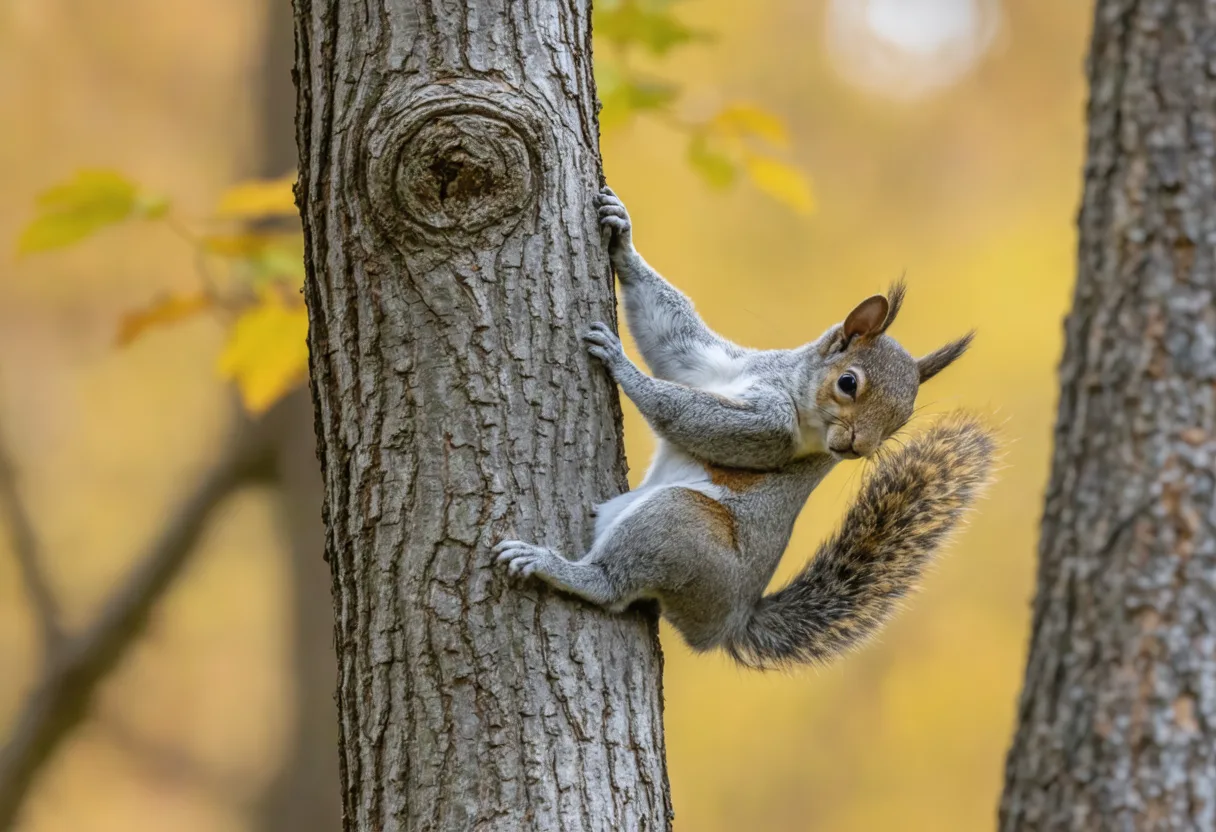
A squirrel climbing headfirst down a tree, back feet turned round
Headfirst
How a squirrel runs down a tree
Most mammals cannot climb down a tree headfirst, but tree squirrels can. Their feet help. In most squirrels the back legs are longer than the front legs, and every squirrel has four or five toes on each foot. The feet have soft pads underneath, and strong claws for gripping and climbing. The real trick is in the back legs. A tree squirrel can turn its ankles right round, by 180 degrees. Then its back feet point backwards, and they can grip the bark from the other direction. Squirrels also have large eyes and excellent vision, which is especially important for the squirrels that live in trees.
SourceBig and small
Tiny squirrels, giant squirrels and busy tails
Squirrels come in many sizes. At one end are the African pygmy squirrel and the least pygmy squirrel. They are only 10 to 14 centimetres long from nose to tail tip, and weigh just 12 to 26 grams. At the other end is the Bhutan giant flying squirrel, at up to 1.27 metres long. Big or small, a squirrel's tail does many jobs. It can keep rain, wind or cold off the squirrel. It can help it cool down when it is hot. It works as a counterbalance when the squirrel jumps about in trees, and as a parachute when it leaps. Squirrels also use their tails to signal.
SourceThree remarkable squirrels
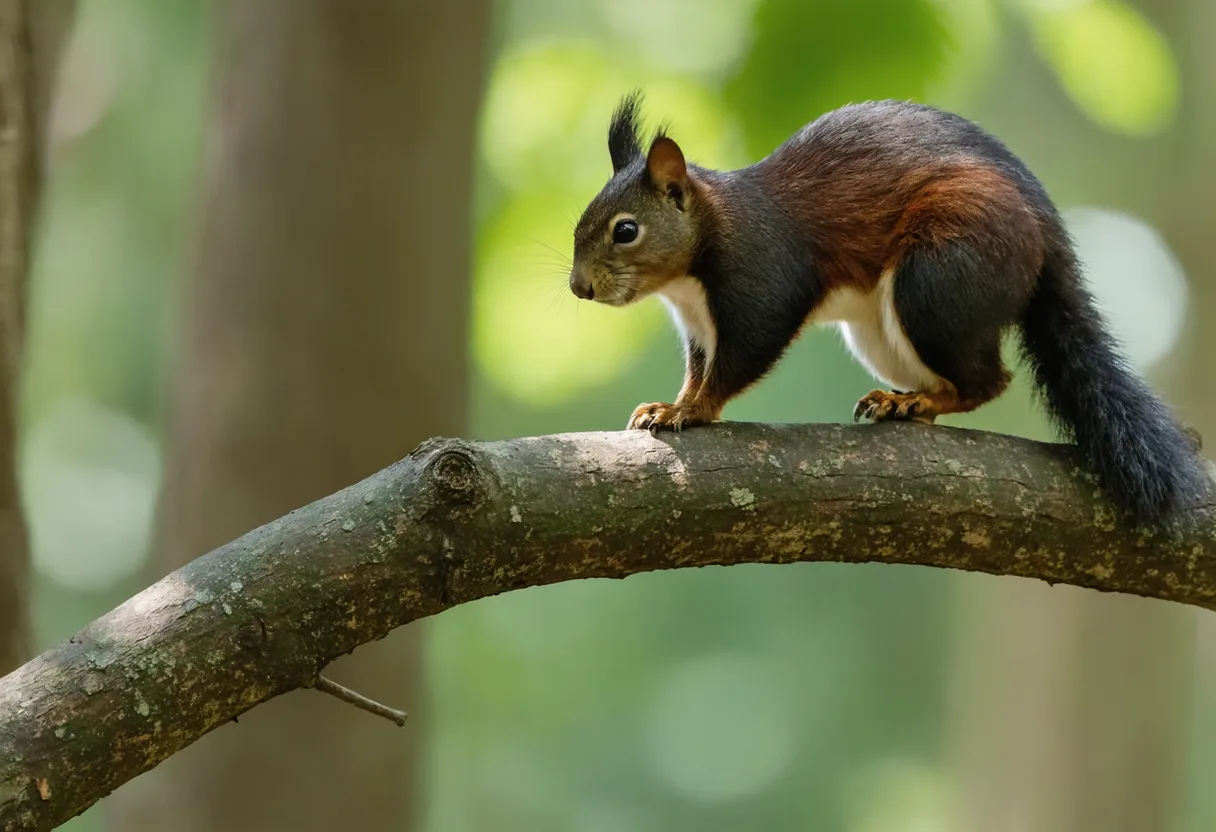
An Indian giant squirrel on a branch in a tropical forest
Indian giant squirrel
Ratufa indica
This large tree squirrel lives only in the forests and woodlands of India. Its fur can be cream, tan, rust, maroon, brown or black, and it travels from tree to tree with jumps of up to 6 metres.
SourceSouthern flying squirrel
Glaucomys volans
Flying squirrels do not really fly. They glide, using a furry flap of skin that stretches from the front legs to the back legs. Just before reaching a tree, this squirrel raises its flat tail to change direction sharply upwards.
Source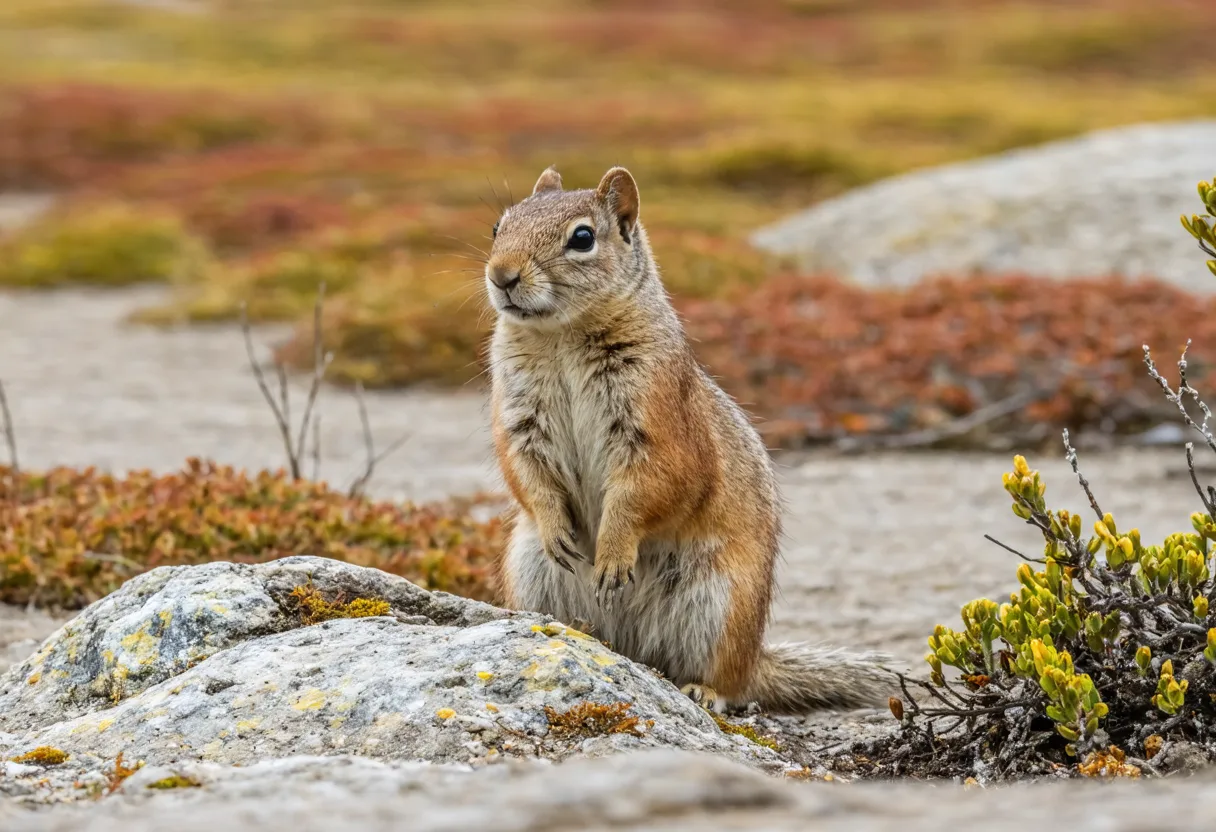
An Arctic ground squirrel beside its burrow on the tundra
Arctic ground squirrel
Urocitellus parryii
This squirrel lives on the tundra of Alaska, northern Canada and the Russian Far East. It hibernates for seven to eight months, and its body temperature can fall as low as minus 2.9 degrees Celsius.
SourceThe pictures on this page are AI-generated illustrations. The facts are checked against the sources linked.