Open your worlds
Your wish list — the plush you mean to keep.
Press Add to a collection on any plush in the shop: start a collection of your own, or keep it on your wish list. Sign in and both follow you to any device.
Open my wish list →Menu
Wonders of badgers
Badgers (the short-legged digging animals of the weasel and skunk families)
What makes a badger a badger
Badgers live in North America, Europe, Asia and Africa. Here are three things worth knowing about badgers as a group.
Built for digging
Badgers have short, wide bodies with short legs for digging. Their heads are long, like a weasel's, with small ears.
SourceA bite that holds on
The hinge of a badger's lower jaw fits into long hollows in its skull. This helps stop the jaw slipping out of place, and it makes the badger's bite grip stronger.
SourceTwo families, one shape
Animals called badgers belong to two different families: the weasel family and the skunk family. They are grouped together because of their squat bodies and digging ways, not because they are close relatives.
Source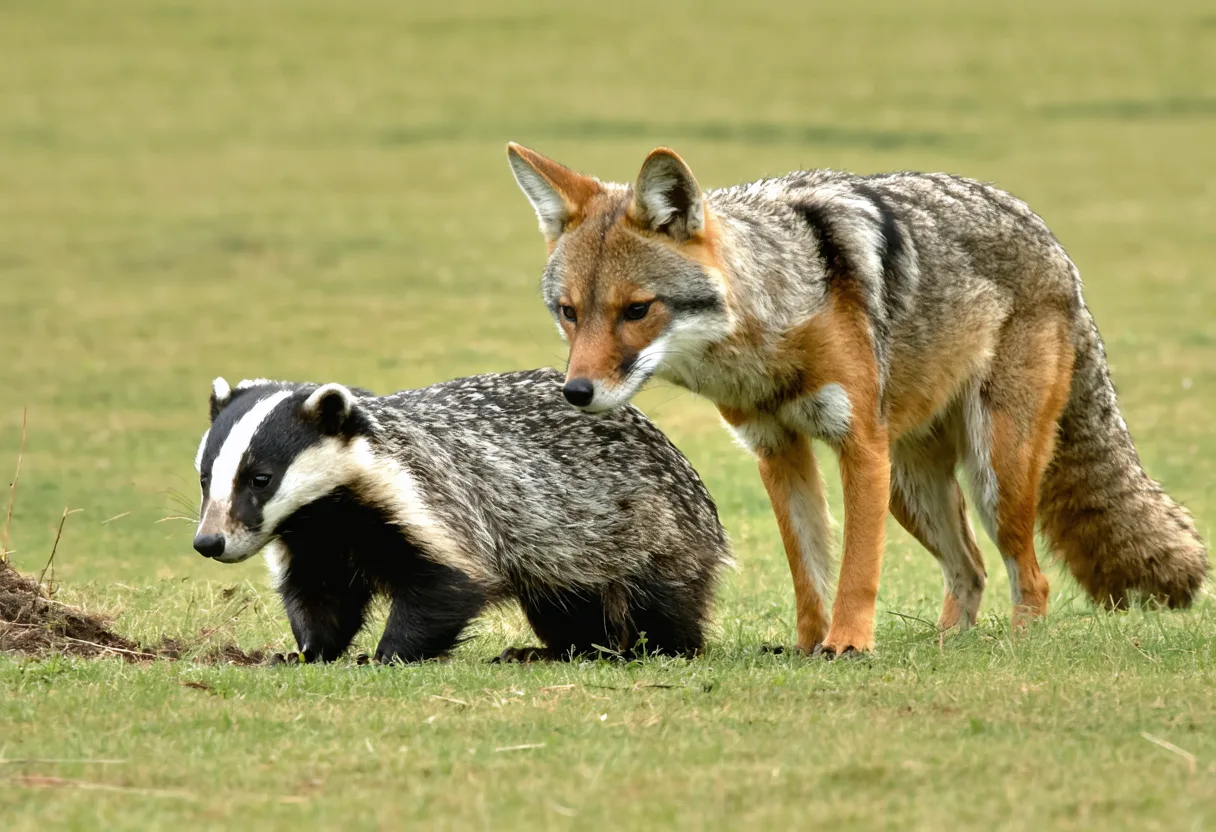
An American badger and a coyote hunting together on the prairie
Hunting partners
The badger and the coyote
In North America, the American badger has been seen hunting side by side with a coyote. Usually it is one badger with one coyote, but sometimes two, or even three, coyotes join a badger. Ground squirrels escape from each hunter in a different way. When a ground squirrel spots a coyote, it crawls into its hole. When it sees a badger, it climbs out of its hole and tries to outrun it. Hunting together makes the squirrels easier to catch. Researchers found that the coyote's catch rate goes up by about 33 per cent. It is harder to see how the badger gains, but it spends more time underground and active, and it is thought to use less energy hunting in burrows.
SourceOld tales
Badgers in stories from long ago
Long ago, people told strange stories about badgers. Medieval books about animals, called bestiaries, said that badgers worked together to dig holes under mountains. One badger was said to lie down at the entrance of the hole, holding a stick in its mouth, while the other badgers piled earth on its belly. Then two badgers would take hold of the stick and drag the loaded badger away, like a wagon. People probably understood this tale as a story with a lesson. In German-speaking parts of Europe, badgers were once used to predict how long winter would last. That custom became Groundhog Day in North America.
SourceThree remarkable badgers
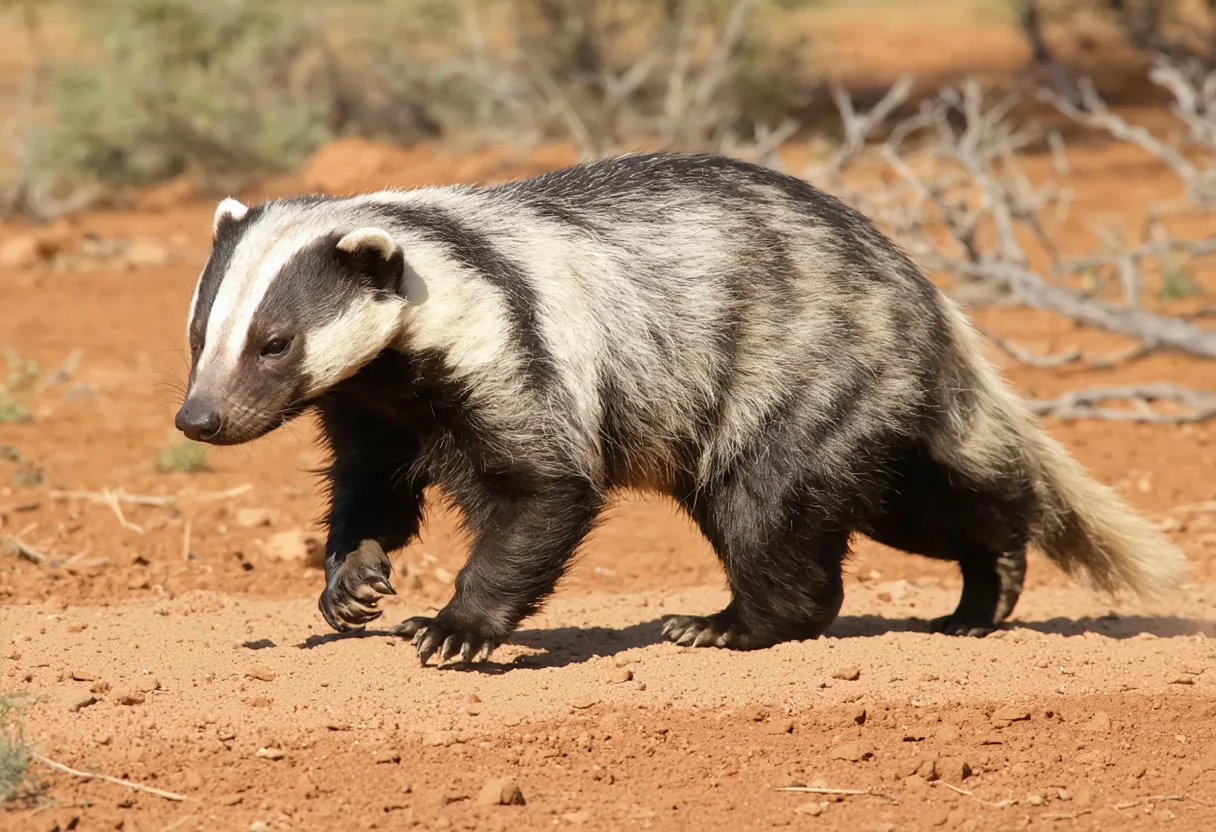
A honey badger crossing dry scrub
Honey badger
Mellivora capensis
It lives across Africa, Southwest Asia and the Indian subcontinent. Its skin is so loose that it can turn and twist inside it. Its scientific name, Mellivora, means 'honey eater', and it often raids beehives for bee larvae and honey.
Source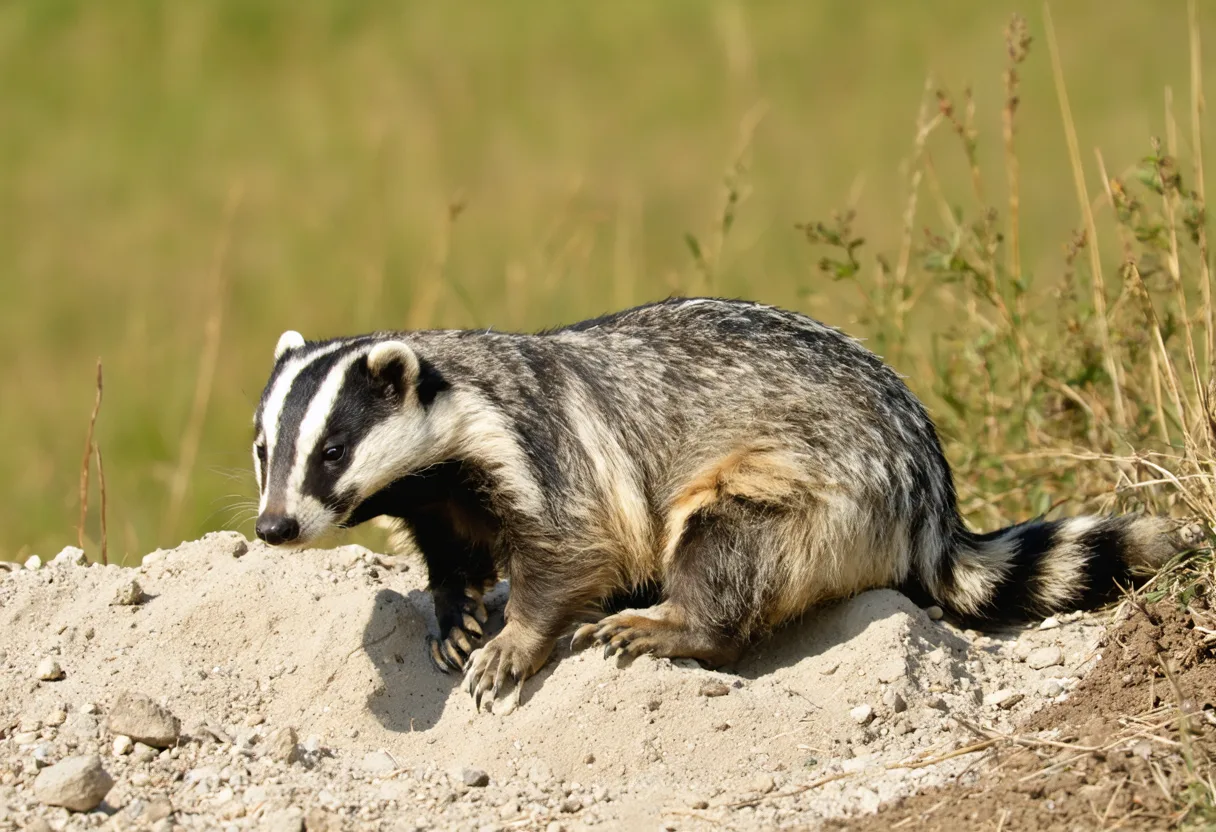
An American badger, long front claws and all, at its burrow
American badger
Taxidea taxus
It lives in North America, from Canada down to northern Mexico, mostly in open grasslands. Its huge front claws can be up to 5 centimetres long. When it leaves a burrow, other animals such as foxes, skunks and burrowing owls may move in.
Source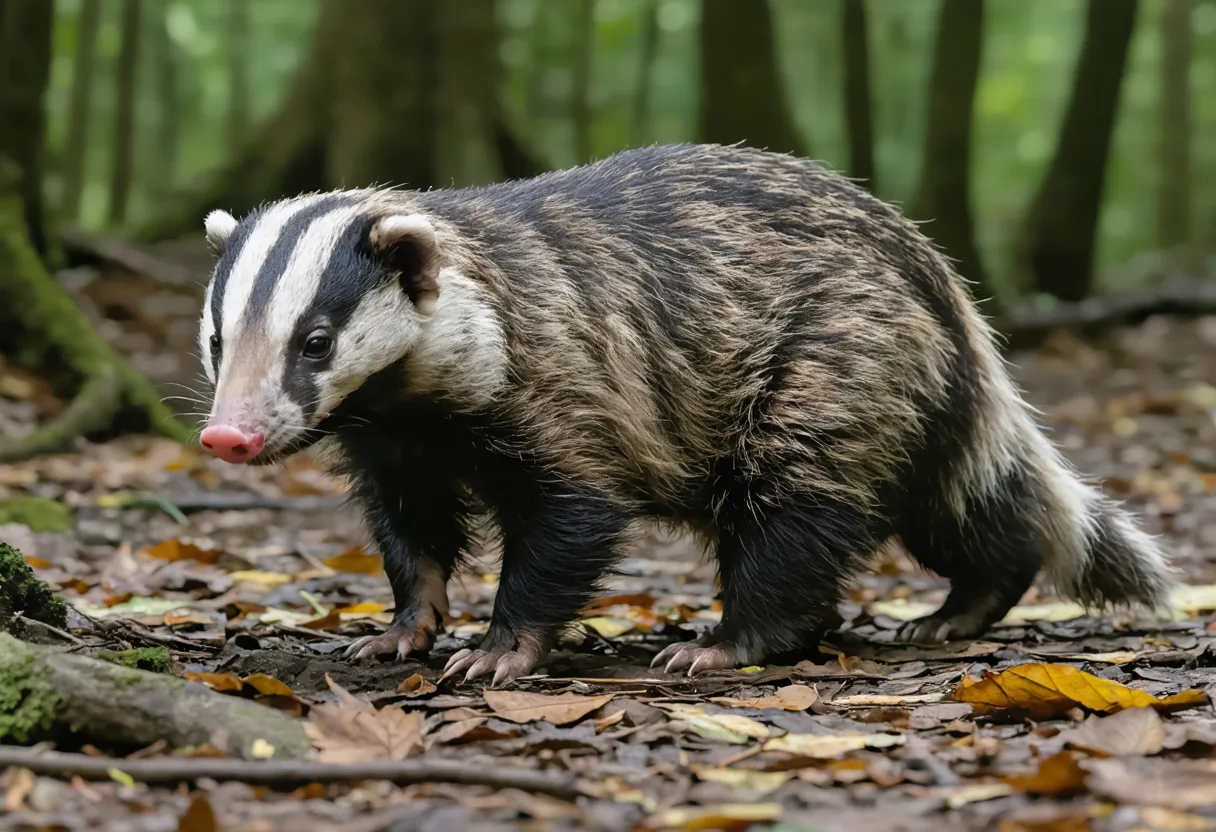
A greater hog badger nosing through the forest floor
Greater hog badger
Arctonyx collaris
It lives in Southeast Asia, in tropical evergreen forests and grasslands. It looks a lot like a European badger, but it has a pink, pig-like nose and larger claws on its front feet. It eats fruits, roots and small animals.
SourceThe pictures on this page are AI-generated illustrations. The facts are checked against the sources linked.