Open your worlds
Your wish list — the plush you mean to keep.
Press Add to a collection on any plush in the shop: start a collection of your own, or keep it on your wish list. Sign in and both follow you to any device.
Open my wish list →Menu
Wonders of the European badger
The European badger (Meles meles)
↑ All about badgersThe real European badger
European badgers are widespread in Britain, and they are most common in the south-west. Here are three true things about them.
The UK's biggest land hunter
Badgers are the largest land predator in the UK. They are 75 to 100 centimetres long, with a tail of about 15 centimetres, and they usually weigh 8 to 12 kilograms.
SourceA striped face
A badger has a black and white striped head. The fur on its back is grey, and the fur on its throat, legs and underparts is black.
SourceWorms for supper
Earthworms make up around 60 per cent of a badger's diet. An adult can eat over 200 earthworms in a night.
Source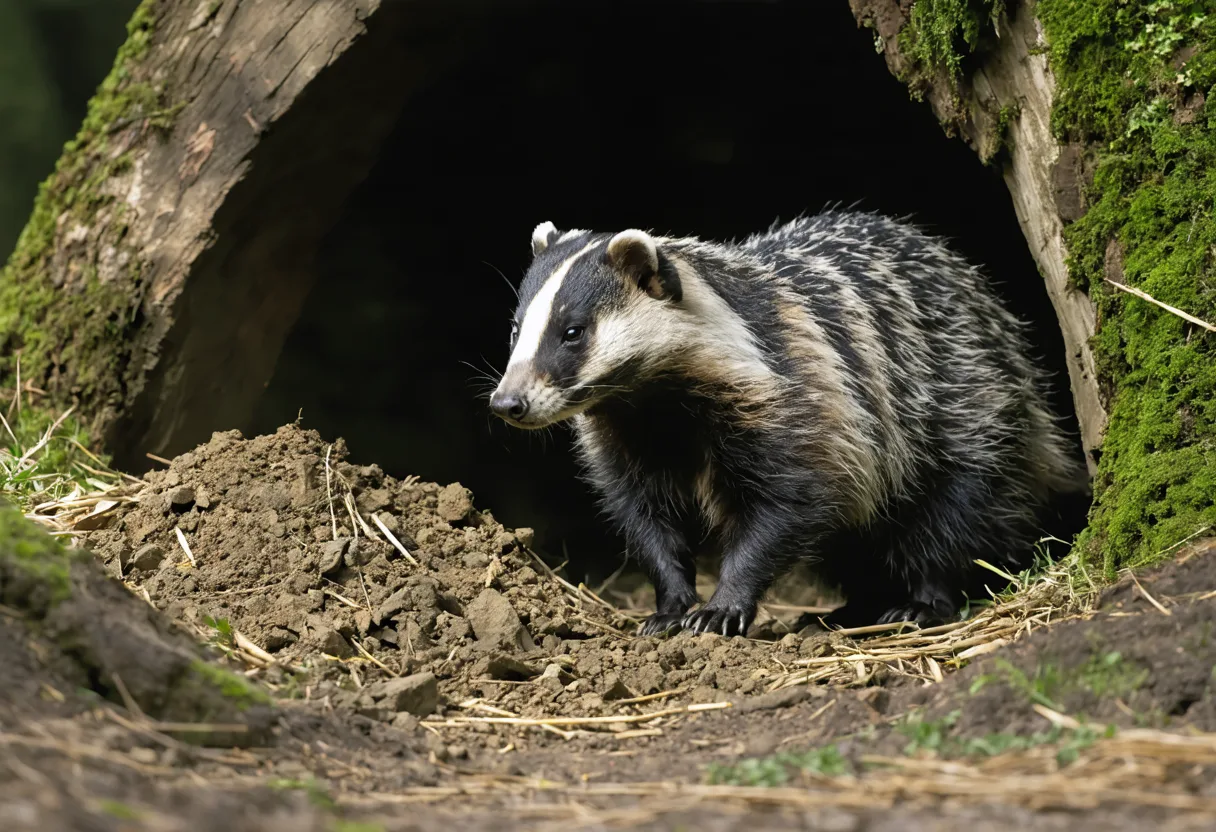
A European badger coming out of its sett at dusk
Underground homes
A home for many generations
Badgers live in setts, which are networks of underground burrows and tunnels. A sett is home to a group of about 4 to 8 badgers, both males and females. A group living in the same sett is called a clan. Some setts are small, but others are vast, ancient tunnel systems stretching 20 to 100 metres or more. These big setts can have more than 50 entrances. They take many years to dig, and they are passed down through generations. Some are more than 100 years old. Near the edge of their land, badgers dig a shallow pit to use as a toilet, called a latrine. Setts also shelter other animals, such as red foxes, rabbits and wood mice.
SourceSpring cubs
How badger cubs arrive
Badger cubs can be born from mid-December, but most are born between January and March. A litter has 1 to 5 cubs, and 2 or 3 is common. A mother badger can have 11 months between mating and birth. This is probably because of delayed implantation. The early cub forms soon after mating, then almost stops growing. The short days of December or early January set it growing again. The cubs come out of the sett for the first time when they are around 12 weeks old. By 16 weeks, they show most of the ways adults behave together, such as scent marking and grooming.
SourceThe pictures on this page are AI-generated illustrations. The facts are checked against the sources linked.