Open your worlds
Your wish list — the plush you mean to keep.
Press Add to a collection on any plush in the shop: start a collection of your own, or keep it on your wish list. Sign in and both follow you to any device.
Open my wish list →Menu
The bear with the hump
The brown bear is one species, Ursus arctos. The grizzly bear belongs to it too, as a subspecies.
A hump of muscle
The hump on a brown bear's shoulders is a mass of muscle. It helps the bear press down hard on the ground to dig for roots and squirrels.
SourceEvery grizzly is a brown bear
All grizzly bears are brown bears, but not all brown bears are grizzlies. In North America, brown bears that can reach coastal food such as salmon are usually called brown bears, and those living further inland are called grizzlies.
SourceClaws for careful digging
A grizzly bear's front claws can be as long as 10 centimetres. It can use them to dig up one single root, or to dig over large patches of meadow to catch pocket gophers.
Source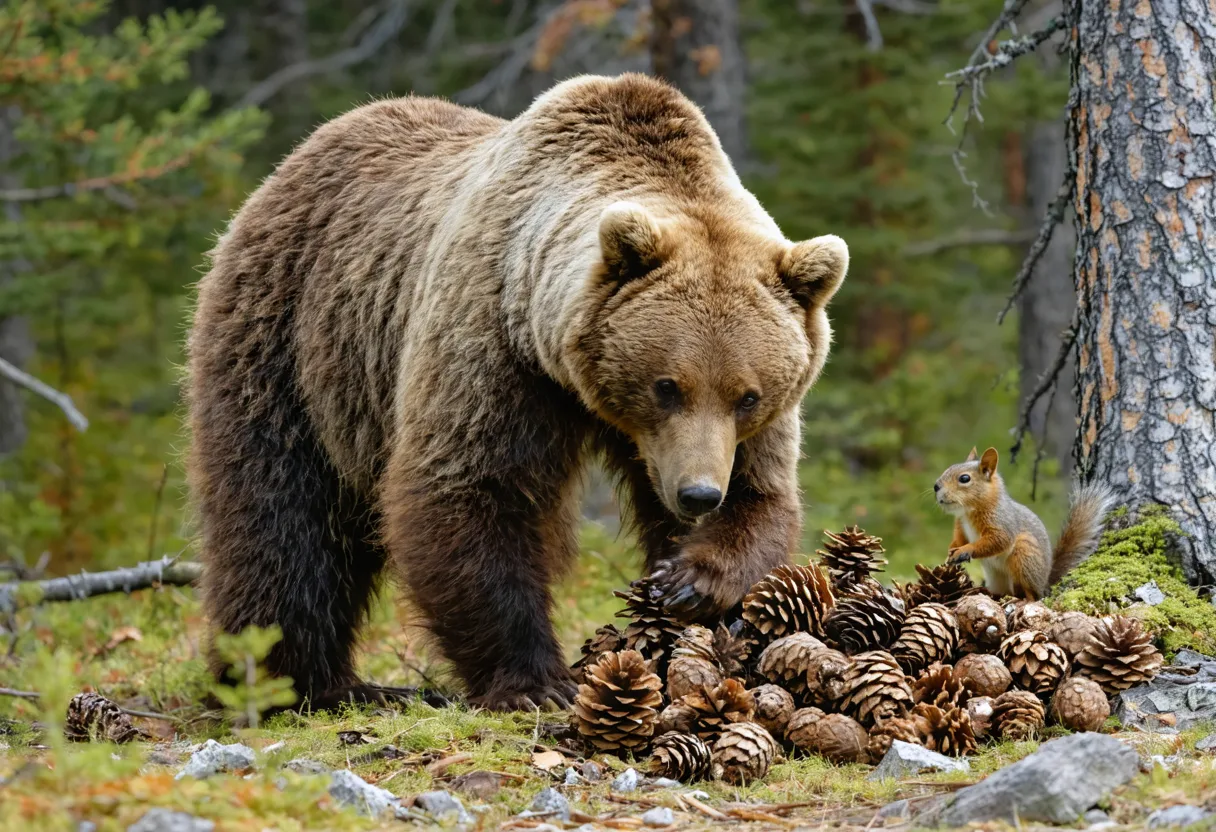
A grizzly bear digging into a red squirrel's store of pine cones
Squirrel's larder
The bear that raids the squirrel's store
In the mountain forests around Yellowstone, from early summer, red squirrels snip cones off whitebark pine trees and bury them in big stores called middens. They plan to live on them through the long, cold winter. But in early autumn a grizzly bear may come sniffing along and find one. Whitebark pine seeds are a high-energy food, rich in fats, and bears want them before they go into their dens. The cones do not split open to drop their seeds, and grown-up grizzlies are poor tree climbers. So the bear lets the squirrel do the hard work. Ignoring the furious chatter from the branches above, it digs up the cones, picks out the seeds with its claws, lips and tongue, and eats most of the store in one sitting.
SourceA long menu
More than 266 things to eat
Scientists studying the grizzly bears of the Greater Yellowstone area recorded more than 266 different species that the bears eat. There were plants, animals and even mushrooms. The bears ate at least 36 kinds of small creatures without backbones, mostly ants, moths, yellow jackets and earthworms. They ate 24 different species of ants, and ants have turned up in every grizzly diet study there that looked at bear droppings, from 1943 to 2009. The army cutworm moth had the highest energy value of any food recorded. To find the moths, bears travel to the places where they gather, on remote slopes of loose rock.
SourceThe pictures on this page are AI-generated illustrations. The facts are checked against the sources linked.