Open your worlds
Your wish list — the plush you mean to keep.
Press Add to a collection on any plush in the shop: start a collection of your own, or keep it on your wish list. Sign in and both follow you to any device.
Open my wish list →Menu
What makes a camel
Every camel shares a few clever features. Here are three of them.
Humps full of fat
A camel's humps store fat, not water. When food is scarce, the camel's body uses that fat for energy.
SourceBuilt to keep sand out
Camels can close their nostrils to keep sand out of their noses. Double rows of extra-long eyelashes help keep sand out of their eyes.
SourceThree camels, more cousins
There are three surviving species of camel. In a wider sense, the word camel is also used for their cousins the llama, the alpaca, the guanaco and the vicuña.
Source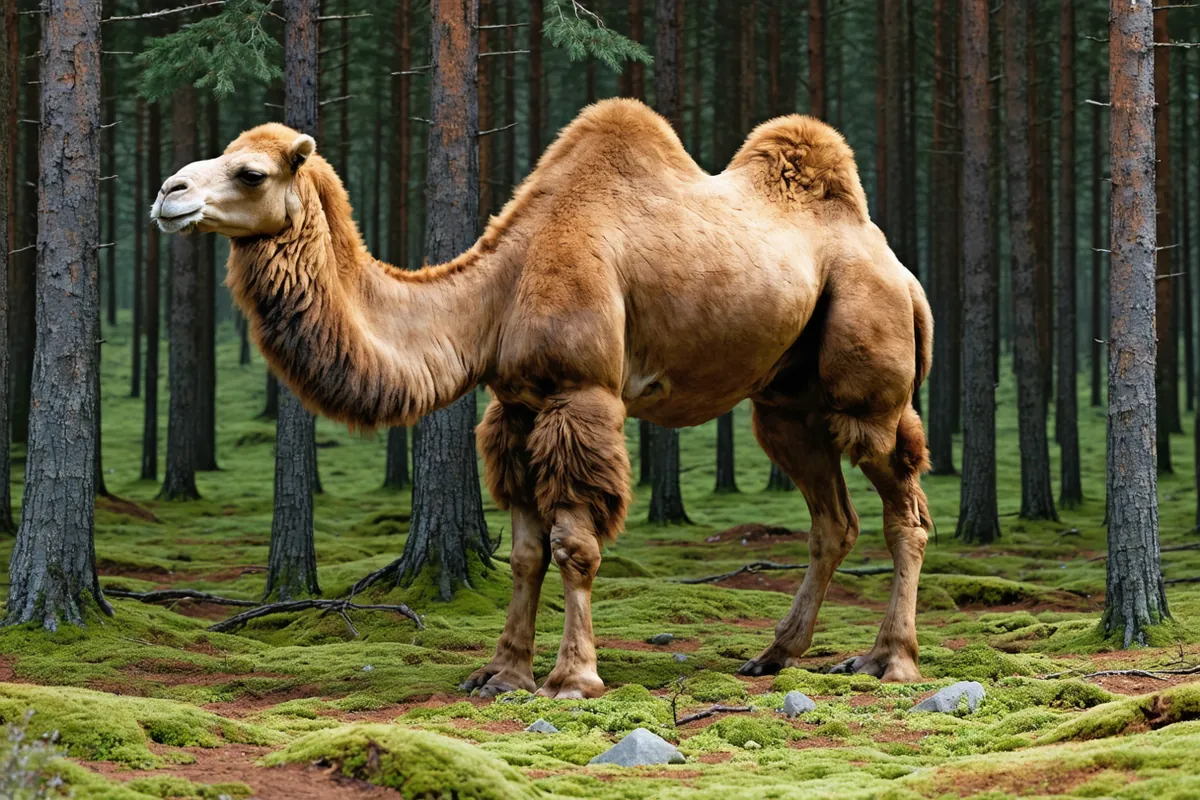
AI-generated illustration
Strange history
The giant camel of the Arctic
On Ellesmere Island, in Nunavut in Canada's far north, scientists found 30 fossil fragments of a leg bone at a site called the Fyles Leaf Bed. The bone was about three and a half million years old. Its size suggested it came from a very large mammal. A technique called collagen fingerprinting showed that it belonged to a camel, probably from the same line as Paracamelus, the ancestor of modern camels. This camel lived in a northern forest, during a warm phase for the whole planet. The scientists suggested that some camel features, such as wide flat feet, large eyes and humps for fat, may be adaptations that began with life in a polar environment.
SourceKeeping cool
How a camel saves water
Camels rarely sweat, even when the air reaches 49 °C. Their body temperature changes through the day. It ranges from 34 °C at dawn and rises steadily to 40 °C by sunset, then cools again at night. When a camel breathes out, water vapour is trapped in its nostrils and taken back into its body. Even its blood is unusual. Unlike other mammals, a camel's red blood cells are oval, not round. This helps the blood keep flowing when the camel is short of water. It also helps the cells cope without bursting when the camel drinks a large amount of water.
SourceThree remarkable camels and cousins
AI-generated illustration
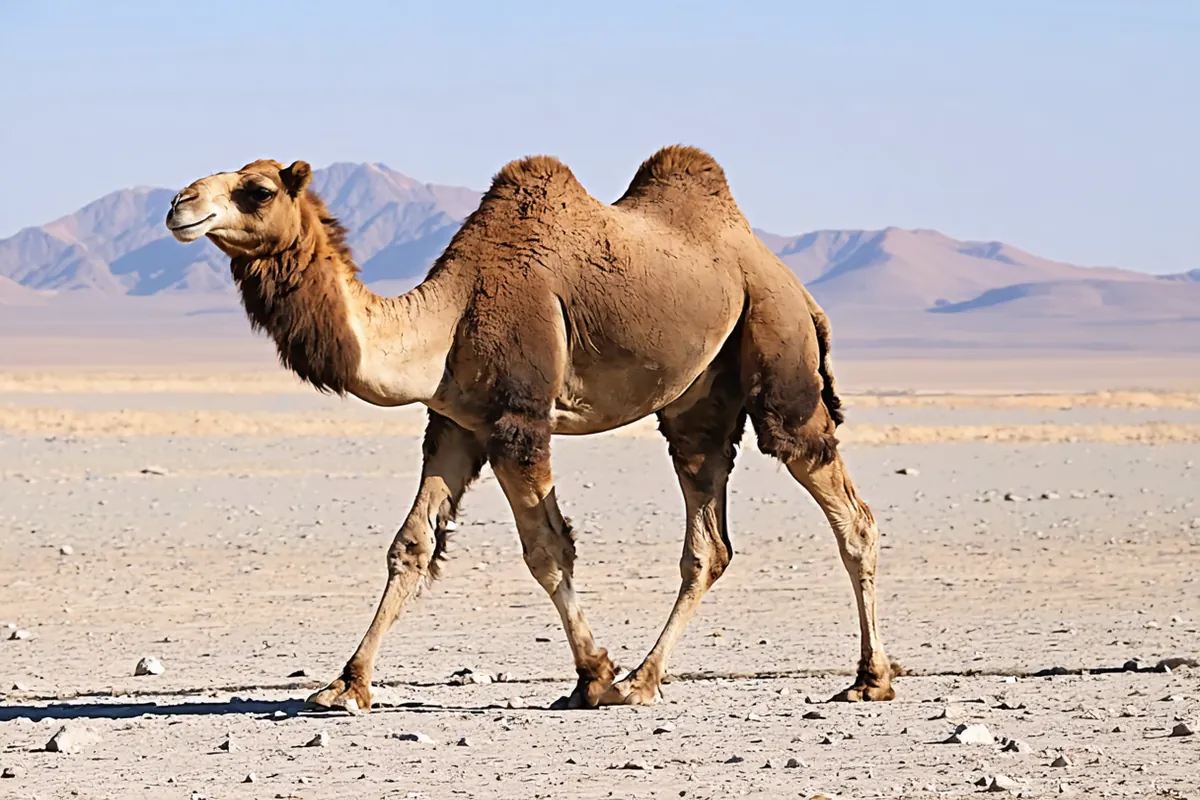
Wild Bactrian camel
Camelus ferus
Genetic studies show this wild camel of China and Mongolia is a separate species from the domestic Bactrian camel. It can survive on water saltier than seawater, and only around 950 are left in the wild.
Source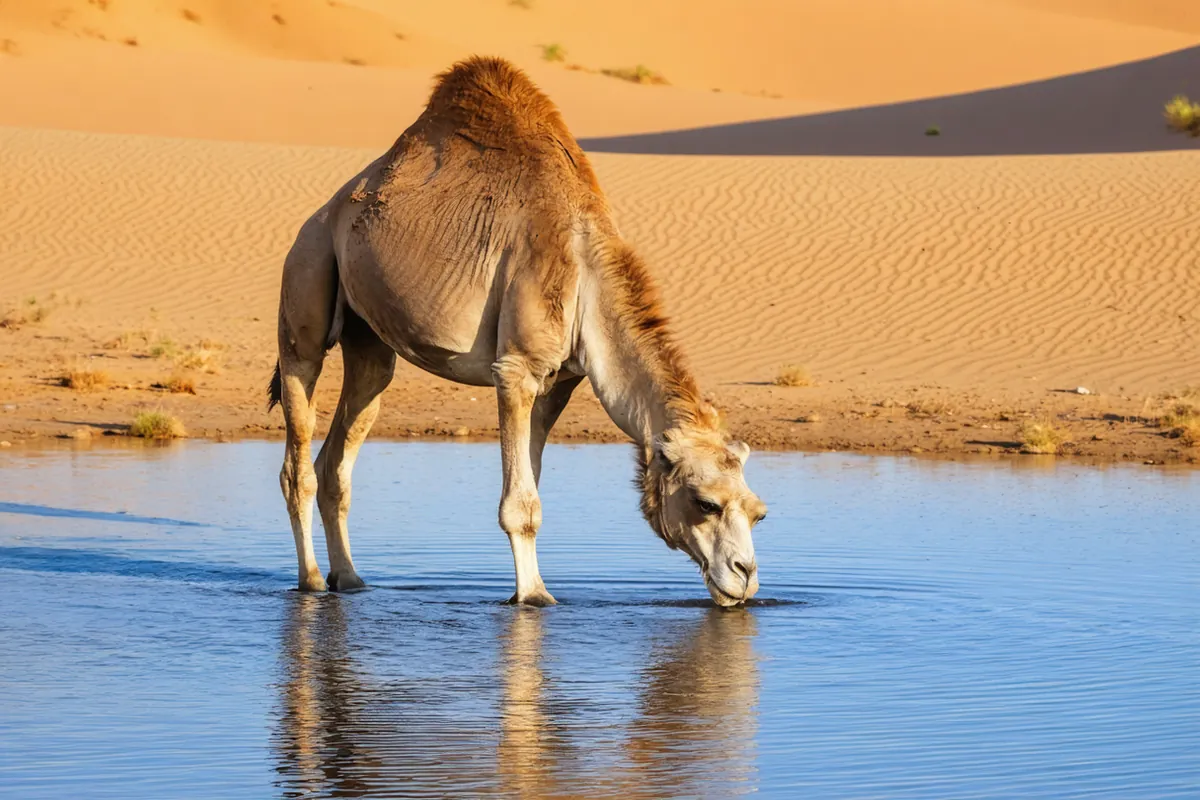
AI-generated illustration
Dromedary
Camelus dromedarius
The one-humped camel can cope with losing more than 30 per cent of its water. When it does find water it can drink up to 114 litres in one sitting, at 10 to 20 litres a minute.
Source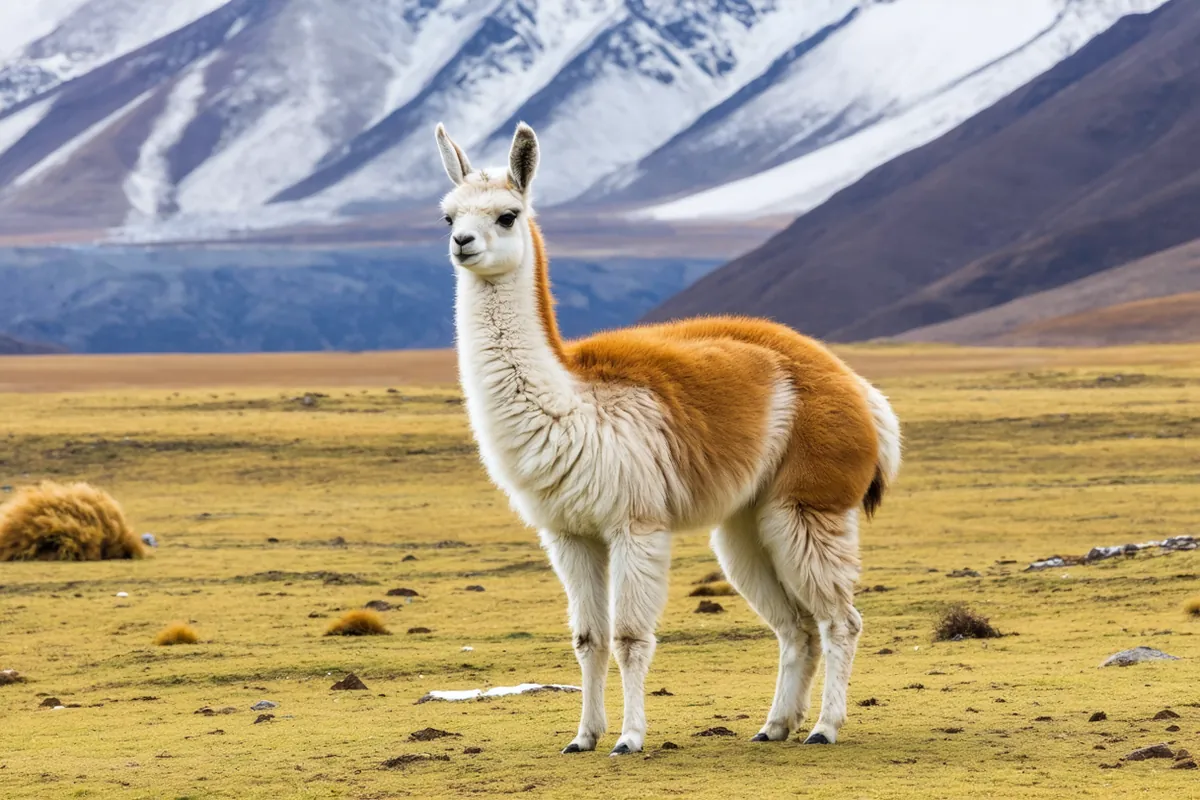
AI-generated illustration
Vicuña
Vicugna vicugna
This wild relative of the llama lives high in the Andes, at 3,200 to 4,800 metres, and has some of the finest fibres in the world. Only about 6,000 were left in 1974; today there are about 350,000.
SourceThe pictures on this page are AI-generated illustrations, not photographs. The facts are checked against the sources linked.