Open your worlds
Your wish list — the plush you mean to keep.
Press Add to a collection on any plush in the shop: start a collection of your own, or keep it on your wish list. Sign in and both follow you to any device.
Open my wish list →Menu
The real cattle
Cattle are large, tame animals with cloven hooves, widely kept on farms. Here are three true things about them.
Eyes on the sides
Cattle have eyes on the sides of their head, not the front. This gives them a field of view of 330 degrees, so they can look out for predators almost all around.
SourceFour parts to one stomach
Cattle have one large stomach with four compartments: the rumen, reticulum, omasum and abomasum. The reticulum, the smallest, is known as the 'honeycomb'.
SourceLying down to sleep
On average, a domestic cow sleeps for about 4 hours a day. Cattle do not sleep standing up. They lie down to sleep deeply.
Source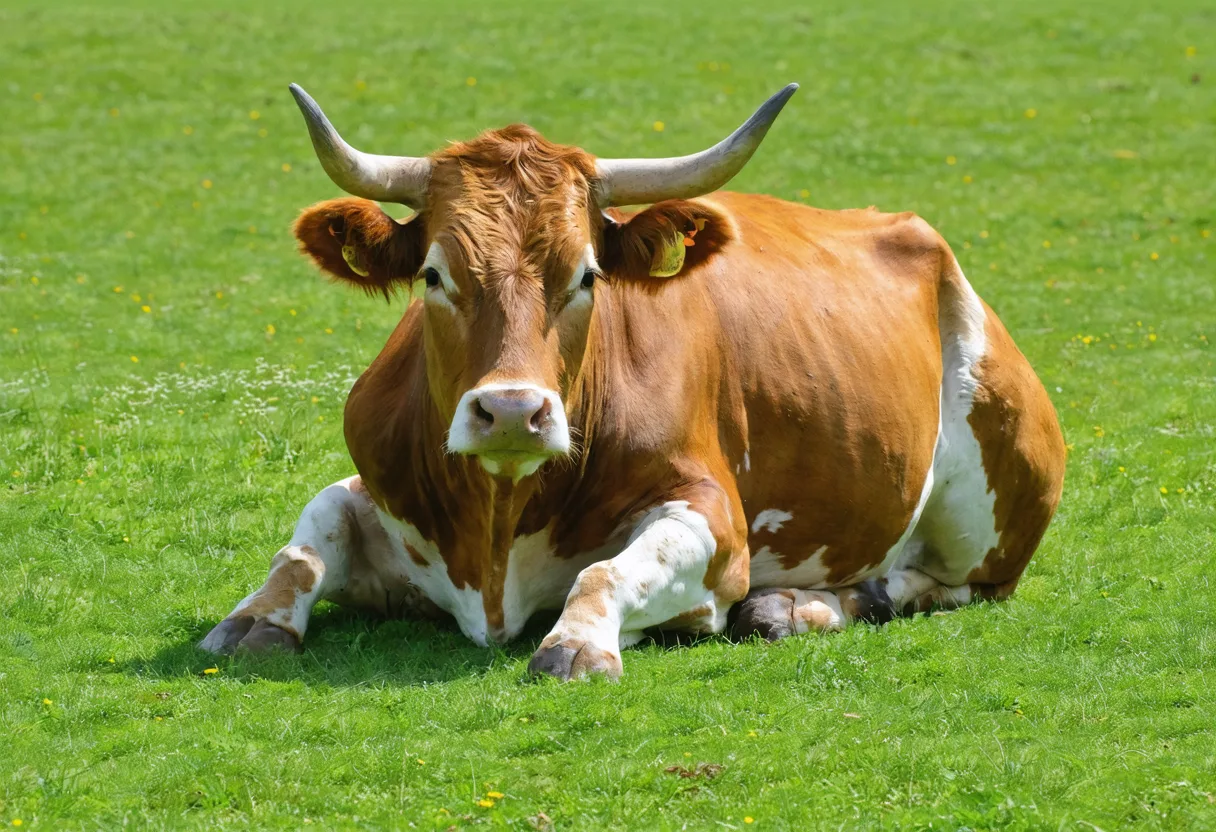
A cow lying in a meadow, chewing the cud
Chewing the cud
How a cow chews the cud
When a cow feeds, it swallows its food without chewing it. The food goes into the rumen, the largest part of its stomach, to be stored. Later, the food comes back up to the cow's mouth, one mouthful at a time. This mouthful is called the cud. The cow chews the cud with its back teeth, grinding the rough plants down into small pieces. Then it swallows the cud again. Tiny living things in the cow's stomach, called micro-organisms, digest it further.
SourceWild cattle
The last of the aurochs
Wild cattle called aurochs once lived across a huge area, from western Europe and northern Africa to the Indian subcontinent and East Asia. Over time there were fewer and fewer of them, as people hunted them and the places they lived were lost. The last herd known for sure lived in a marshy woodland, the Jaktorów Forest in Poland. In the middle of the 16th century there were around 50 of them. By 1601 only four were left. The last widely accepted aurochs, a cow, died there in 1627 from natural causes. Some reports suggest aurochs may have survived up to a century later in parts of southeastern Europe.
SourceThree remarkable cattle
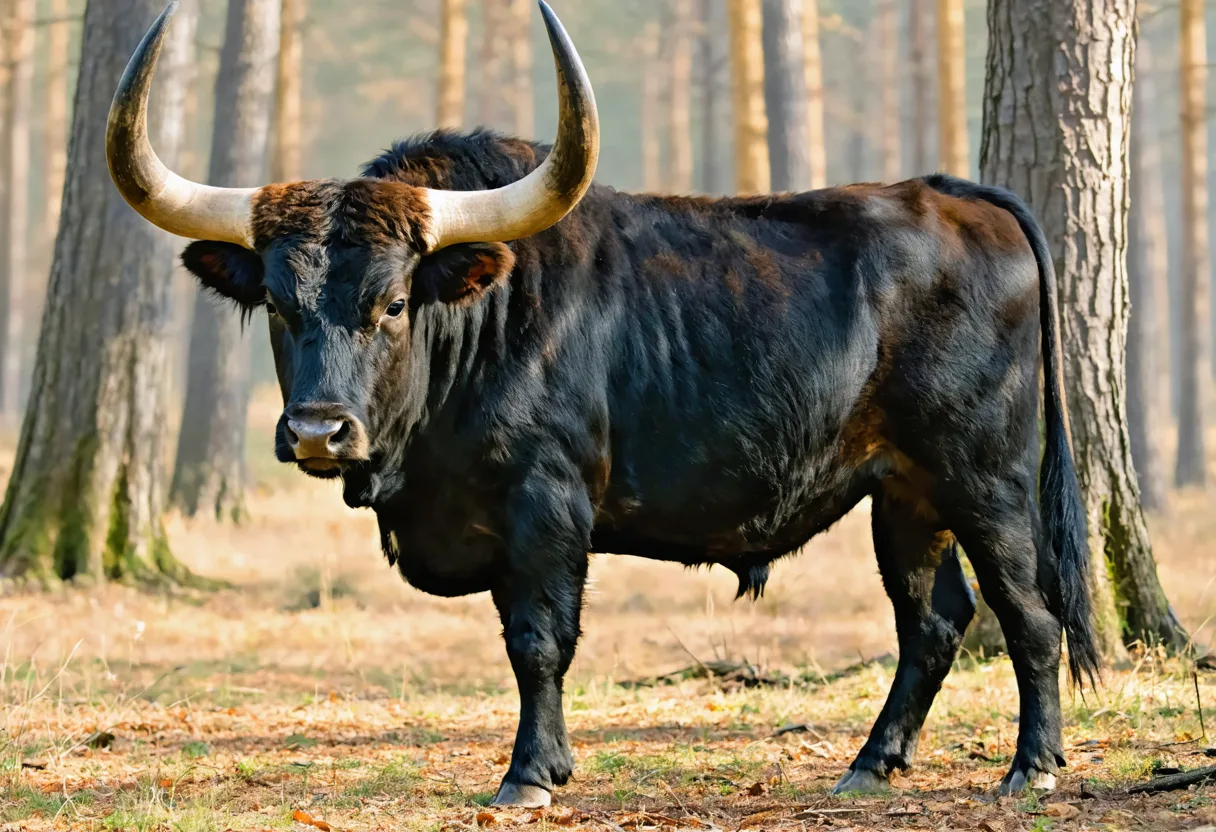
An aurochs bull, the extinct wild ancestor of cattle, in a woodland clearing
Aurochs
Bos primigenius
The aurochs is an extinct wild bovine, thought to be the wild ancestor of today's cattle. Bulls stood up to 1.8 metres tall at the shoulder, and their massive horns reached 80 centimetres long.
Source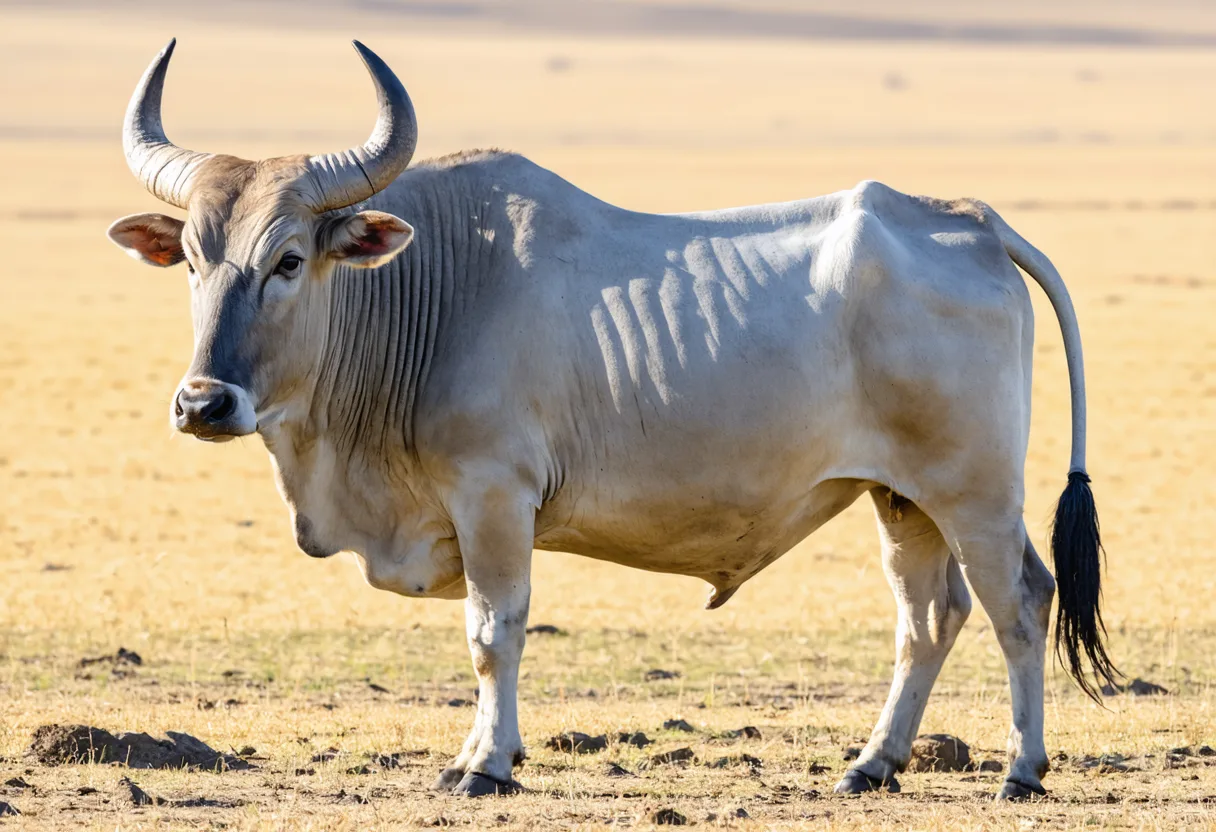
A zebu, with its shoulder hump and drooping ears, on a dry plain
Zebu
Bos indicus
The zebu is a kind of domestic cattle that first came from South Asia. It has a fatty hump on its shoulders, a large dewlap and ears that sometimes droop. It is well adapted to high temperatures and is raised throughout the tropics.
Source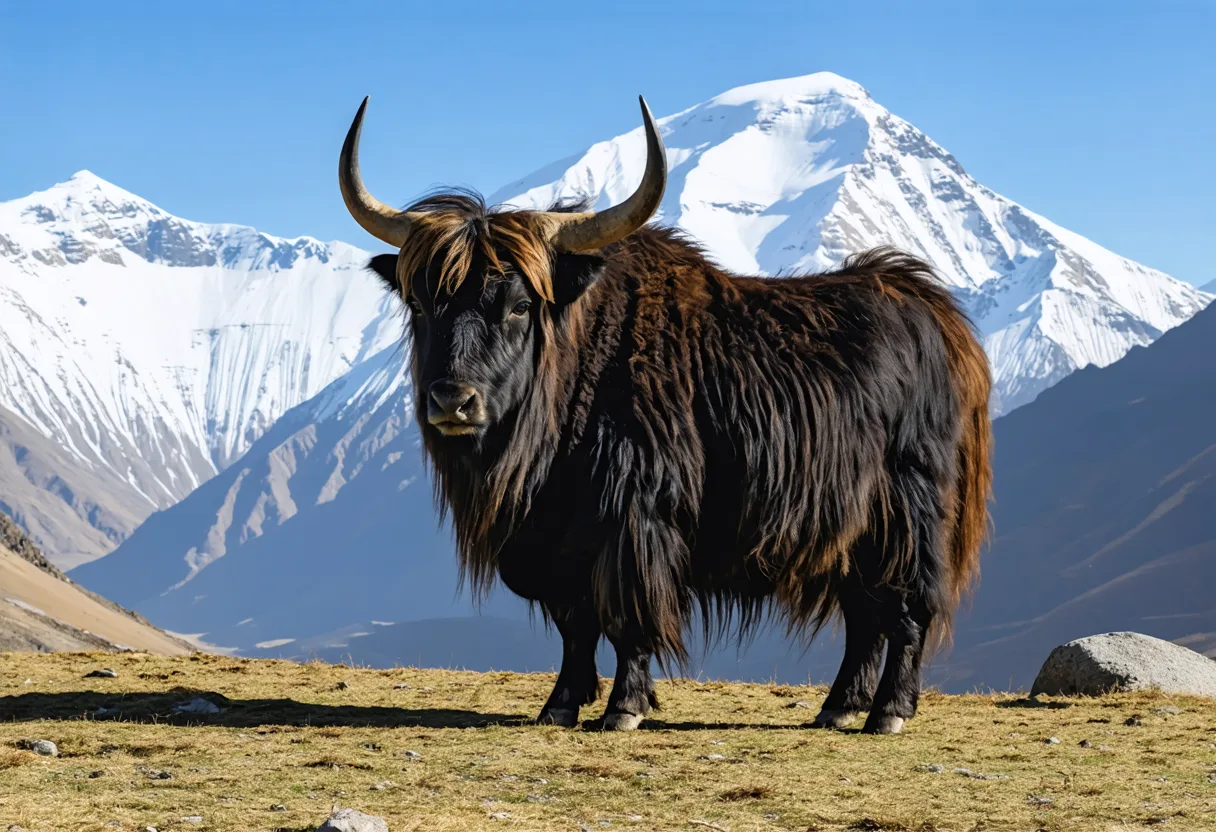
A yak on a high mountain pasture
Yak
Bos grunniens
The yak is a long-haired domesticated Asian cattle found across the Himalayan region and the Tibetan Plateau. It has larger lungs and heart than cattle that live lower down, and a dense woolly undercoat against the cold. Yaks grunt and squeak.
SourceThe pictures on this page are AI-generated illustrations. The facts are checked against the sources linked.