Open your worlds
Your wish list — the plush you mean to keep.
Press Add to a collection on any plush in the shop: start a collection of your own, or keep it on your wish list. Sign in and both follow you to any device.
Open my wish list →Menu
Wonders of the Eurasian otter
The Eurasian otter (Lutra lutra)
↑ All about ottersThe otter of British rivers
The Eurasian otter lives along rivers, wetlands and coasts. It leaves plenty of clues.
Its droppings smell of tea
Otters leave their droppings, called spraints, in places such as fallen trees, weirs and bridges, as scented messages that help them find mates and defend territories. Spraints are full of fish bones you can see, and they have a pleasant smell, a little like jasmine tea.
SourceIts cubs swim young
Eurasian otters have their cubs in underground burrows called holts. The young are in the water by the time they are 10 weeks old.
SourceIt can own a long stretch of river
One Eurasian otter's territory may be anywhere from 1 to 40 kilometres long. It is shorter on coasts and longer on narrower rivers.
Source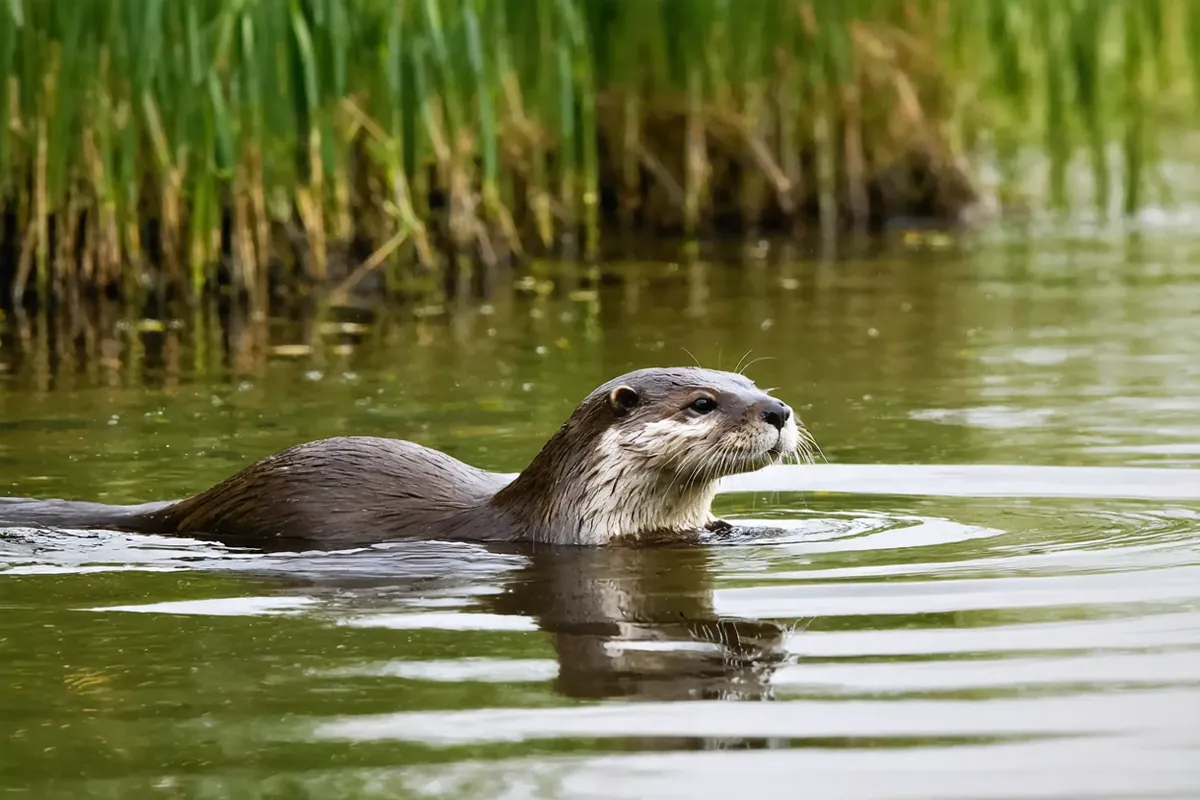
AI-generated illustration
Back from the brink
The otters that came home
In the middle of the twentieth century, otters in Britain nearly went extinct. People persecuted them, and certain pesticides poisoned them. Then things began to change. Those pesticides were phased out, and people made huge efforts to clean up the water in our rivers. Fish came back to the waterways, and the otters came back with them. Conservation groups, such as the Wildlife Trusts, did a huge amount of work to help. Today otters have returned to rivers in every county in England. They are a flagship species of our wetlands, and seeing one suggests that the wildlife around it is in fairly good health.
SourceOn the menu
What a river otter eats
Fish make up most of what a Eurasian otter eats, especially in the rivers and lakes of mild and Mediterranean lands, where fish are plentiful. But fish are not the only thing on an otter's menu. In winter, and in cooler places too, it also eats worms, caterpillars, clams, crustaceans, insects, eggs, birds, amphibians and small mammals, including young European beavers. The Eurasian otter can overpower animals much bigger than itself. It sometimes hunts large waterbirds, even adult greylag geese.
SourceThe pictures on this page are AI-generated illustrations, not photographs. The facts are checked against the sources linked.