Open your worlds
Your wish list — the plush you mean to keep.
Press Add to a collection on any plush in the shop: start a collection of your own, or keep it on your wish list. Sign in and both follow you to any device.
Open my wish list →Menu
Wonders of the real frog
Frogs, starting with the common frog (Rana temporaria)
The real frog in the meadow grass
The Explorer's specimen sat as still as a pond frog does. Its real cousin, the common frog of British ponds and gardens, is full of surprises.
It can breathe through its skin
In winter a common frog can rest, cold and still, in a pond or in mud, and the oxygen it takes in through its skin is enough to keep it going until spring.
SourceIt changes its shade
A common frog can make its skin lighter or darker to match its surroundings.
SourceIt lays thousands of eggs
One female common frog lays anywhere from a few hundred to about 5,000 eggs, and most of the tadpoles have turned into little frogs by June and July.
Source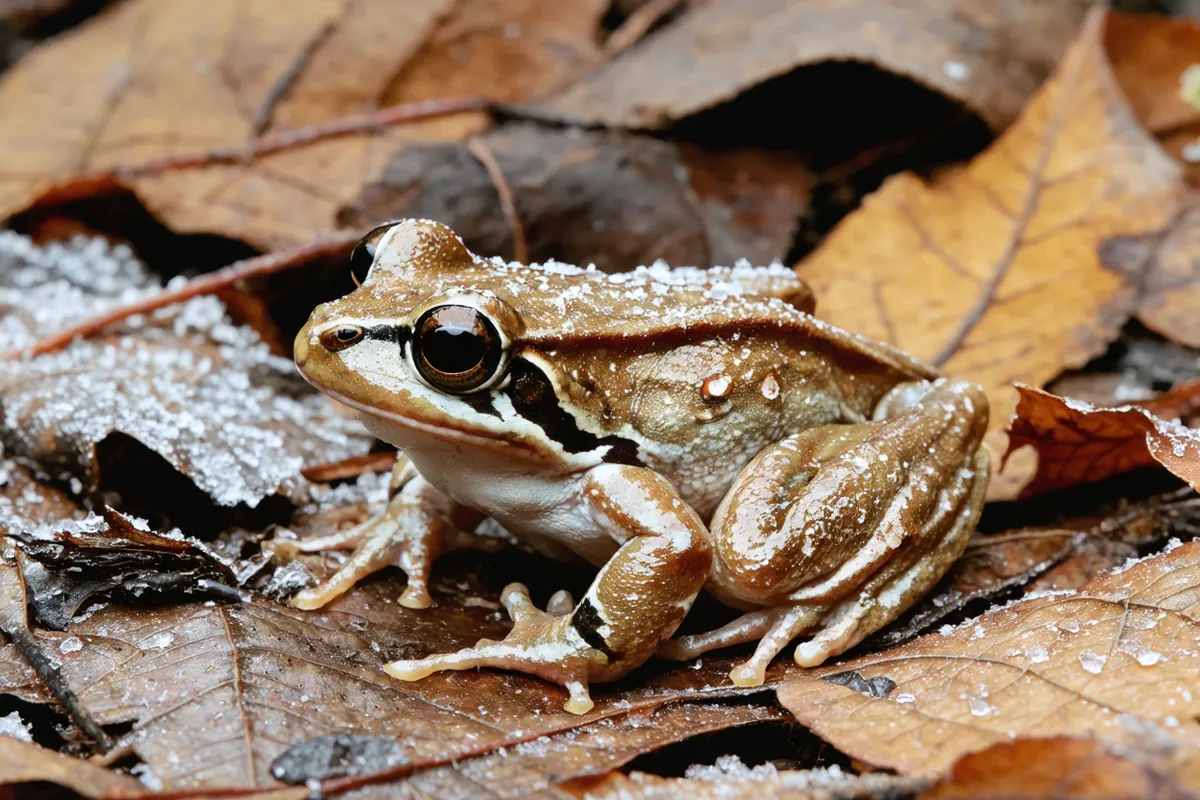
AI-generated illustration
Secret defence
The frog that freezes solid
In the forests of North America, the wood frog does something that sounds impossible. When winter comes, up to 65 to 70 per cent of the water in its body turns to ice. Its heart stops beating, it stops breathing and its blood stops flowing. What protects it is sugar: the frog fills its cells with glucose, which works like antifreeze and keeps them from being damaged as they freeze and thaw. The wood frog is the only North American frog found north of the Arctic Circle.
SourceVanishing act
The frog that hides its blood
Glass frogs live in the forests of Central and South America, and some have skin so clear that you can see the heart, liver and gut through their bellies. In 2022 scientists studying the northern glass frog found it has a trick for sleeping safely in daylight: it moves about 89 per cent of its red blood cells out of its blood and packs them into its liver, which has a mirror-like coating. With its red blood tucked away, a sleeping frog becomes far harder to see on its leaf. When it wakes, the red cells go back into its blood.
SourceThree remarkable frogs
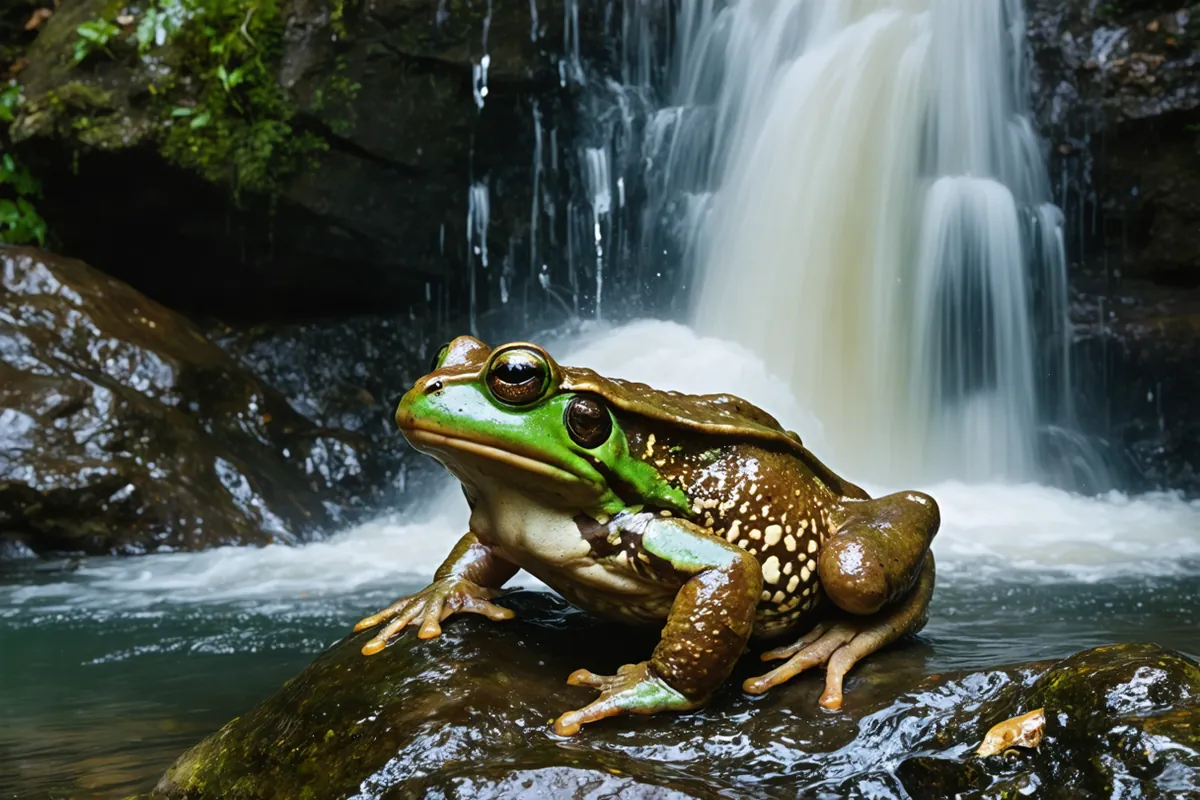
AI-generated illustration
Goliath frog
Conraua goliath
The giant of the frog world lives near waterfalls in Cameroon and Equatorial Guinea. The heaviest one ever verified weighed 3,305 grams.
Source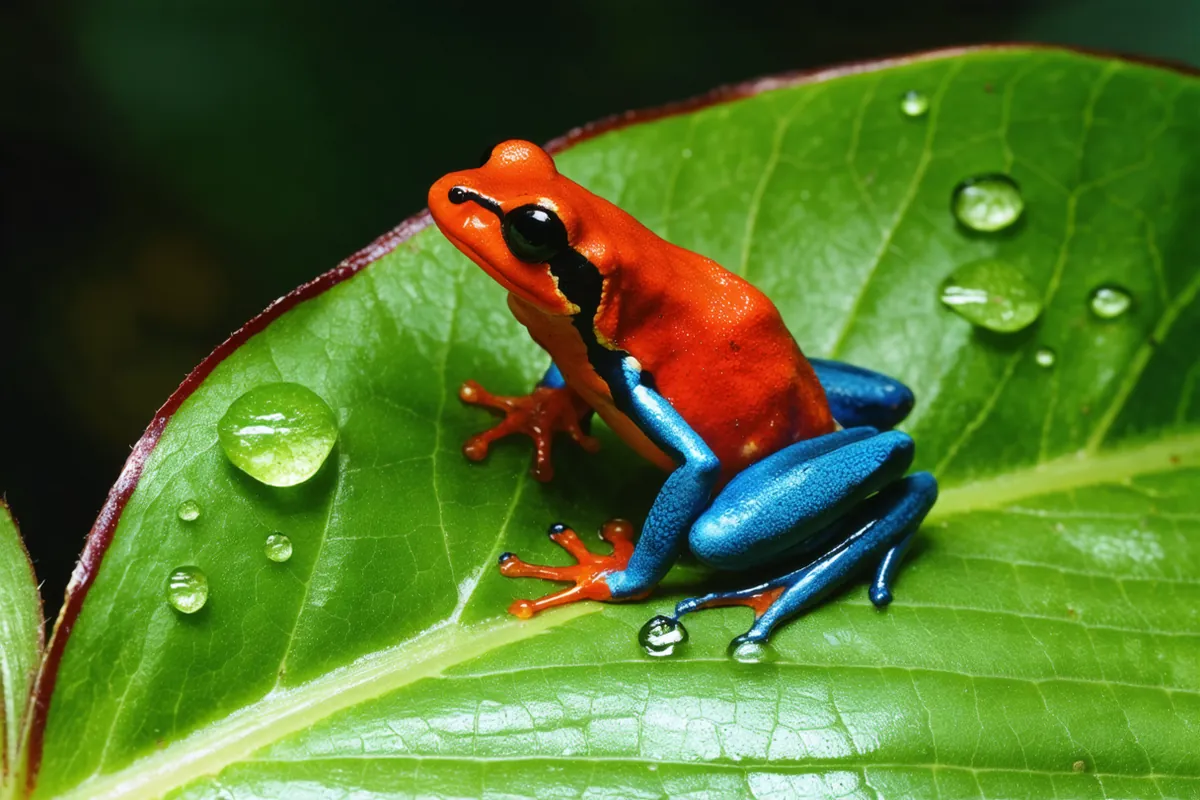
AI-generated illustration
Strawberry poison frog
Oophaga pumilio
Only about 2 centimetres long, this bright little frog of Central American rainforests is a devoted mother. She carries each tadpole on her back to its own tiny pool of water, often in a bromeliad plant, and comes back every few days to lay eggs for it to eat.
Source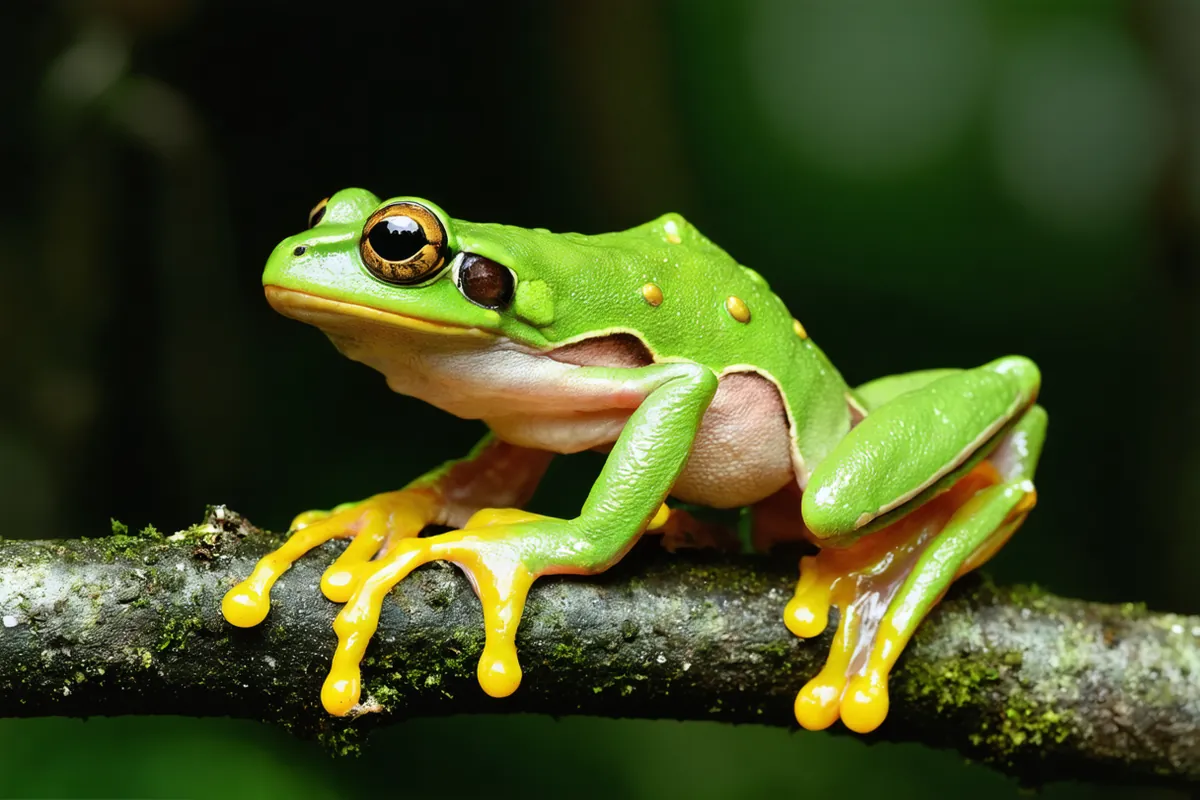
AI-generated illustration
Wallace's flying frog
Rhacophorus nigropalmatus
This tree frog of South-East Asia has toes webbed right to the tips. When it leaps from a branch it spreads its four big webbed feet and glides, sometimes 15 metres or more.
SourceThe pictures on this page are AI-generated illustrations, not photographs. The facts are checked against the sources linked.