Open your worlds
Your wish list — the plush you mean to keep.
Press Add to a collection on any plush in the shop: start a collection of your own, or keep it on your wish list. Sign in and both follow you to any device.
Open my wish list →Menu
Meet the grey wolf
Here are three true things about the grey wolf: how big it is, who it lives with, and how it calls to its pack.
The biggest wild dog
The grey wolf is the largest wild member of the dog family, and it is native to Europe, Asia and North America. Its fur is usually a mix of white, brown, grey and black, and wolves in the Arctic may be nearly all white.
SourceParents lead the pack
In a grey wolf pack, the mother and father usually lead, and they teach the rest of the pack how to hunt, stay safe and mark their territory. Packs usually have five to eight wolves, but packs of as many as 36 have been reported.
SourceEvery wolf has its own howl
Each wolf has a different howl, and other wolves can hear it 10 to 11 kilometres away. Howling helps to keep the pack together, and it can bring a lost wolf back to its pack.
Source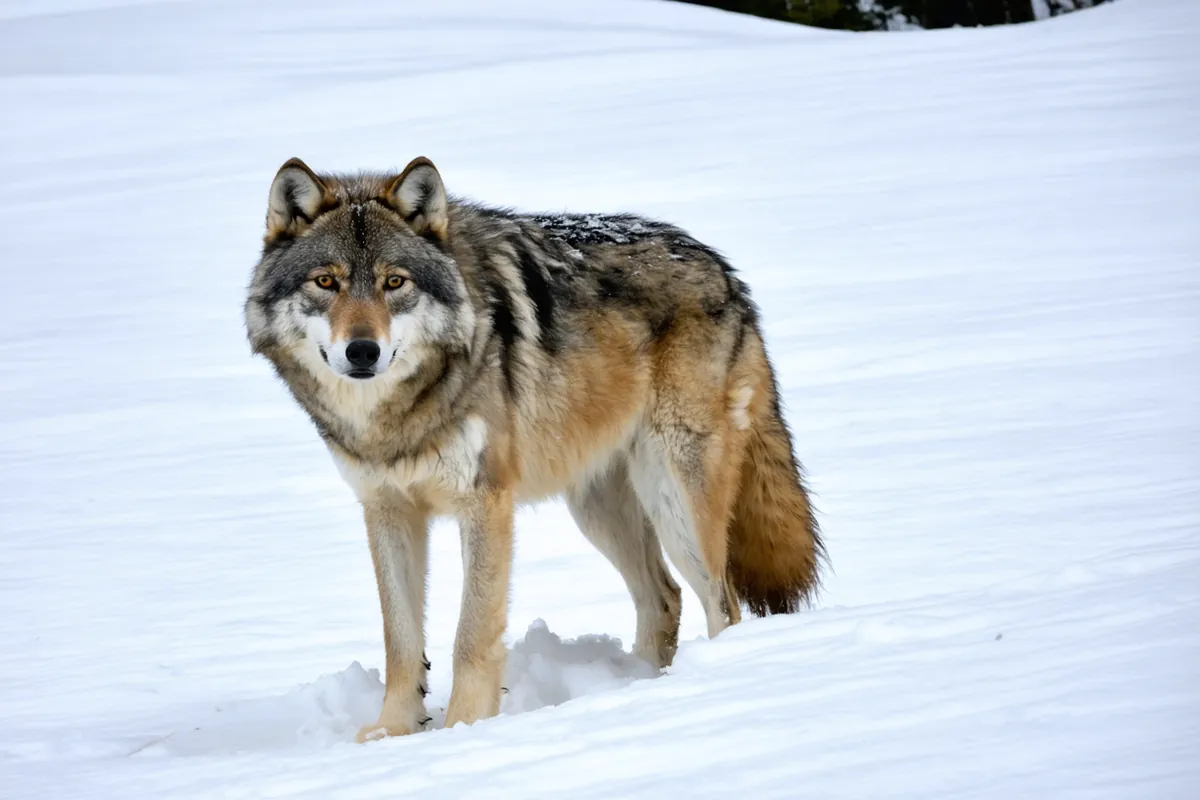
AI-generated illustration
Coming home
How wolves came back to Yellowstone
Wolf packs once roamed North America from the Arctic tundra to Mexico. But loss of their homes and campaigns to kill them meant that, by the early 1900s, wolves were gone from most of the United States. In 1973 the northern Rocky Mountain wolf was listed as an endangered species, and the Greater Yellowstone area was named as one of three places for it to recover. From 1995 to 1997, 41 wild wolves from Canada and north-west Montana were released in Yellowstone National Park. In January 2025 the park marked 30 years since wolves returned. Today the north of the park is one of the best places in the world to watch wolves, and about half of its wolves are black.
SourceLost neighbours
When wolves lived in Britain
Wolves once lived in Great Britain. The earliest known wolf remains in Britain come from Bontnewydd Cave in Wales, and they are around 225,000 years old. Writings from Roman and Saxon times suggest that wolves were very numerous. The Anglo-Saxon Chronicle says that January was known as 'Wolf monath', because it was the first full month of wolf hunting. Bit by bit, wolves were wiped out as forests were cut down and people hunted them for rewards. According to folklore, the last wolf in Great Britain was killed near the Scottish village of Killiecrankie in 1680.
SourceThe pictures on this page are AI-generated illustrations, not photographs. The facts are checked against the sources linked.