Open your worlds
Your wish list — the plush you mean to keep.
Press Add to a collection on any plush in the shop: start a collection of your own, or keep it on your wish list. Sign in and both follow you to any device.
Open my wish list →Menu
What makes a hedgehog a hedgehog
Hedgehogs are spiny mammals that are easy to recognise by their spines. Here are three things worth knowing about hedgehogs as a group.
Seventeen kinds
There are 17 species of hedgehog. They live in parts of Europe, Asia and Africa, and people brought them to New Zealand. No living kind is native to the Americas.
SourceSpines made of hair
A hedgehog's spines are hollow hairs made stiff with keratin. They are not poisonous or barbed, and unlike a porcupine's quills, they do not easily come away from the body.
SourceA hog in the hedge
The name hedgehog came into use around the year 1450. It joins 'hedge', because the animal is often found in hedgerows, and 'hog', for its pig-like snout. Other names for it are urchin and hedgepig.
Source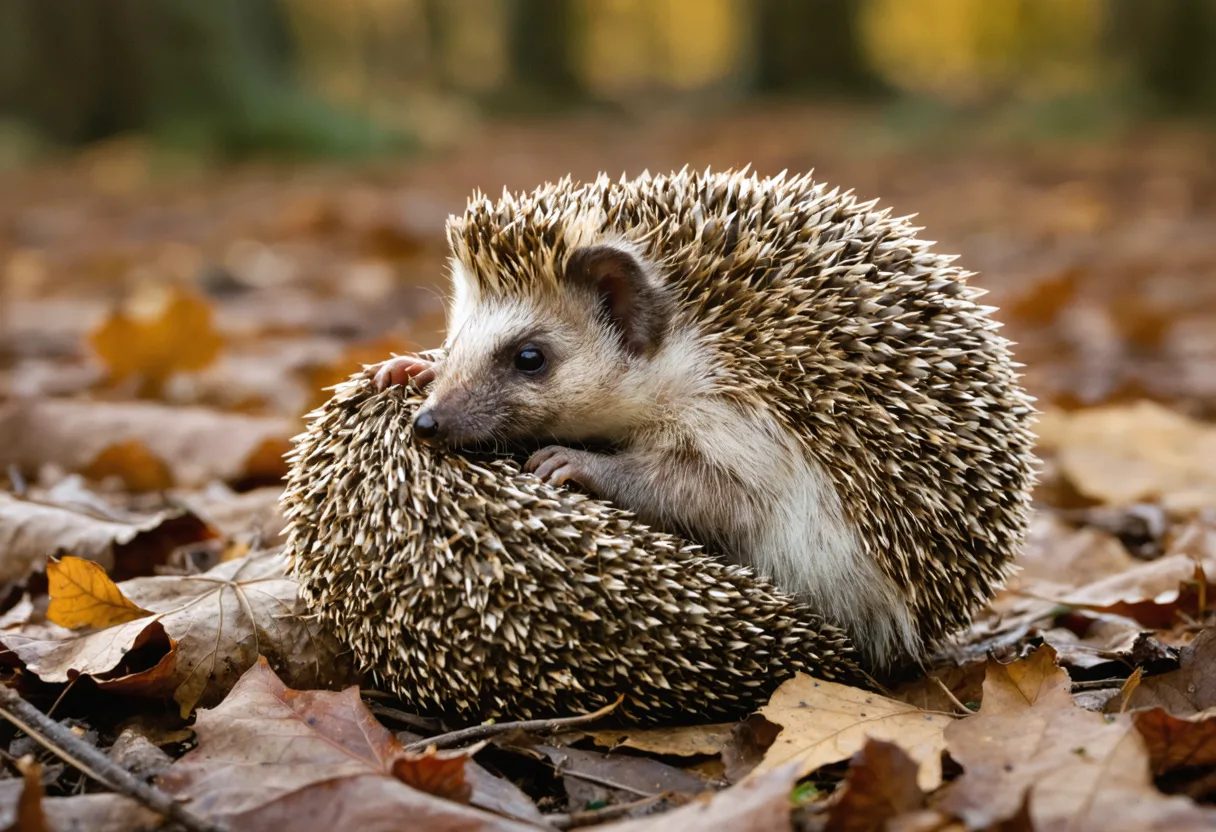
A hedgehog rolled into a spiny ball on fallen leaves
Spiny defence
How a hedgehog rolls up
When a hedgehog is threatened, it rolls into a tight, spiny ball. It tucks in its furry face, its feet and its belly. Two large muscles in its back direct the spines. Not every hedgehog does this first, though. Some light desert hedgehogs, which have fewer spines, are more likely to run away or to attack, ramming the intruder with their spines. They roll up only as a last resort. Hedgehogs are mostly active at night, though some kinds are also out in the day. They sleep for much of the day under bushes, grasses or rocks, or most often in dens dug underground.
SourceOdd habit
The hedgehog that froths
Now and then, a hedgehog does something very odd. When it meets a new smell, it licks and bites the thing that smells. Then it makes a scented froth in its mouth and pastes it onto its spines with its tongue. This is called anointing. It is sometimes also called anting, after something similar that birds do. Some experts think the froth might help the hedgehog smell like the place around it. It might also give an infection to a predator that gets poked by the spines. Hedgehogs are fairly noisy animals, too, with grunts, snuffles and squeals.
SourceThree remarkable hedgehogs
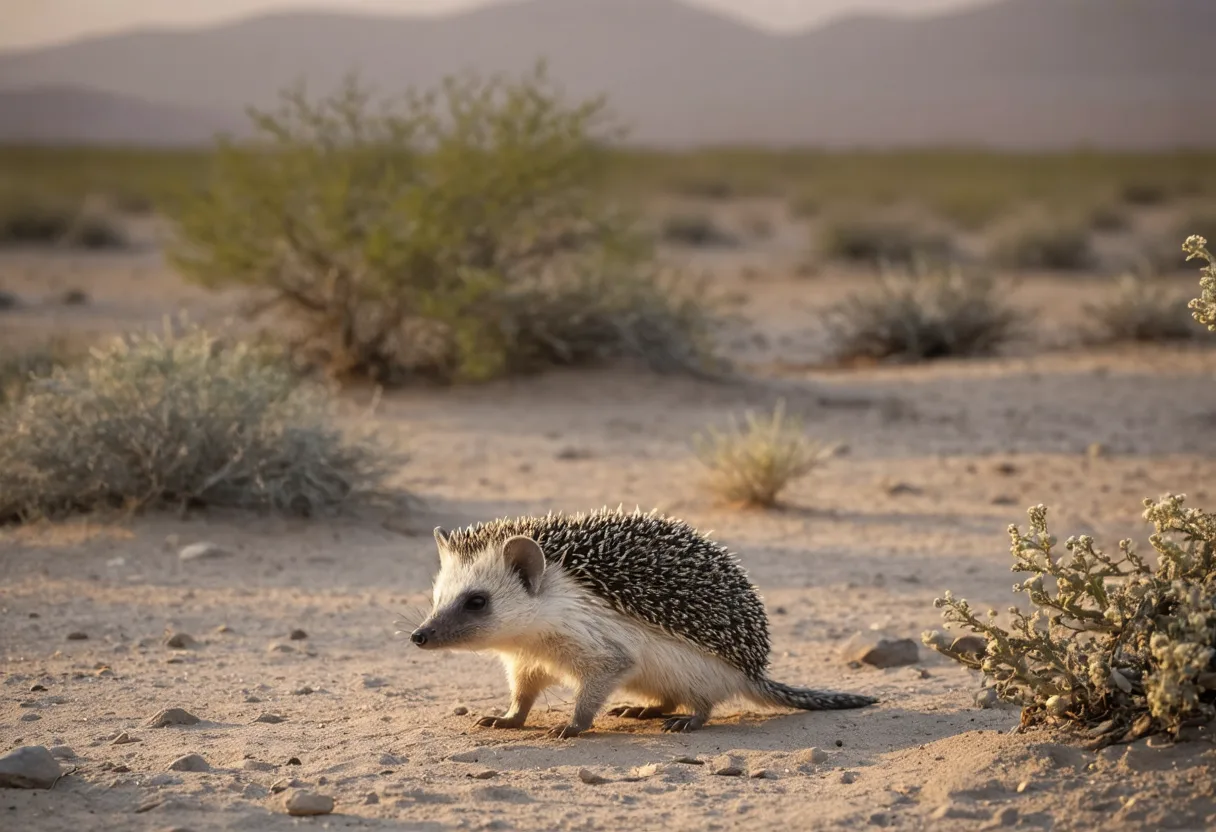
A long-eared hedgehog on desert ground at dusk
Long-eared hedgehog
Hemiechinus auritus
It lives in Central Asia and parts of the Middle East. Its ears reach 30 to 45 millimetres past its nearest spines, and they help it give off heat in the desert. It may travel up to 9 kilometres in a night looking for food.
Source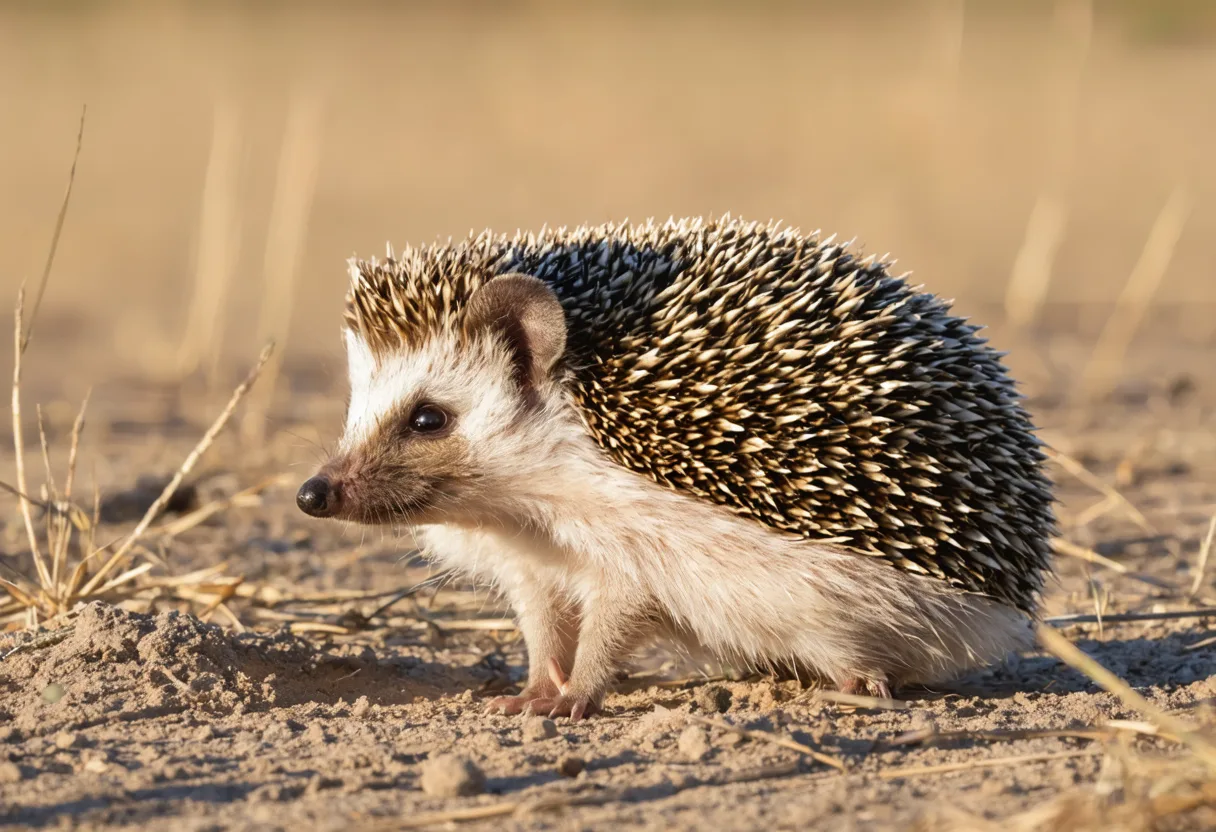
A four-toed hedgehog in dry savannah grass
Four-toed hedgehog
Atelerix albiventris
It lives across much of central and eastern Africa. It usually has only four toes on each back foot, which is how it got its name. It mostly moves along the ground, but it can climb and swim when it needs to.
Source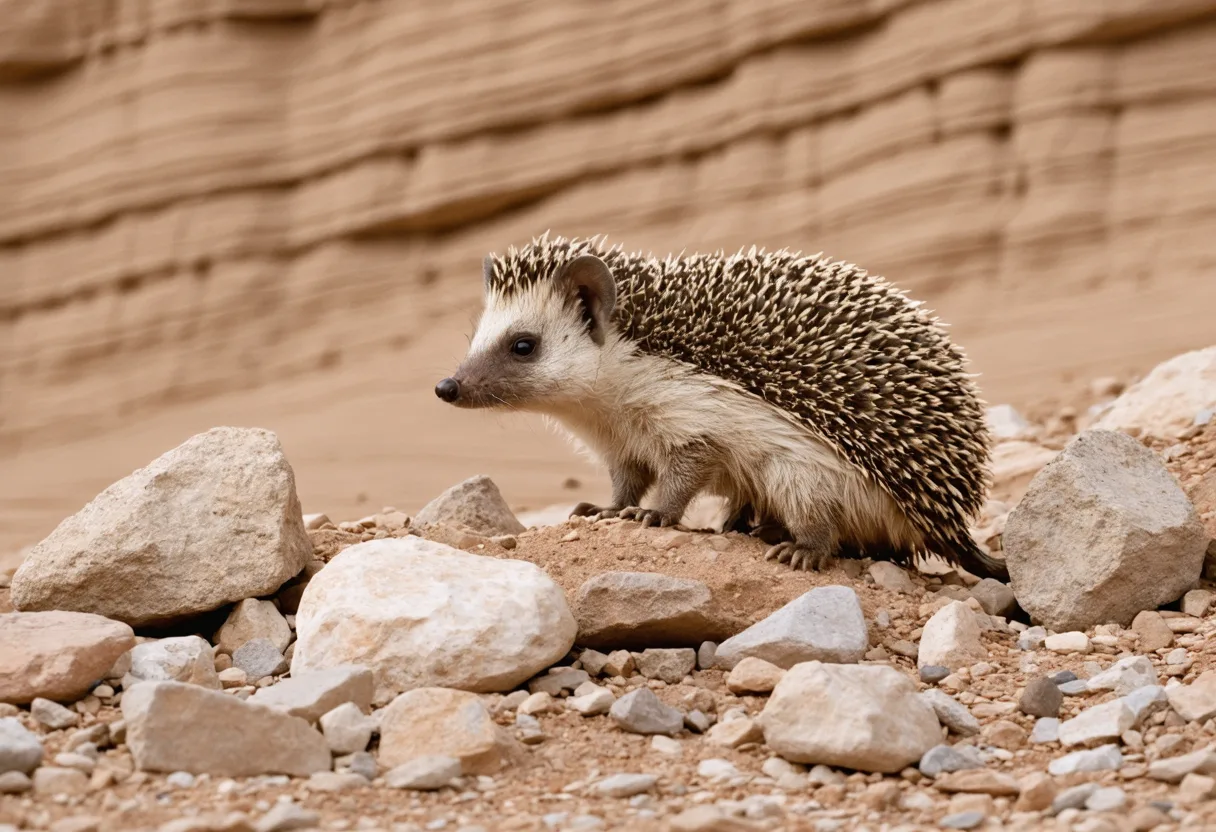
A desert hedgehog among stones on a desert slope
Desert hedgehog
Paraechinus aethiopicus
One of the smallest hedgehogs, it is usually known by its dark muzzle. Its spines bend instead of breaking, and they can soak up the force of a fall to protect it.
SourceThe pictures on this page are AI-generated illustrations. The facts are checked against the sources linked.