Open your worlds
Your wish list — the plush you mean to keep.
Press Add to a collection on any plush in the shop: start a collection of your own, or keep it on your wish list. Sign in and both follow you to any device.
Open my wish list →Menu
Wonders of the North American river otter
The North American river otter (Lontra canadensis)
↑ All about ottersThe otter of North American rivers
The North American river otter lives in both fresh water and the sea: in streams, rivers, lakes, ponds and marshes, and along coasts. Here are three things worth knowing about it.
From the Rio Grande to Alaska
North American river otters live throughout most of North America, from the Rio Grande to Canada and Alaska. They eat mostly animals that live in water, including fish, frogs, crayfish, turtles, insects and some small mammals.
SourceA long breath
A river otter can hold its breath for up to 8 minutes. That is even longer than a sea otter, which holds its breath for up to 5 minutes.
SourceMessage stations
River otters use latrines: places on land they return to again and again to leave their droppings and scent marks. Otters pass information to each other there by smell, so a latrine works like a communication station.
Source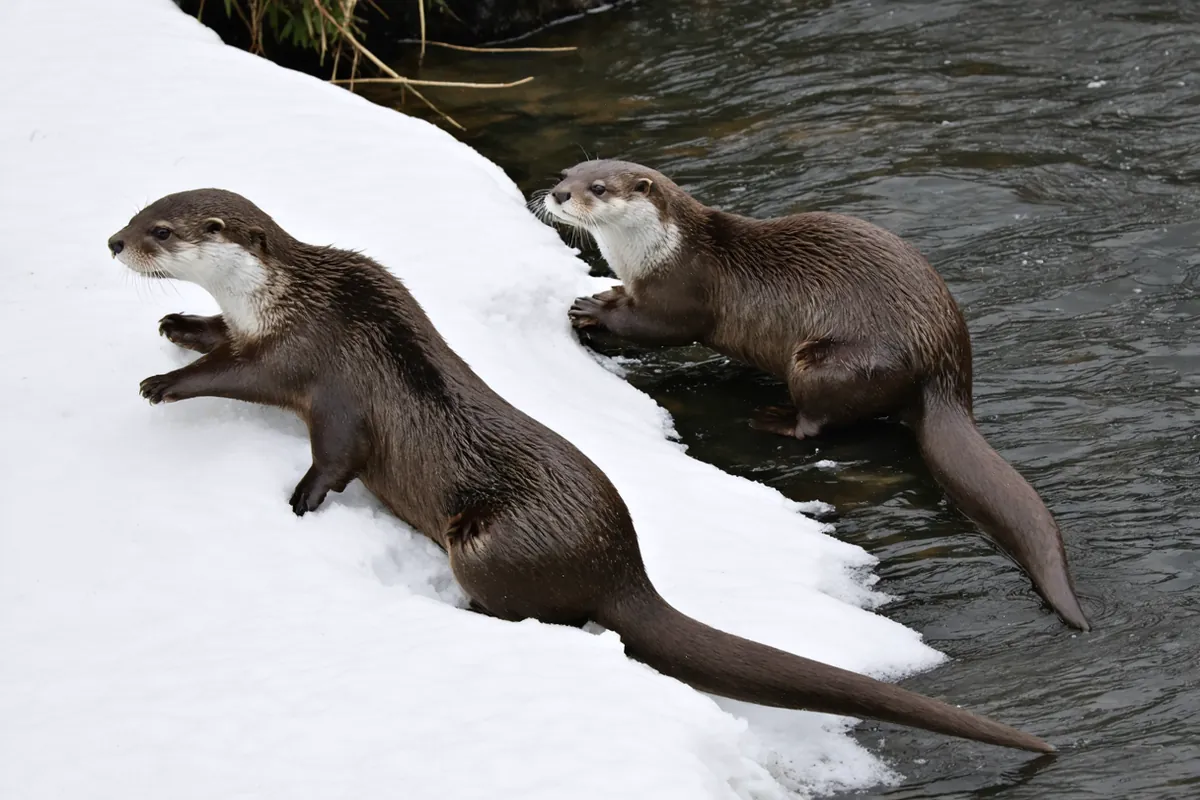
North American river otters sliding down a snowy bank
Time to play
The otters that slide
North American river otters tend to live alone or in pairs. But they often get together in groups, and they are known for their playful behaviour. People often see them playing and sliding together. Their long, nimble bodies let them twist, turn, roll and dive quickly, and they are often seen sliding or burrowing in the mud or snow. Is it all just for fun? Perhaps not. There is evidence that play helps river otters strengthen the bonds between them, improve their hunting and scent mark their territories. It is the most abundant kind of otter, yet surprisingly little is known about its life in the wild.
SourceComing home
The otters brought back
Before Europeans settled in North America, river otters lived in waters across most of the continent. Then trapping, the filling of wetlands and the growth of industries made them vanish, or fall in number, in many areas. By 1980 they had disappeared from 11 US states. In the 1970s, many wildlife agencies began work to bring otters back, including reintroduction projects. Since 1976, over 4,000 otters have been reintroduced in 21 US states. In Kentucky, where they were brought back in the early 1990s, otters are now found in all of the state's major waterways. Cleaner water has helped river otters win back parts of their old range in many areas.
SourceThe pictures on this page are AI-generated illustrations. The facts are checked against the sources linked.