Open your worlds
Your wish list — the plush you mean to keep.
Press Add to a collection on any plush in the shop: start a collection of your own, or keep it on your wish list. Sign in and both follow you to any device.
Open my wish list →Menu
The real owl
Owls are birds of prey with big, forward-facing eyes and flat faces. Here are three true things about them.
Owls everywhere
There are some 220 to 225 species of owl. They live in all parts of the Earth except the polar ice caps and some remote islands.
SourceEyes that stay still
An owl's eyes are shaped like tubes and fixed in place, so it cannot move them in any direction. Instead it can turn its head and neck as much as 270 degrees, and it has 14 neck bones where people have seven.
SourceQuiet wings
Most owls can fly almost silently. Saw-toothed edges on their wing feathers soften the sound of each wingbeat, and a velvety surface on the feathers soaks up sound.
Source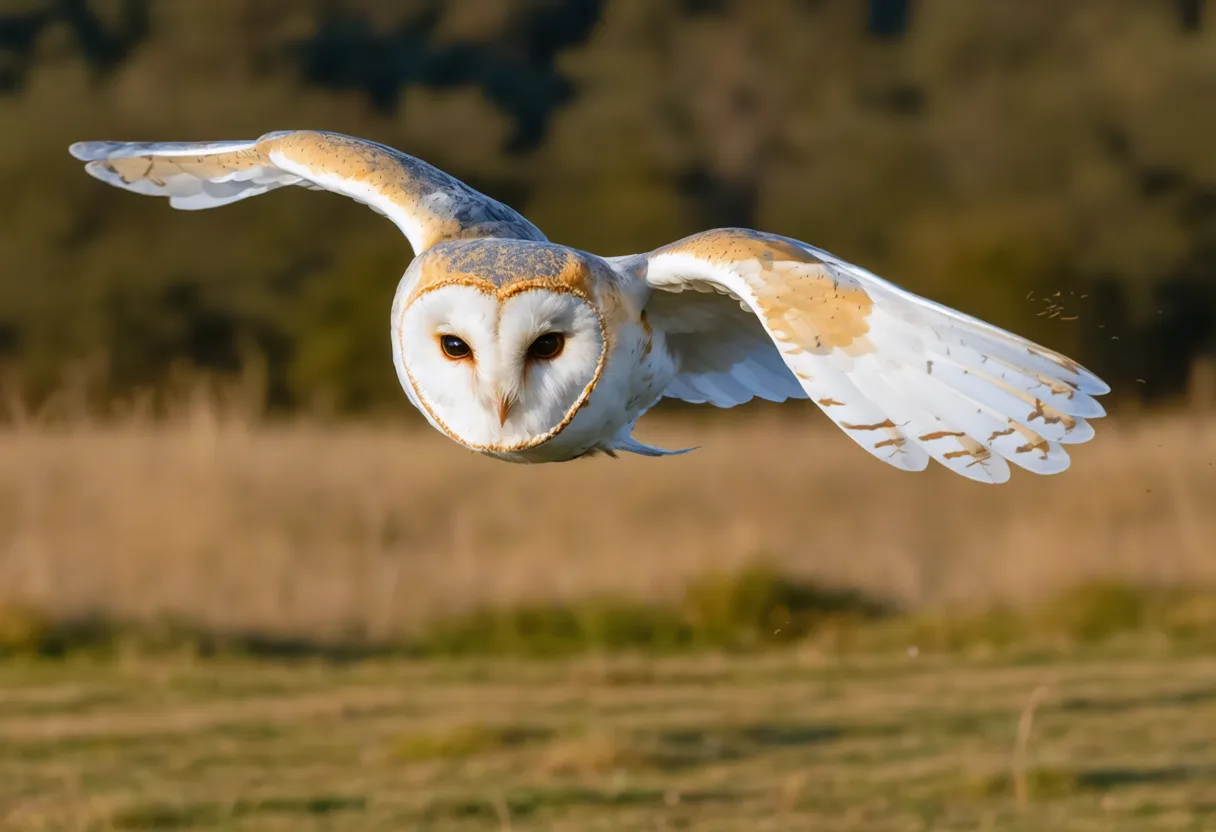
A barn owl hunting low over a meadow at dusk
Hunting by ear
How an owl listens
Many owls have a circle of feathers around each eye, called a facial disc. The disc helps funnel the sound of prey to the owl's ears, and the owl can adjust its feathers to focus sounds from near or far. In some owls, the two ears are set at different places on the skull. A sound reaches the two ears at very slightly different times, and that tells the owl which direction it came from. Owls are farsighted, too. They cannot clearly see anything closer than a few centimetres from their eyes. They feel prey they have caught with hair-like feathers on the beak and feet.
SourceOwl clues
Hard to see, easy to study
An owl's feathers help it sit still and blend into its surroundings, so prey can hardly see it. Many owls match the colours, and sometimes the patterns, of the places they rest. Often the only sign that an owl is there is its call or its brightly coloured eyes. But owls leave clues. An owl brings back up the parts of its prey it cannot digest, such as bones, scales and fur, packed into a lump called a pellet. Owl pellets are common and easy to study, and they are often sold to schools for pupils to take apart in biology lessons.
SourceThree remarkable owls
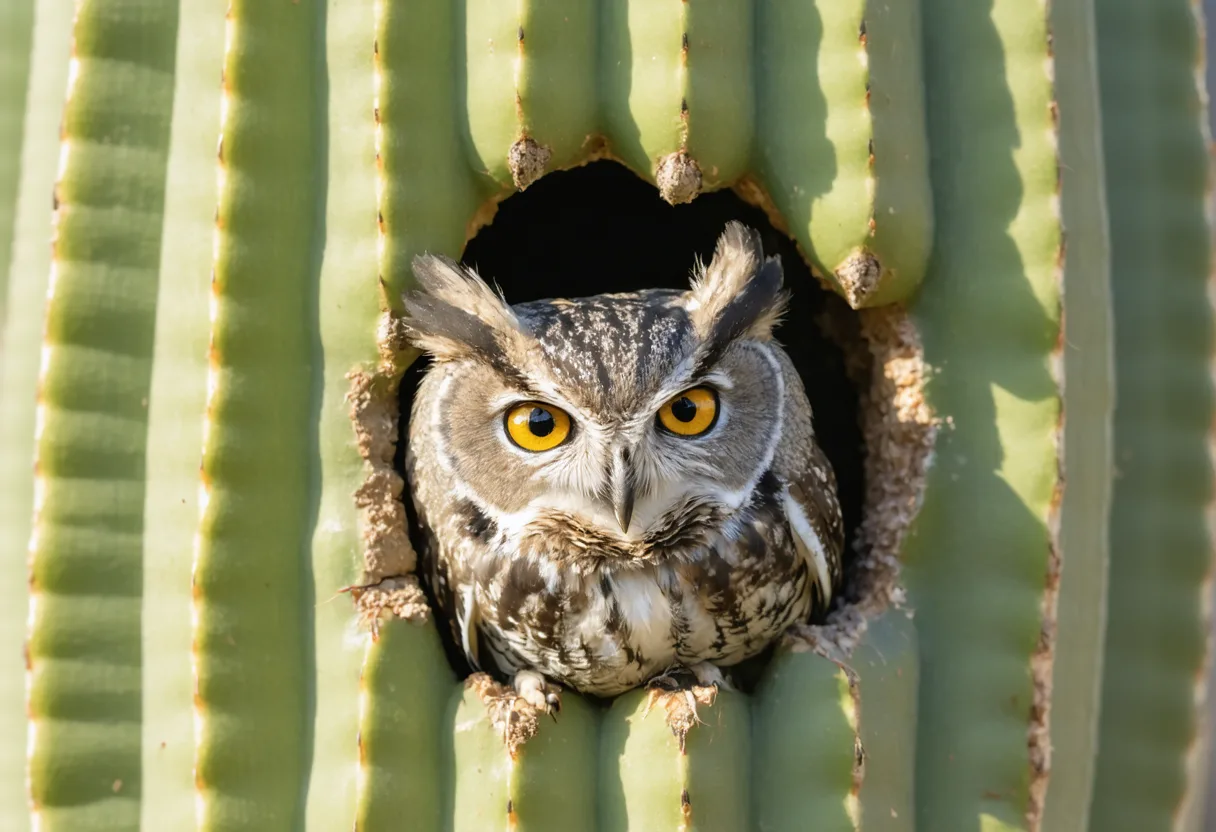
An elf owl looking out of its hole in a cactus
Elf owl
Micrathene whitneyi
The elf owl is the world's smallest and lightest owl, about 12.5 to 14.5 centimetres long. It often nests in old woodpecker holes in saguaro cacti and eats mainly insects. It has been seen removing a scorpion's sting before eating it.
Source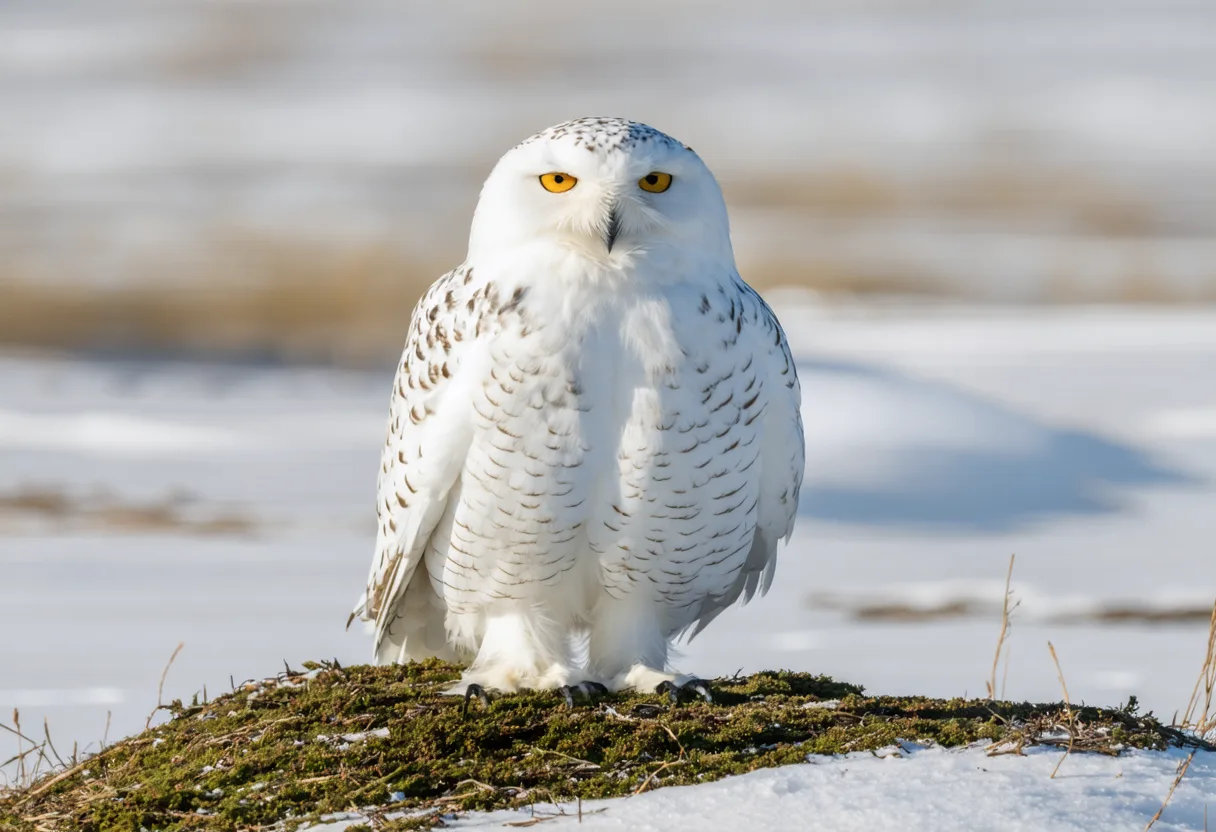
A snowy owl on the Arctic tundra in summer
Snowy owl
Bubo scandiacus
The snowy owl lives in the Arctic and is the only owl with mainly white feathers. Most owls hunt at night, but the snowy owl is often active during the day, especially in summer.
Source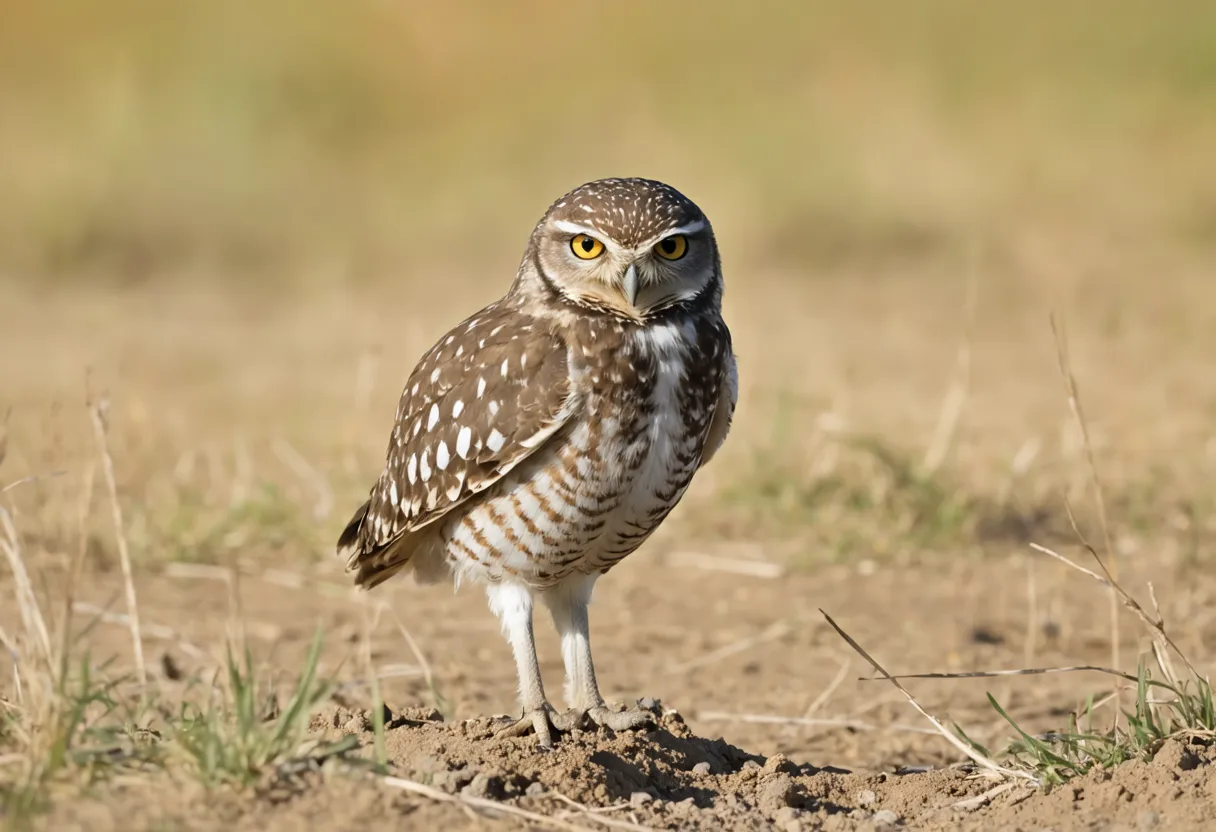
A burrowing owl at the mouth of its burrow
Burrowing owl
Athene cunicularia
This small, long-legged owl of North and South America lives in burrows, often ones dug by ground squirrels or prairie dogs. When threatened, it goes into its burrow and makes rattling, hissing sounds like a rattlesnake.
SourceThe pictures on this page are AI-generated illustrations. The facts are checked against the sources linked.