Open your worlds
Your wish list — the plush you mean to keep.
Press Add to a collection on any plush in the shop: start a collection of your own, or keep it on your wish list. Sign in and both follow you to any device.
Open my wish list →Menu
The real puffin at sea
Puffins are three kinds of small seabird called auks. Two live in the North Pacific Ocean, and one lives in the North Atlantic.
A beak that changes
All puffins have large beaks that are brightly coloured in the breeding season. Afterwards they shed the colourful outer parts, leaving a smaller, duller beak.
SourceFlying under water
A puffin's short wings are adapted for swimming, with a flying stroke under water. In the air, puffins beat their wings very fast, up to 400 times a minute.
SourceWinter far from land
After breeding, all three kinds of puffin spend the winter at sea. They are usually far from the coast, and often further south than where they breed.
Source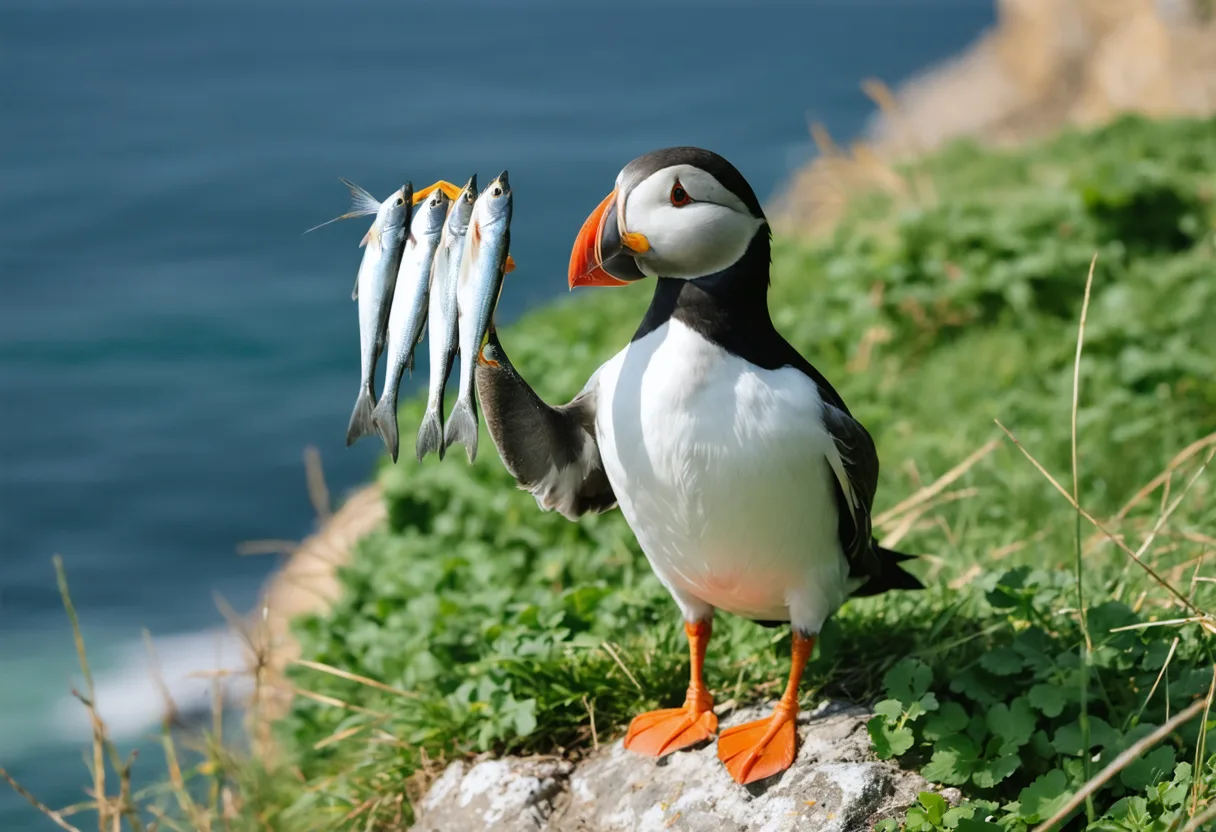
A puffin with a row of small fish held across its beak
Raising a puffling
One egg and a beak full of fish
Puffins breed in colonies on coasts and islands, and a pair stays together for a long time. The female lays a single egg, and both parents take turns to keep it warm. The parent holds the egg against its brood patch with its wings. The chick that hatches is called a puffling. Its parents feed it mostly small fish, several times a day. A puffin can hold several small fish at a time, sometimes over a dozen, lined up crosswise in its bill. A special hinge in its beak lets the top and bottom edges meet at many different angles. The chicks leave the nest at night. They spend their first few years at sea, and come back to breed about five years later.
SourceWhat's in a name
How the puffin got its name
The name "puffin" has a curious history. It means "puffed", in the sense of swollen. At first it was not the name of these birds at all. It was used for the fatty, salted meat of young Manx shearwaters, an unrelated seabird. Puffin is an Anglo-Norman word for the cured bodies of young shearwaters from the nest. The puffins' scientific name has a story too. Fratercula is Latin for "friar", from a word meaning "little brother". It was chosen because the puffin's black and white feathers look like a friar's robes.
SourceThree remarkable puffins
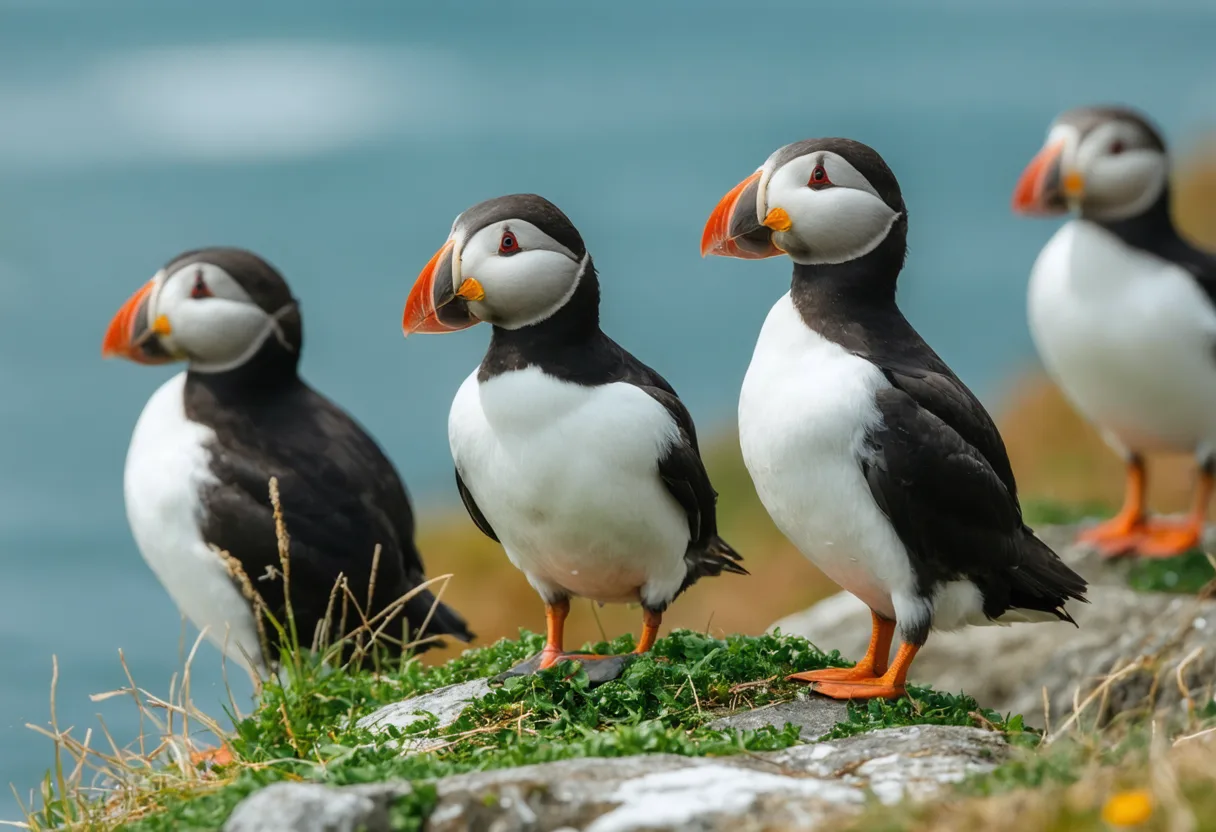
Atlantic puffins on a grassy sea cliff
Atlantic puffin
Fratercula arctica
It is the only puffin native to the Atlantic Ocean. Colonies in Iceland alone are home to 60 per cent of the world's Atlantic puffins.
Source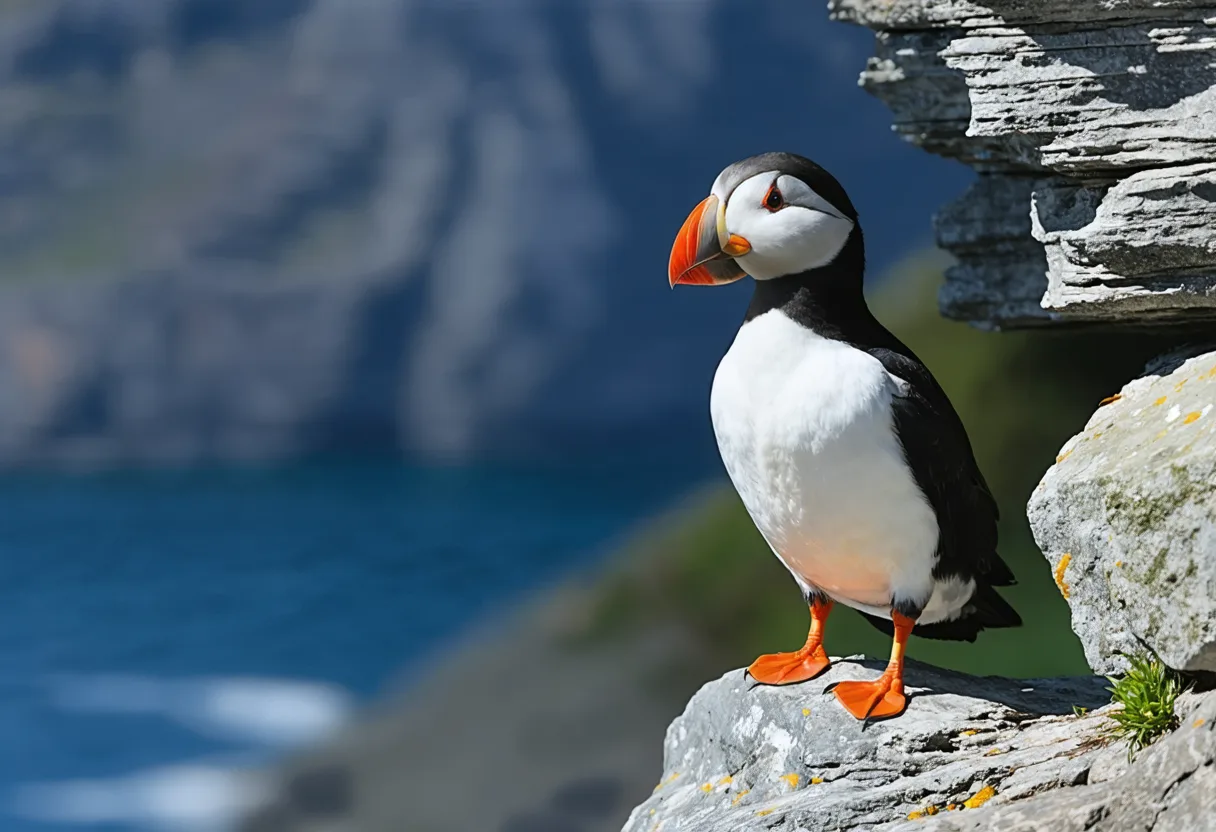
A horned puffin at a crack in a rocky cliff
Horned puffin
Fratercula corniculata
Adults have a small, fleshy black "horn" above the eye, which gives the bird its name. Unlike other puffins, it digs little or no burrow, and makes its home in rock crevices or under piles of rock.
Source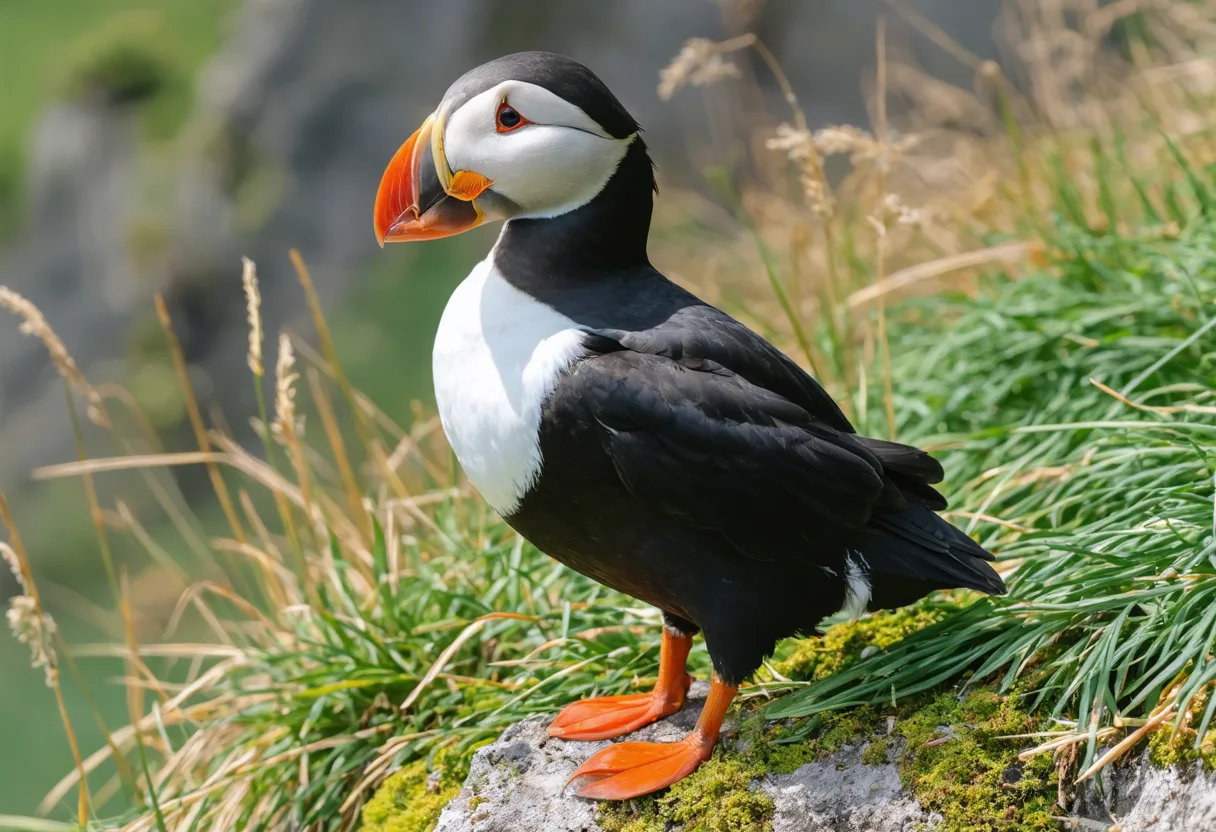
A tufted puffin with its yellow tufts
Tufted puffin
Fratercula cirrhata
Each year, as the summer breeding season approaches, both males and females grow yellow tufts. At around 35 centimetres long, it is the largest of all the puffins.
SourceThe pictures on this page are AI-generated illustrations. The facts are checked against the sources linked.