Open your worlds
Your wish list — the plush you mean to keep.
Press Add to a collection on any plush in the shop: start a collection of your own, or keep it on your wish list. Sign in and both follow you to any device.
Open my wish list →Menu
What makes a crab a crab
There are thousands of kinds of true crab, and they live in many different places. Here is what most of them share.
Ten legs and two pincers
Crabs generally have five pairs of legs, which makes ten. The front pair end in claws that work as pincers, and they usually walk sideways.
SourceA hard suit of armour
A crab's outer skeleton is often thick and hard. Young crabs have to keep moulting it many more times before they become adults.
SourceAt home almost everywhere
Crabs live in all the world's oceans, in fresh water and on land. About 7,000 kinds of true crab are known.
Source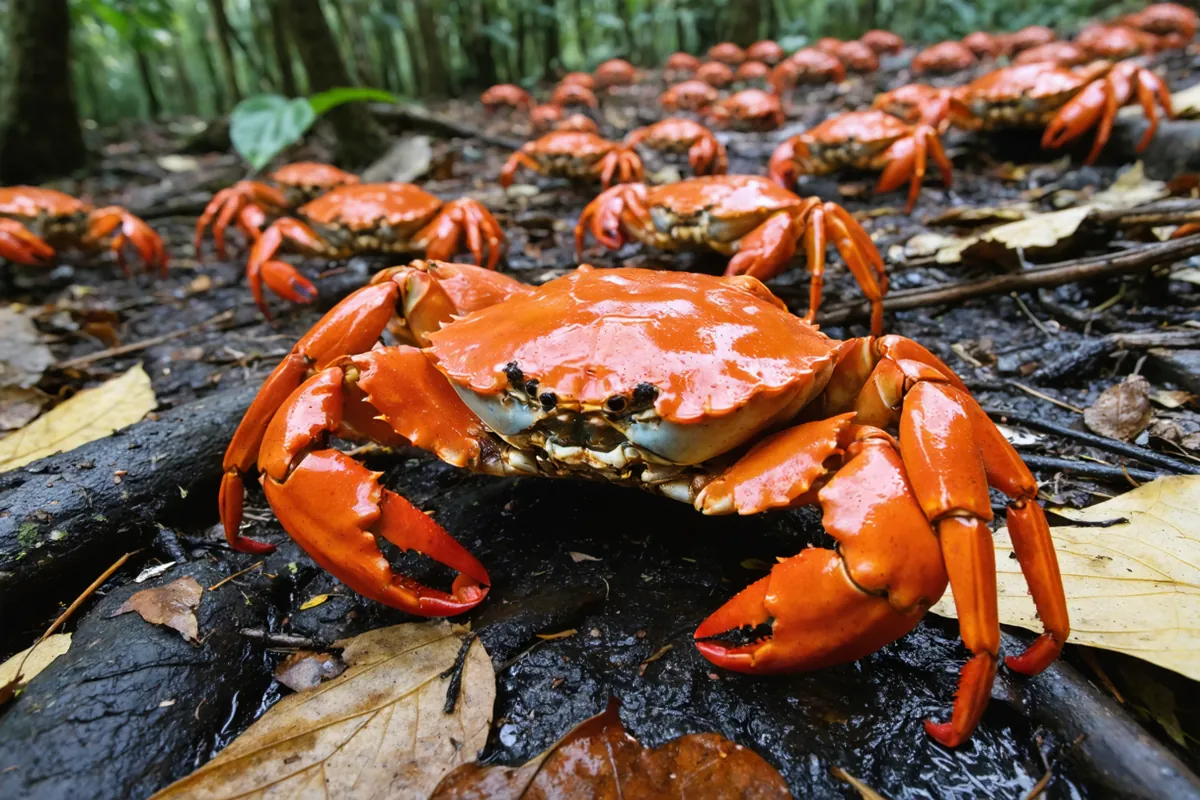
AI-generated illustration
Great journey
The island where millions of crabs go to the sea
On Christmas Island, millions of large red crabs live in the forest. Every year they come out and make their way to the sea to breed. The journey starts with the first rain of the wet season, usually in October or November. The males lead, and the females join them along the way. The crabs always spawn before dawn, as a high tide goes out, in the last quarter of the moon. Some roads close while the crabs cross, and crab bridges have been built over the roads. Later, tiny crabs about 5 millimetres across march inland, taking around nine days to reach the safety of the plateau.
SourceClever trick
The crabs that queue for new homes
Hermit crabs are not true crabs. They are more closely related to squat lobsters and porcelain crabs. A hermit crab keeps its soft body safe inside an empty shell, and as it grows it needs a bigger one. Several kinds, on land and in the sea, have been seen swapping homes in a queue. When an empty shell is too big for the crab that finds it, the crab may wait beside it, and others join in. Up to 20 crabs hold on to each other in a line from the largest to the smallest. When the right-sized crab takes the new shell, the others swap shells one after another, each moving up to the next size.
SourceThree remarkable crabs
AI-generated illustration
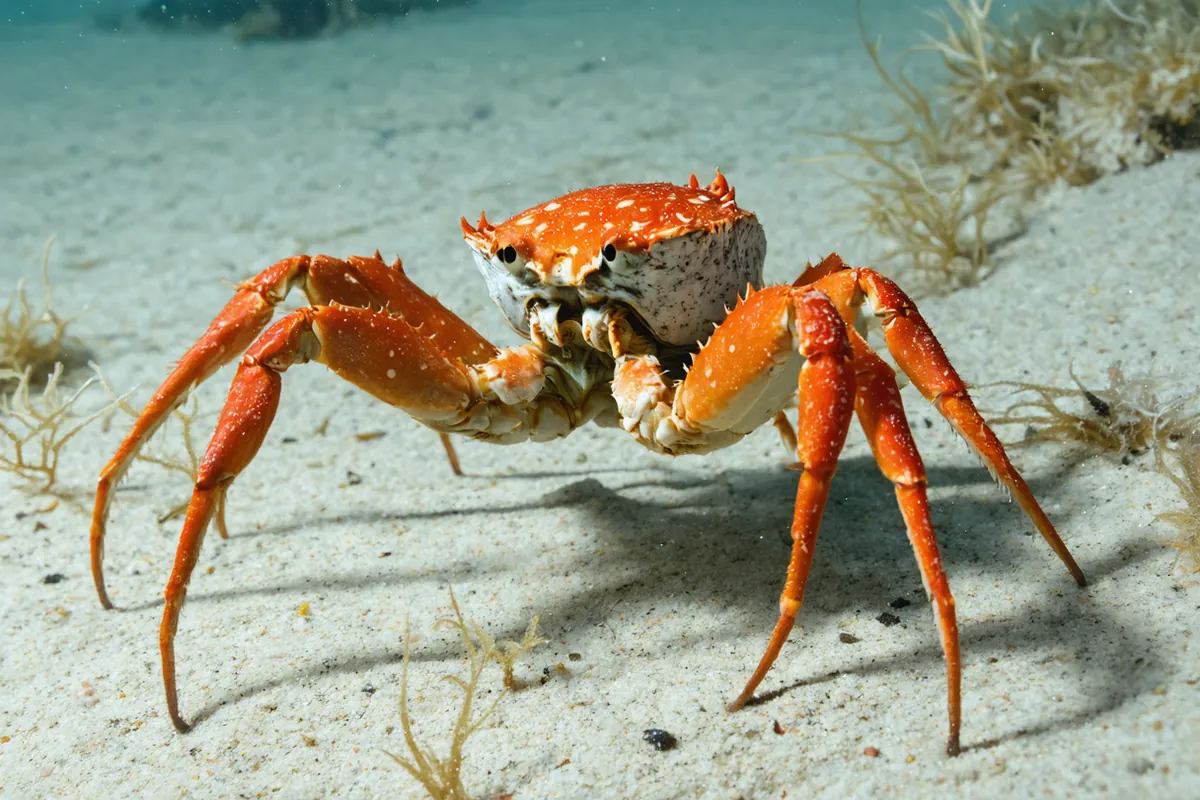
Japanese spider crab
Macrocheira kaempferi
This crab of the waters around Japan has the greatest leg span of any known arthropod: up to 3.7 metres from claw to claw.
Source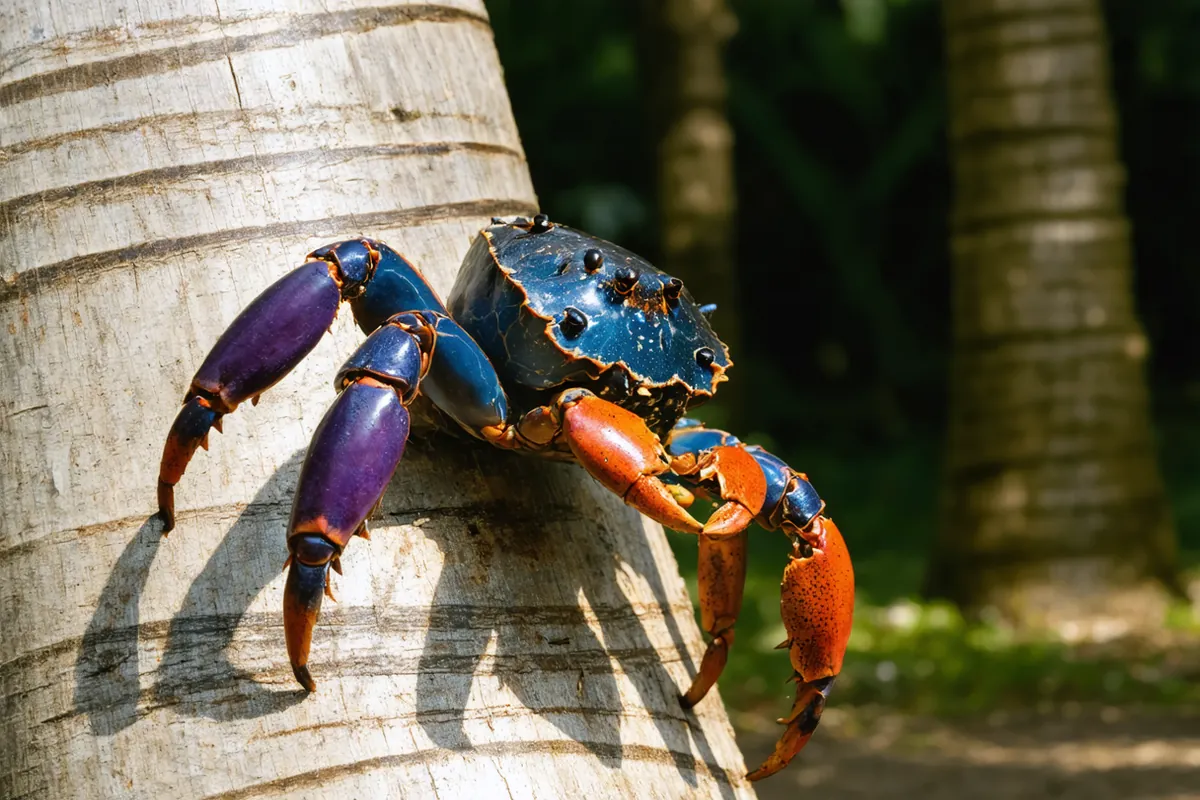
AI-generated illustration
Coconut crab
Birgus latro
The largest living land arthropod lives on islands across the Indian and Pacific Oceans. It can cut holes into coconuts with its claws, has been filmed climbing trees, and may live for more than 60 years.
Source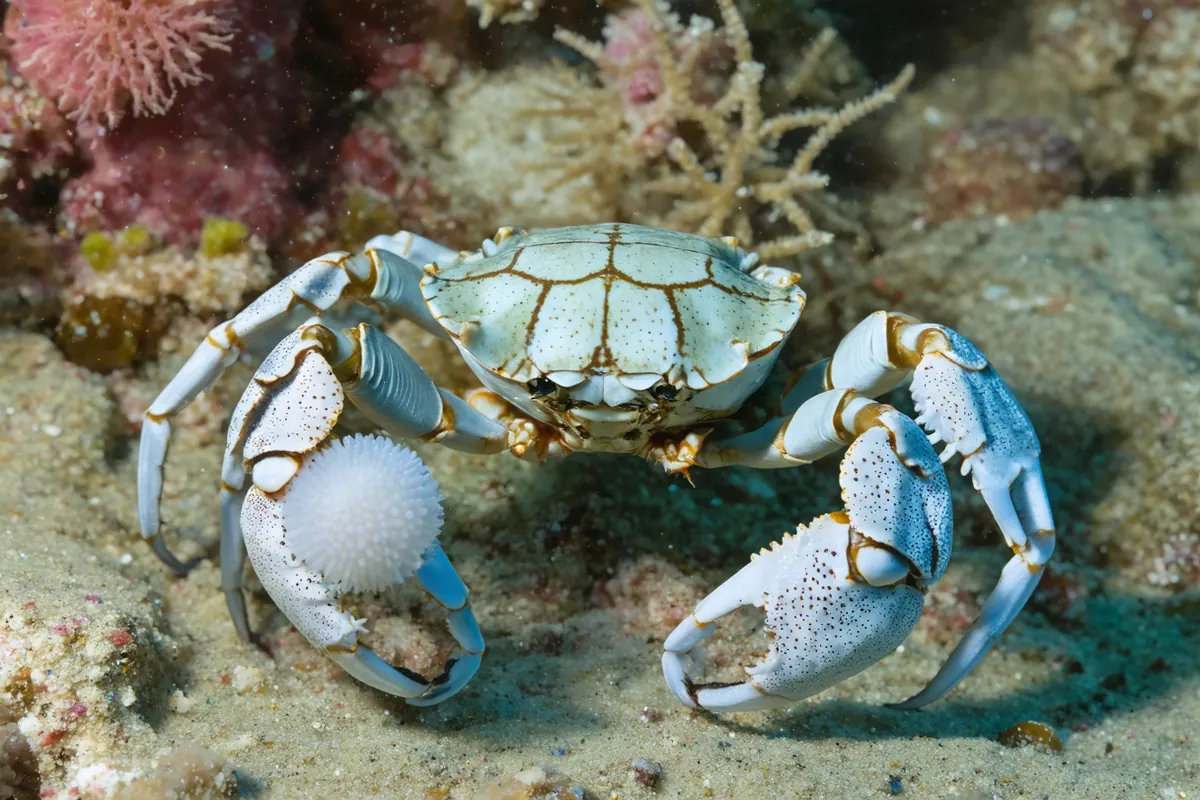
AI-generated illustration
Boxer crab
Lybia tessellata
This little crab, about 2.5 centimetres wide, carries a tiny sea anemone in each claw. When attacked, it threatens the attacker with an anemone, and it uses the anemones' tentacles to collect bits of food.
SourceThe pictures on this page are AI-generated illustrations, not photographs. The facts are checked against the sources linked.